

Daredevil: Born Again
The Art of the Always-On Campaign

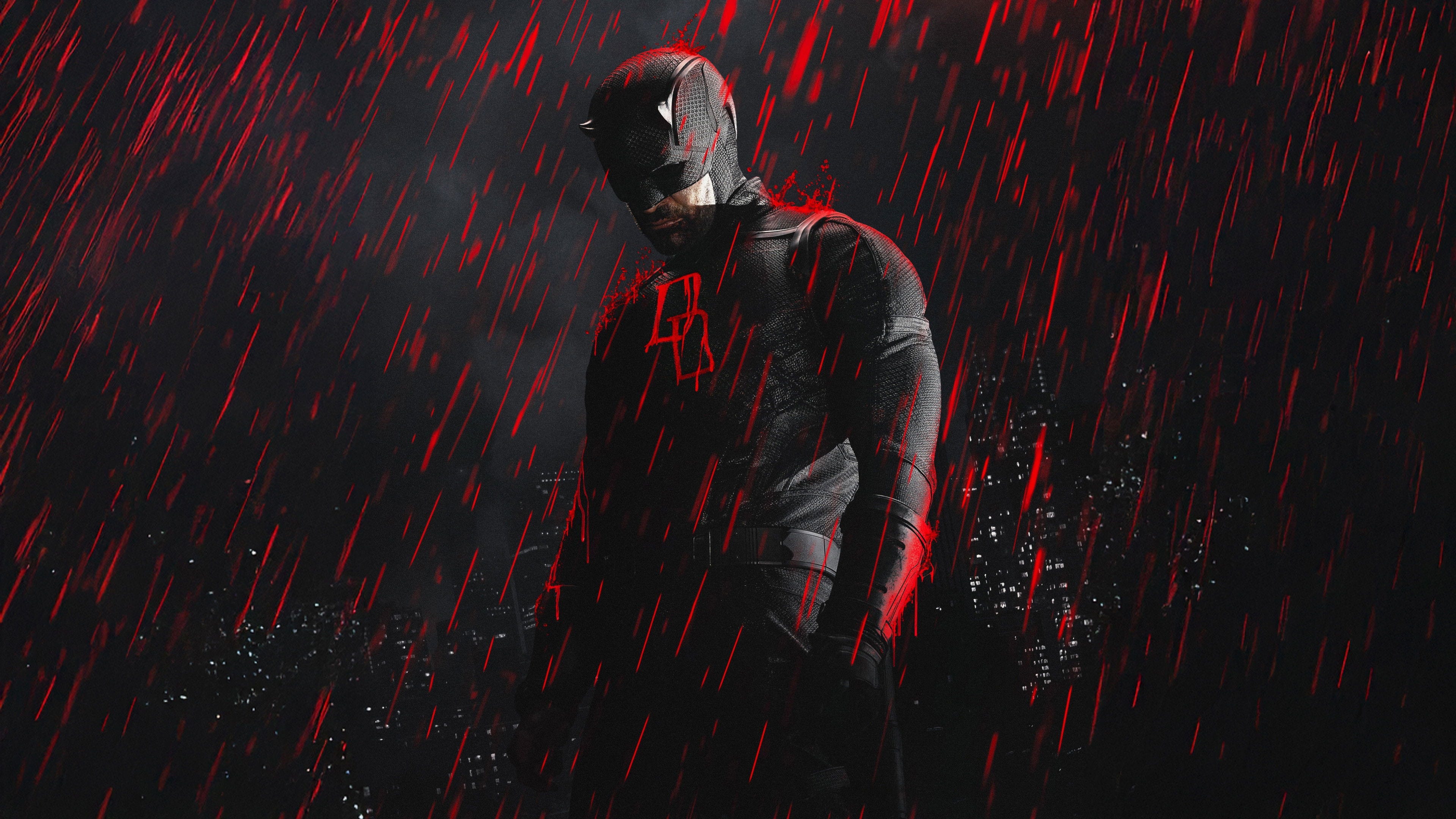
This post is technically about Season 2 of Daredevil: Born Again. But to really understand what Disney+ and Marvel Television pulled off this year, we need to go back a bit because the campaign for Season 2 didn’t start in March 2026. It started in March 2025, when Season 1 dropped and quietly rewrote the rules for how a superhero show gets marketed in the streaming era.
So here’s what I’m going to break down for you:
The mythology - Netflix Daredevil and Season 1 as the foundation that made all of this possible
Season 2’s performance, media planning, and the campaign itself - what they bought, why they bought it, and which bits genuinely excited me
The extended universe - the Defenders returning, and the Punisher’s very significant next move
Transmedia and the MCU - how Daredevil became a structural pillar, not just a popular show
And then the Spider-Man segue, because you’ll want to stay tuned for that one
Let’s get into it.
The Foundation
Why This Chapter in the Daredevil Mythos Matters
Before any of the season 2 campaign analysis makes sense, you need to understand what Daredevil actually is as a piece of IP, and why it carries so much weight before a single poster goes up.
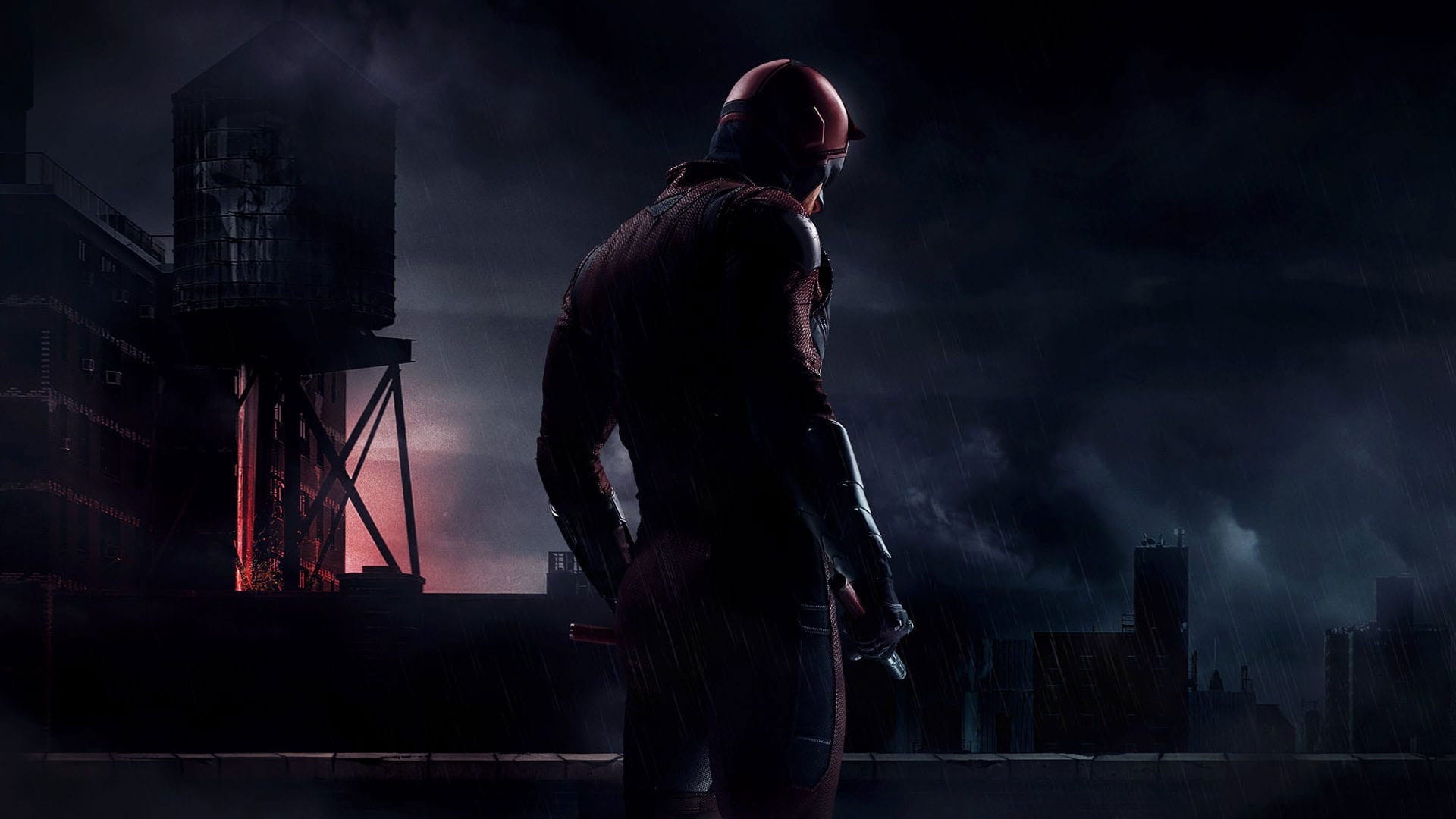
The Netflix run (2015-2018) is genuinely important here, not just as nostalgia, but as brand architecture. Marvel and Netflix built something that felt genuinely different from the wider MCU: dark, grounded, street-level, and unafraid of consequence. Charlie Cox and Vincent D’Onofrio as Matt Murdock and Wilson Fisk became one of the best protagonist/antagonist pairings in superhero television, and the show earned an audience that was deeply, almost protectively loyal. When it was cancelled, that audience didn’t disappear, it just waited.


Disney+ and Marvel Television understood exactly what they were inheriting when they brought the characters back. The decision to call the new show Born Again - borrowing the title of Frank Miller and David Mazzucchelli’s iconic 1986 comic arc - is its own piece of marketing intelligence. It’s not that Disney were aiming to exactly adapt that storyline, rather they were using its reputation because “Born Again” signals to long-time fans: this is the serious one. It’s more like branding as a promise.
And then Season 1 had to actually deliver on that promise, which it did. With a highly targeted launch built around the TV-MA rating, the gritty aesthetic, and a reveal strategy that started at New York Comic Con with a surprise appearance from Cox and D’Onofrio that broke the internet before any trailer had been released.


The campaign leaned into real-world themes (the controversial real-world appropriation of the Punisher logo got addressed head-on in press), and it aligned with the UFC; Pereira vs. Ankalaev collab where the fight posters mirrored the red-and-white Daredevil key art, with the “Dare to Be Great” strapline. Then an Ilia Topuria x Disney+ giveaway where fans had to name a Topuria/Daredevil team-up. Pairing a combat sports audience with a show built on brutal fight choreography is, frankly, one of the smarter audience targeting calls I’ve seen from a streaming platform.

Season 1 also ran a mural campaign and international OOH. As shown above Vincent D’Onofrio stood in Times Square and posted about what it felt like to see a billboard there; having walked those streets broke as a young actor, decades earlier. That post genuinely moved people. Personal brand, earned media, zero cost.


In the US they also bought an LA roadside billboard alongside what appears to be an underground commuter domination; wrapping the stairway entrance in Daredevil branding. That particular execution works well because the urban grit of the environment actually amplifies the creative; the red and black palette against yellow safety steps has a strange visual energy that fits the show perfectly.
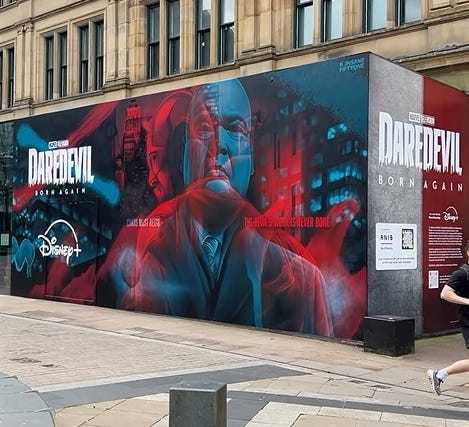
And then finally, the Red & Blue 3D mural. A UK artist commissioned by Disney Plus & Marvel UK, posting about the Daredevil mural they’d brought to life. Murals appear in the Daredevil Netflix era campaign too (a worldwide street art campaign in London, New York, LA, Paris, and Sydney) which means this tactic now carries its own sense of continuity. The Daredevil mural is becoming something of a campaign signature.
Now, moving on because where Season 1 set the table, it’s Season 2 that had to fill it.
Season 2
Performance, Planning & Campaign
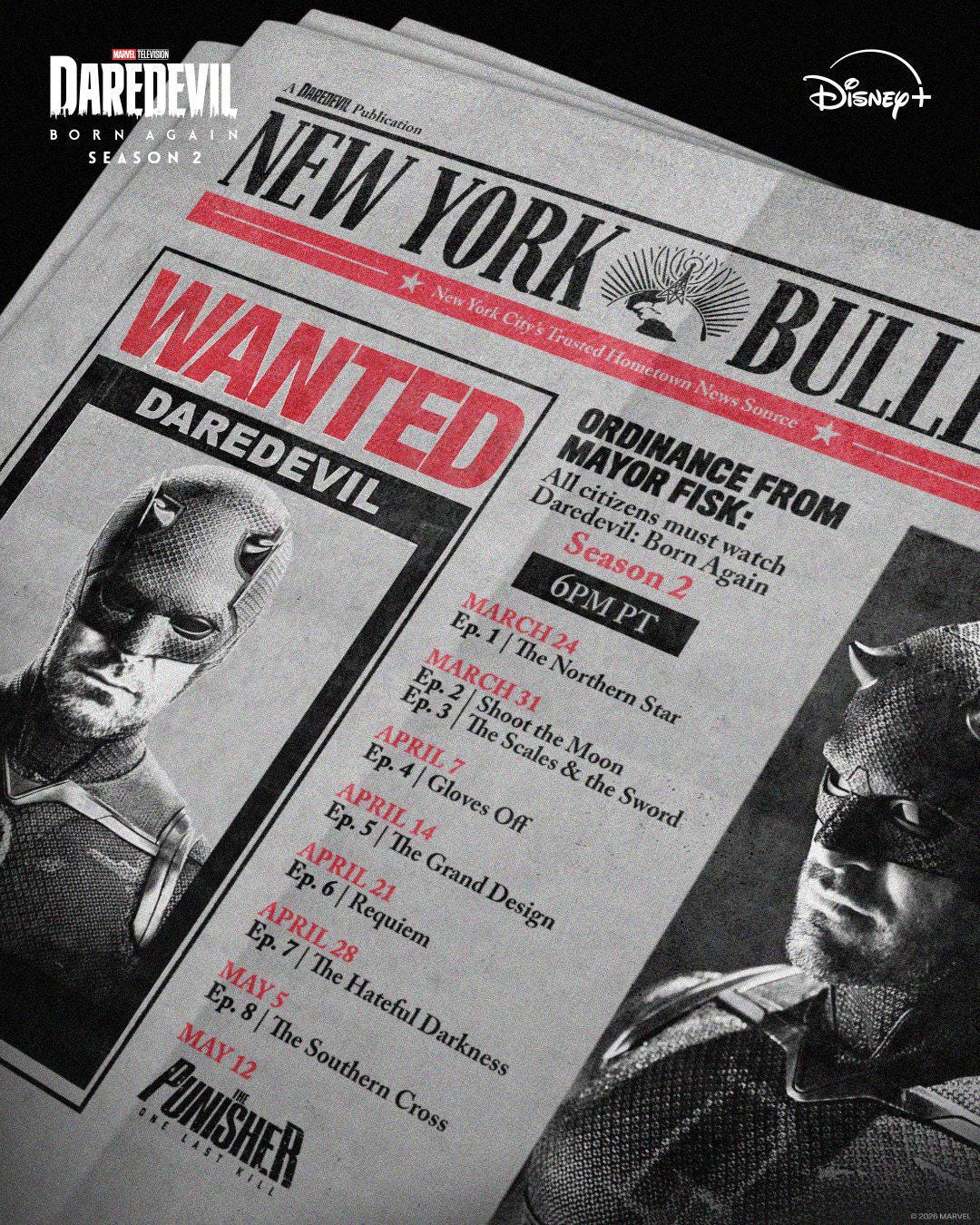
Daredevil: Born Again Season 2 launched on 24th March 2026, on a weekly release schedule with one episode every Tuesday for 7 weeks; the 31st had 2 and then upon the finale we received the Punisher special (more on that later). And that Tuesday cadence ended up being one of the most interesting structural choices to analyse, because it forced the marketing to do something very different from what you’d expect of a film campaign.
You see, with a film you’d build up to a release date. Looking to spike hard, sustain, and then hit the home entertainment window. The campaign has a shape: a beginning, a middle, an end.
With a weekly series, you don’t get that luxury because you’ve gotta keep pulling audiences back every seven days. You’re competing with these audiences entire streaming libraries, their own life admin, football, or whatever’s just dropped on Netflix. You must keep reminding people: it’s Tuesday, it’s Daredevil, don’t sleep; given I live in the UK I opted to watching in the early hours of my Wednesday.
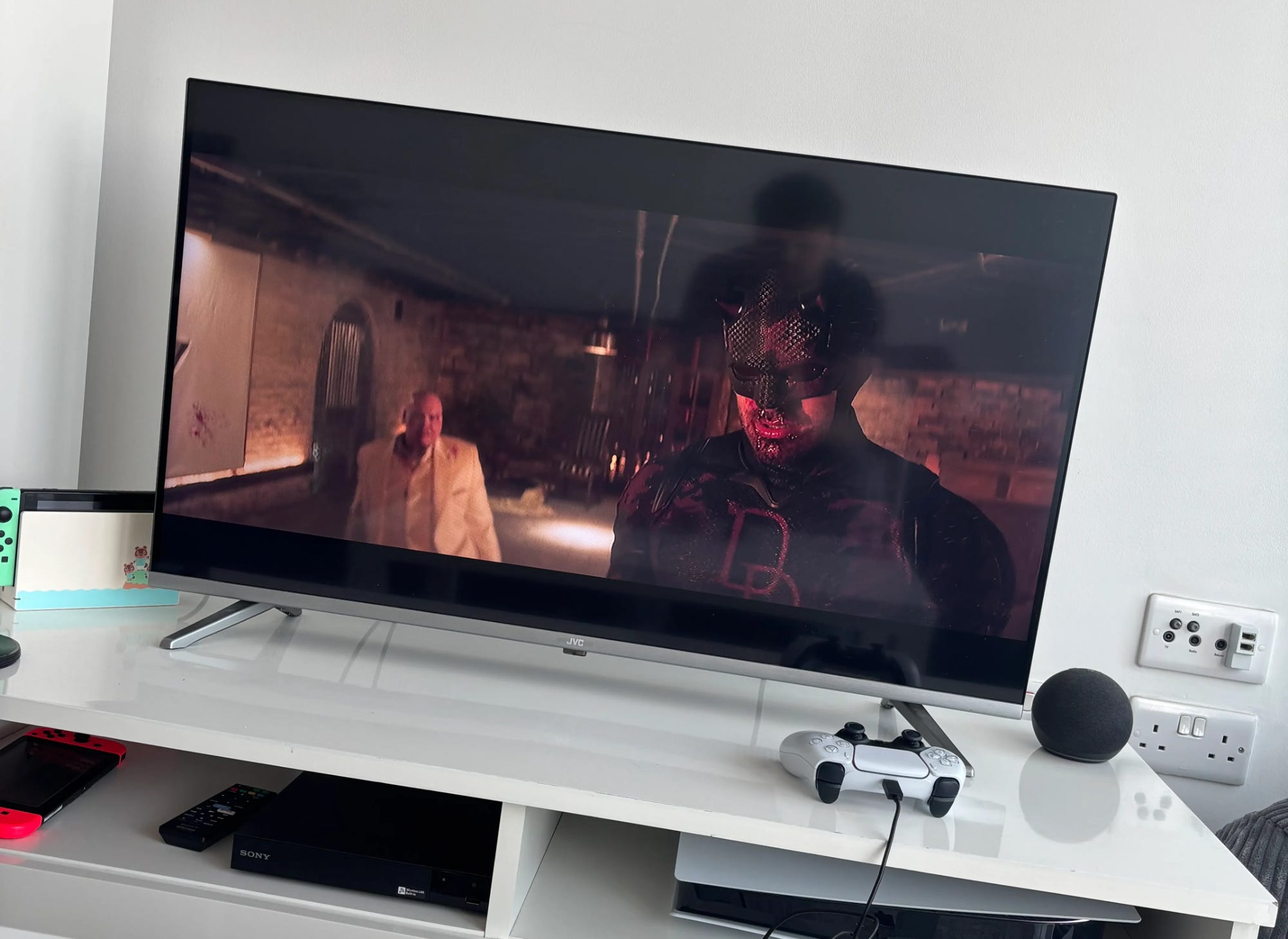
That’s an always-on strategy, and it’s meaningfully harder to execute than a theatrical push.
Now, onto viewership which matters a lot: Luminate tracked the first five episodes and reported that Season 2 accumulated 4,515,000 season views and just under 11 million hours watched. Those are strong numbers in isolation, but the comparison with Season 1 - which generated over 8 million views and 24 million hours watched across the same five-week window - suggests a roughly 46% drop in views and over 54% in hours. That’s a noticeable decline, and worth sitting with for a moment.
My honest read on why that is?
A few things are happening at once. First, the weekly release schedule will have bled casual viewers who’d have binged Season 1 over a weekend and then told everyone about it on Monday. Weekly pacing rewards loyalty, not discovery.
Second, I think the broader advertising investment tapered off earlier than it needed to; there’s plenty of evidence of a strong launch push (more on that below), but sustaining that energy across eight consecutive Tuesdays is expensive and complicated.
Third, Daredevil’s audience is, by design, a specific one. The TV-MA tone is a feature, not a bug, but it does naturally cap your ceiling. You’re not pulling in the whole Disney+ family the way a Marvel theatrical can.
The fact that it still received outstanding critical and audience reviews suggests this isn’t a quality problem. It’s a reach and retention problem and those are marketing problems.
The Media Plan
Now for the bit I particularly enjoy, because this is where theory meets the real world.
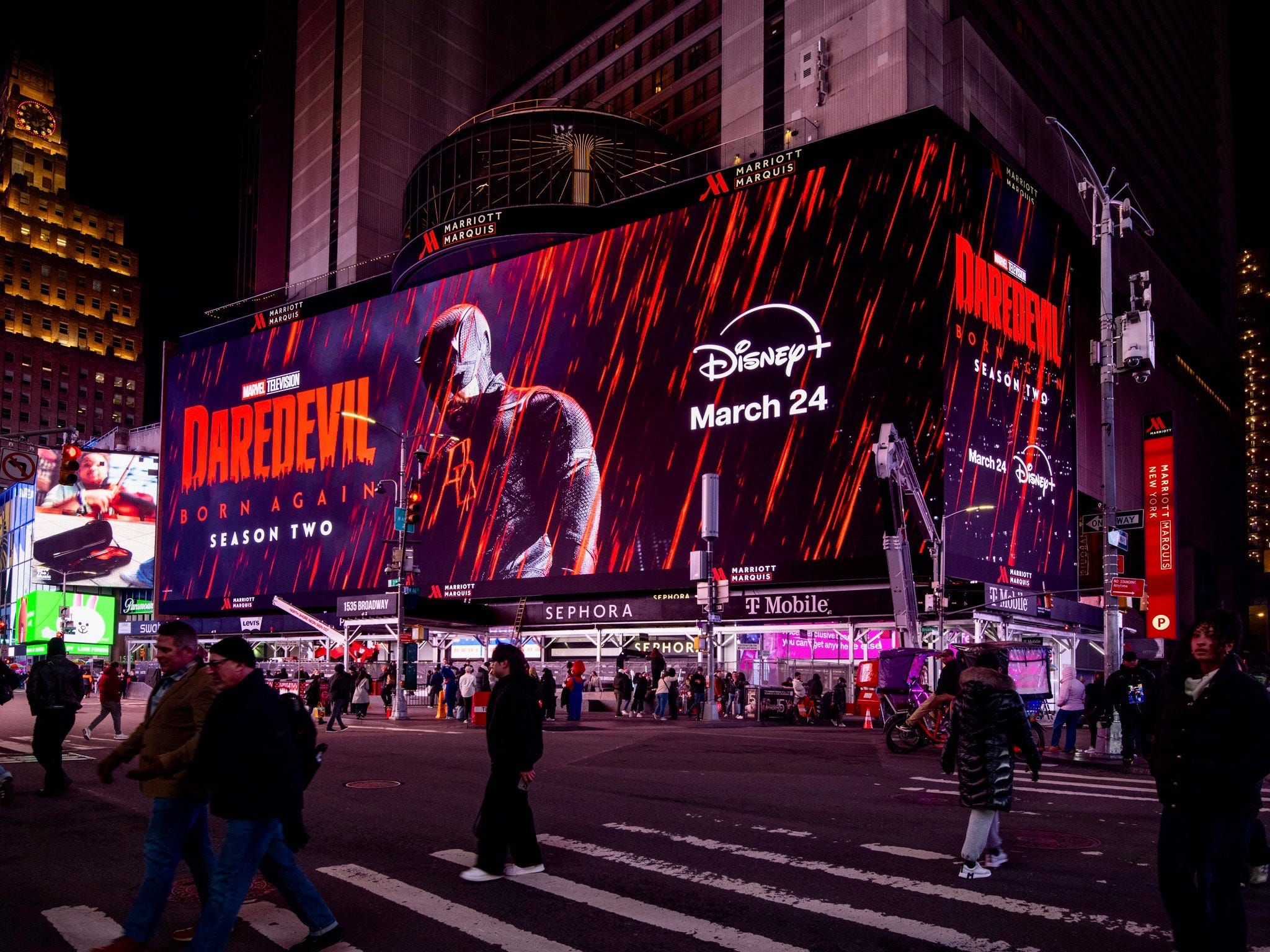
The OOH strategy across both the US and the UK was substantial. In New York, Disney went big - and I mean big. A full takeover of the screens beneath the Marriott Marquis in Times Square is not a subtle spend. If you remember the Season 1 notes above, D’Onofrio’s Times Square moment involved sharing space alongside other brands on that same building. Season 2 got the full takeover. That tells you something about confidence, ambition, and how the studio perceives the show’s cultural standing now.

Alongside that, 1540 Broadway - the large ground-level display in the heart of Times Square, with a Disney store sitting right underneath - was also in the mix. In Times Square specifically, going big or going home is sound logic. The space is so saturated that a smaller buy can get lost. Disney dropped multiple placements at different scales, which suggests they understood the environment.


Now, I swear Disney either own this OOH spot on Sunset Blvd or have some sort of long-term deal with the owner, because they’re always appearing on it (See my Lilo & Stitch post for another example). The placement is bloody massive to say the least and I’m kinda jealous because I don’t think we have a place like it in the UK outside of maybe the BFI IMAX wrap and some other really special (and expensive) sites…
To add to the additional value of a site like that and for me to even find out about it for example, Charlie Cox decided to post up in front of it and take a selfie, garnering over 639k likes on Instagram alone. As you can imagine huge general awareness as a stature piece of OOH, but also huge earned reach & engagement via social media.
Additionally there looks to be other OOH placements across the US, with bus stops and even boards appearing in Hell’s Kitchen!
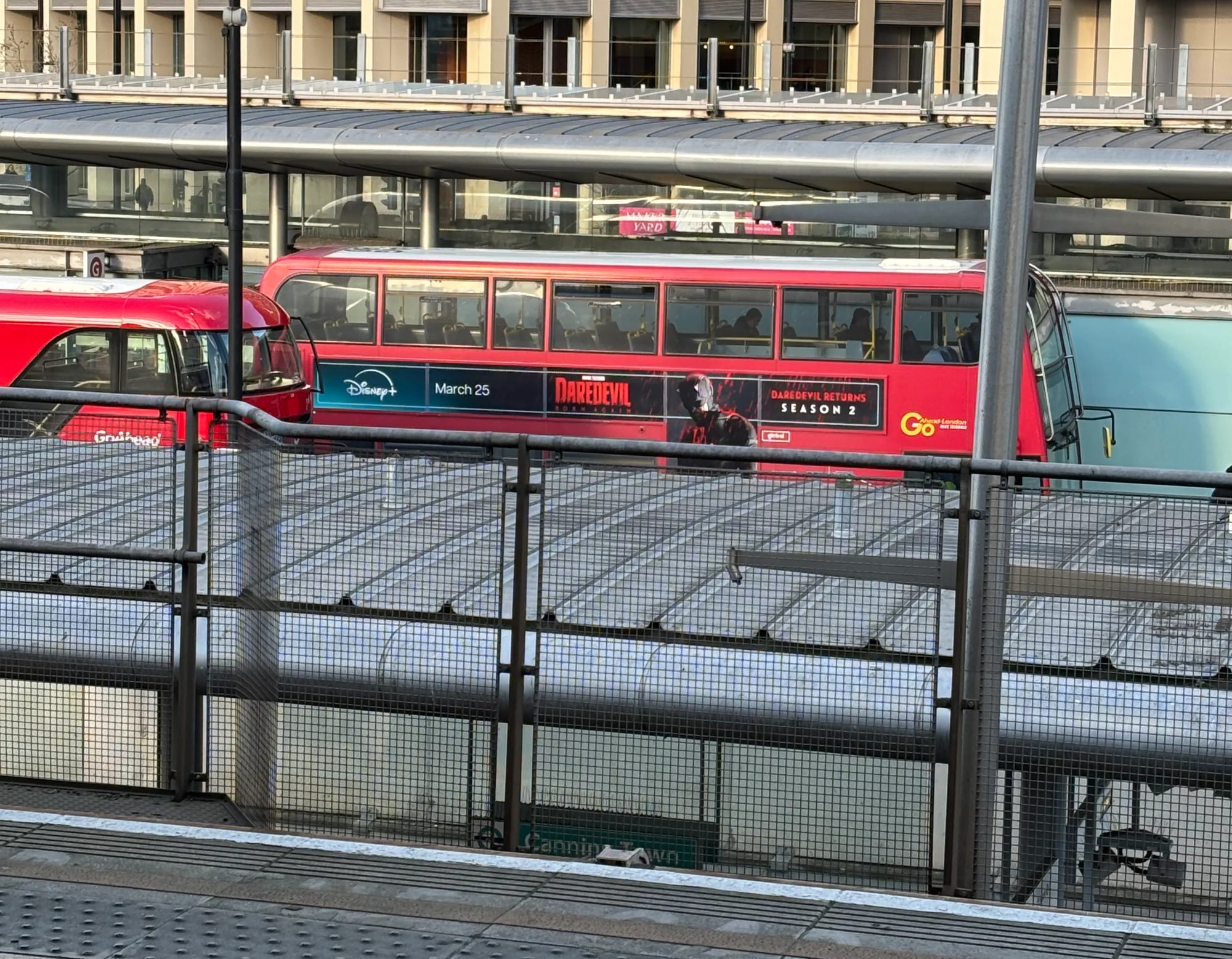
Over here in the UK, I spotted the campaign personally, which always changes how you feel about it when you’re writing it up. Bus T-sides across London (and likely nationally) carrying the Season 2 key art with Matt in the black suit; clean, impactful, and hard to miss from the pavement; in my case the elevated tube platform. As Global put it, “where there are people, there are buses.” For a show you want in the cultural conversation, that ambient reach matters.


Then the 48-sheet paper posters on the London Underground - the platform dwell-time placement - which works on a different principle entirely. Captive audience, extended exposure, high frequency for regular commuters. I know they say digital OOH is the future, but for brand recall, a well-placed 48-sheet is still doing serious work.


There’s also a cinema advertising example worth mentioning. Now, I can’t exactly remember what film I was seeing when I spotted the Disney+ Daredevil pre-roll (and if you know, that’s both peak cinephile and peak industry brain), but the principle matters. Cinema is the highest-attention advertising environment that exists. Screens off, phones down, eyes forward. If the creative is right, you’re speaking directly to your most engaged audience segment, which for Daredevil maps almost perfectly; these are people who care about the craft of storytelling and are actively going out to experience it.
TV spots in the US rounded out the traditional broadcast picture, and the Season 2 one I got my hands on is genuinely well-made: Disney+ branding and Daredevil in one place, the dark red-and-black palette, the action, and crucially, Krysten Ritter making a brief appearance. That’s not accidental. Flagging the return of a fan-favourite character in a 30-second spot is both creative and strategic.
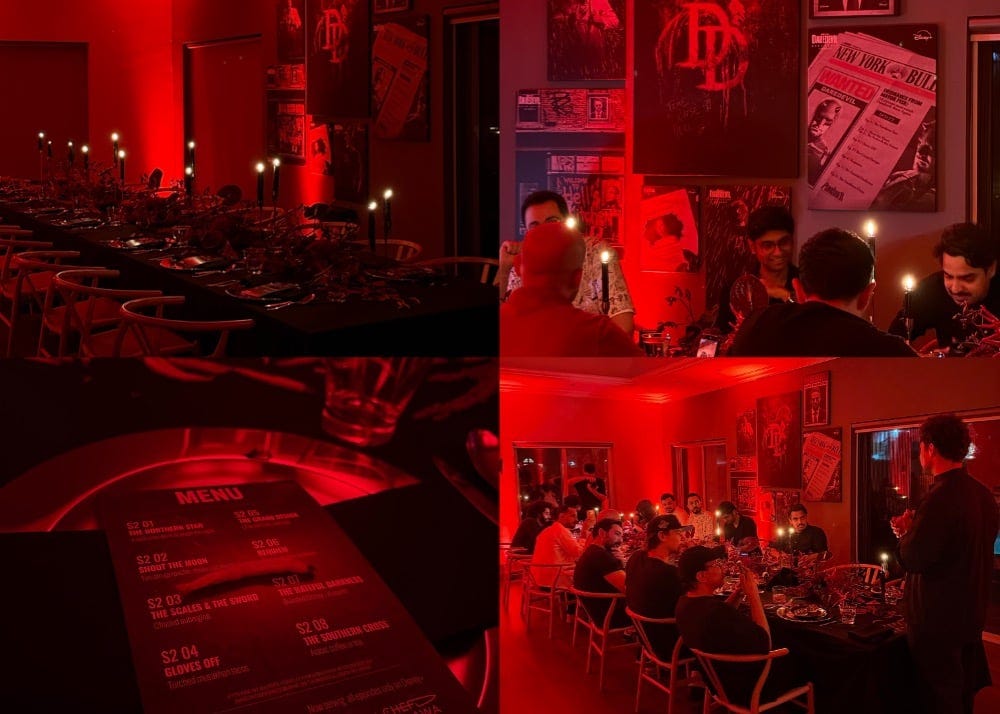
Then there’s the Dubai supper club, which included a partnership with Chef Halawa to create an eight-course dinner experience themed entirely around the show, with each dish representing an episode of Season 2. “We weren’t thinking about a traditional launch campaign. We wanted to create something that made fans feel immersed in the world of the series itself,” the Disney+ Director for MENA explained. An eight-course meal, a small exclusive audience, an enormous earned media yield. For a show built on atmosphere and texture, a multi-sensory dinner is an unusually precise piece of experiential marketing | side note: this is the first time I’ve seen examples reach the Middle East and aim to properly localise, it’s very cool as an international example and I’m glad to see it!
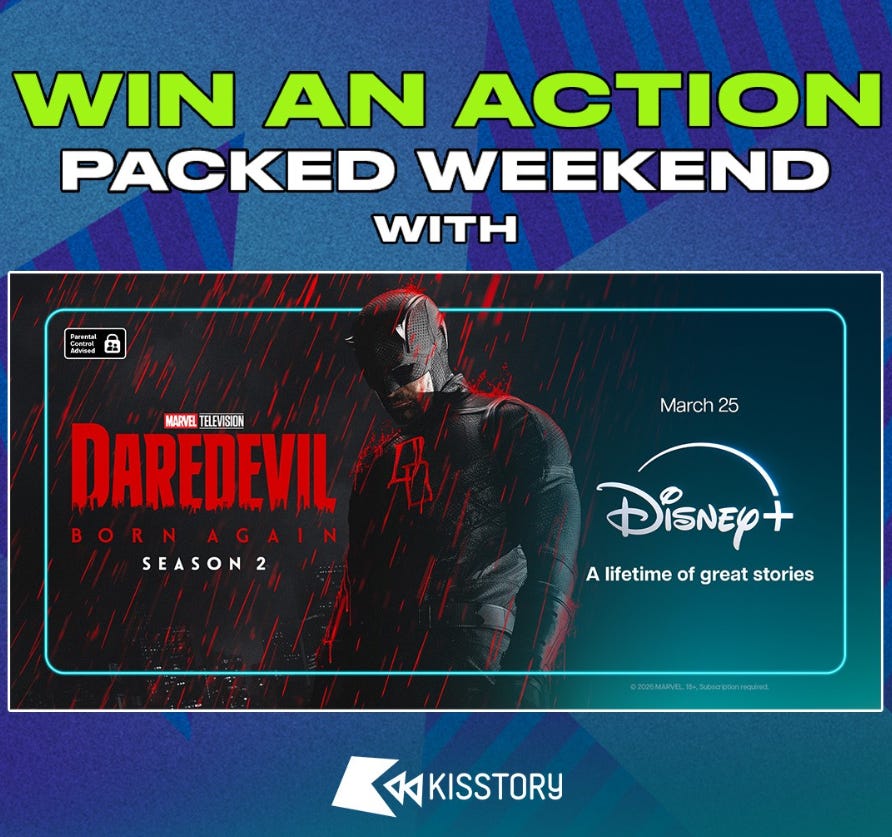
Radio also made it onto the plan in ways I don’t usually get to document; I spotted a Kisstory competition tied to Born Again, which is interesting targeting. Kisstory skews 18-35 and reaches an audience who grew up in the era of the Netflix show. That’s exactly who you’re trying to remind; pair this with other radio stations across the various networks and you’re likely covering multiple bases for broader awareness.
Social Content & The “Always-On” Layer
The social strategy around Season 2 deserves its own section, because it’s where the weekly rhythm found its most creative expression.
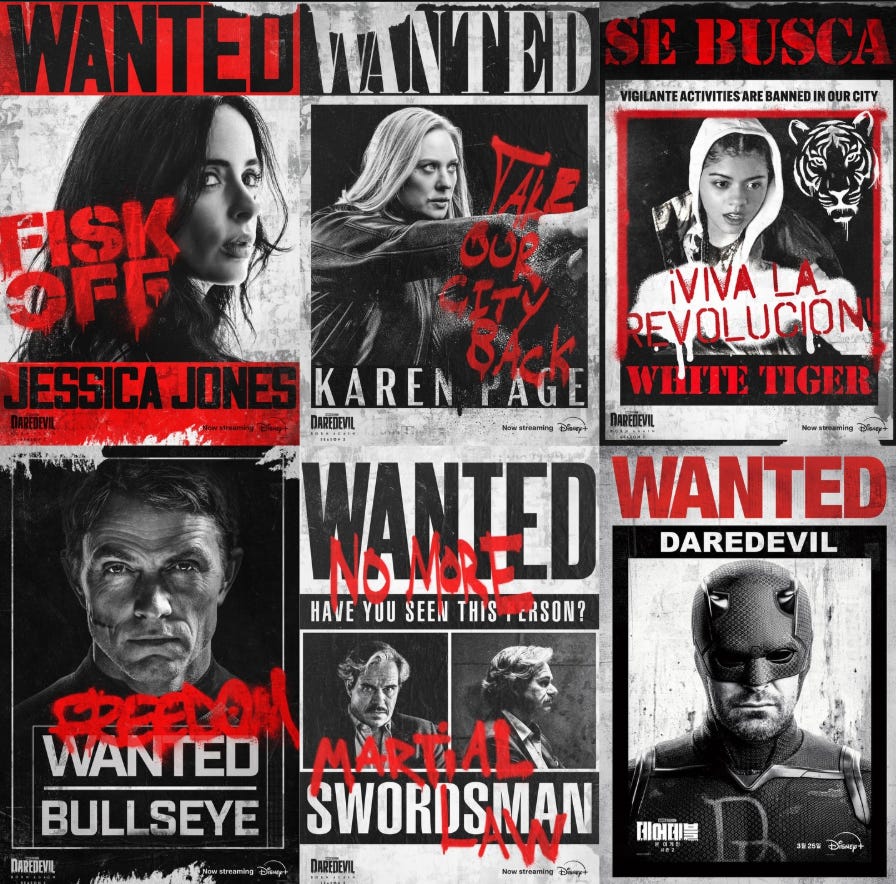
The New York subway guerrilla campaign is probably the single best execution in the whole campaign. Missing and Wanted posters for Matt Murdock and the Devil of Hell’s Kitchen started appearing in NYC subway stations ahead of the premiere. IGN picked it up, but UGC did the real work.


A post captioned “This might be Marvel’s best poster ever” in collaboration with Outfront Media USA accumulated over 250,000 likes. The official Daredevil Instagram account then leaned into it natively: “Guys I’m screwed I think that’s my f***cking lawyer” as overlaid text on a video of the posters. That post alone hit 384,000 likes. The lesson there is almost embarrassingly simple: audiences love content that feels like it belongs in the real world. The erasure of the line between fiction and environment is inherently shareable.
Again, more lowkey missing posters, but this time the video focuses on a small missing poster of Matt Murdock being covered up by another wanted poster of Daredevil by a person in a blue hoodie who leaves the scene quickly; alone this post has over 278k likes. Again, Marvel Studios eating up engagement for very low effort IRL guerrilla style tactics/media.
But that’s not all because again there’s another post from the official DD Insta that captures those posters, alongside in-universe news content through the lens of the ‘bbreport’ Instagram account before finally showing us more DD content; 142k likes, again massive reach and engagement.
Finally there was also a wonderful ongoing thread through the social campaign where Wanted posters for different characters - including the Swordsman - appeared timed to those characters’ episode appearances. That’s exactly the kind of always-on tactical thinking a weekly release schedule demands: character-specific social moments that reward people who are keeping up, and intrigue people who aren’t.
The Paradise x Daredevil cross-promo from the Disney+/Hulu ecosystem was also smart. Paradise (a Hulu series) ran an Instagram post directing people to tune into “Paradise Radio 196.4” for an exclusive audio, then promoted Daredevil’s Season 2 start date in the same caption. Cross-promo between streaming siblings is an underused tactic, and the radio station mechanic gave it a slightly playful, narrative feel that didn’t just read as a generic reshare.
Then there’s this “Daredevil Tuesdays” UGC moment. A fan-made video of someone doing their weekly viewing ritual, surrounded by DD-branded KCBC IPA cans, Coca-Cola Daredevil cans, cupcakes with Daredevil toppers, the black DD mask, and what appeared to be a fan-made Daredevil LEGO Brickheadz (which I respect enormously).
17,000 likes; numerically modest (that’s a cool phrase), but the idea it represents is big: “Are you free Tuesday night? Absolutely not.” That’s a ritual. That’s fandom performing itself. And it’s exactly the kind of content studios should be actively seeding and encouraging, because the cost-to-cultural-impact ratio is extraordinary.
The Interesting Stuff: Partnerships & Collaborations
Marvel Rivals is an example I love coming back to, because it constantly updates with new season. In fact season 7 of the game - The Hunt Is On, running from March to May 2026 - built the “Martial Law” storyline directly around Mayor Fisk declaring martial law in New York City. Meaning the in-game narrative aligned almost perfectly with the Season 2 storyline; to think only 3 seasons before, Daredevil became a playable character.
The Born Again skin for Daredevil dropped alongside the season. An influencer named Itsliuh went further and taught both Charlie Cox and Vincent D’Onofrio to play Rivals whilst she interviewed them. The result was a genuinely funny, personality-forward piece of content that landed authentically in a gaming space without feeling like a brand activation.
I’ll keep on making these comparisons because interactive entertainment isn’t an afterthought anymore, it’s one of the most important audience touchpoints right now; think about the Superman/Fortnite partnership from last summer. If you don’t know it, you can save it for later:
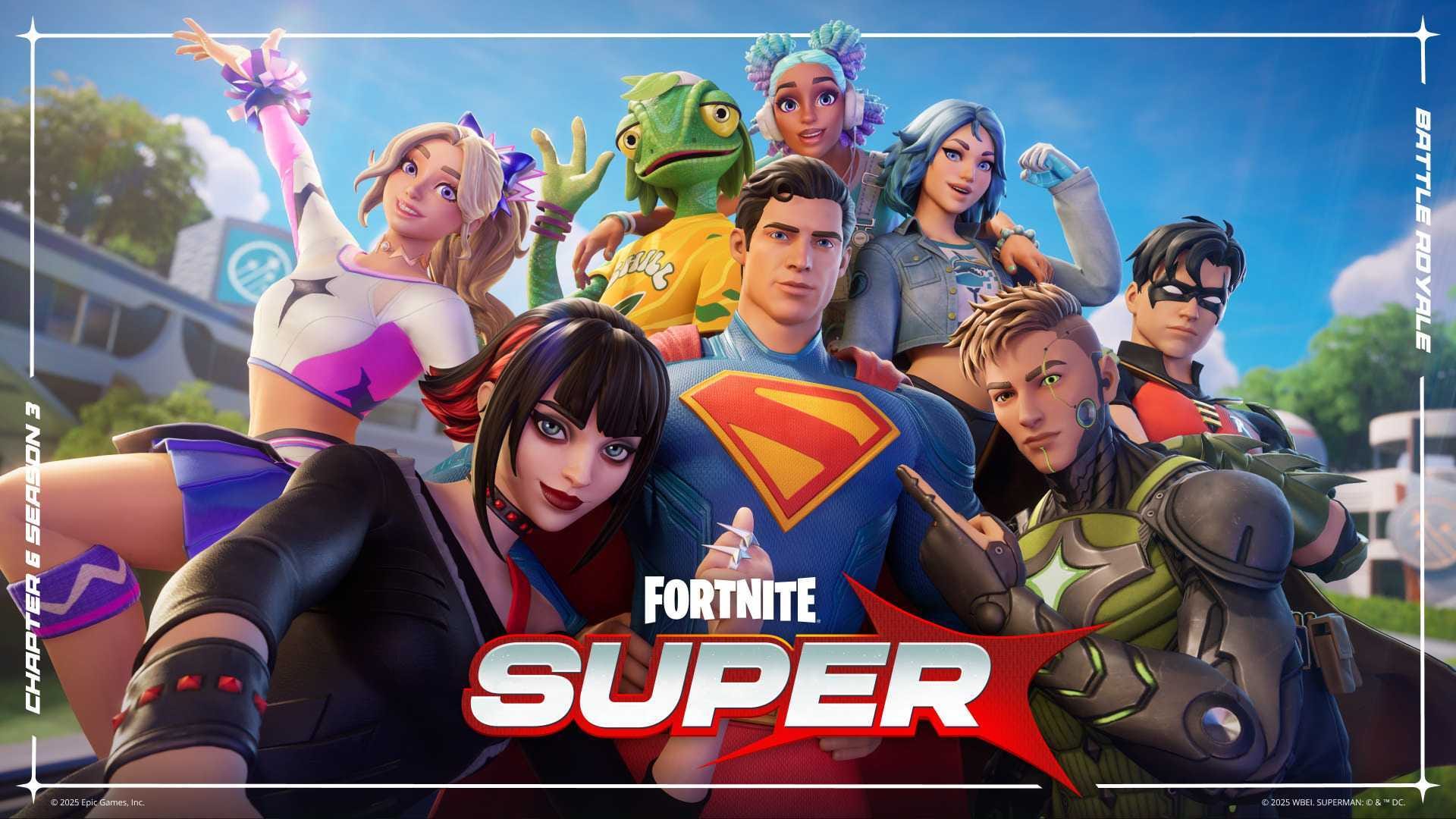
Now, think about 18-35 males who are very much the core Daredevil demographic. Getting inside Marvel Rivals puts you in a game with a huge active community, at no apparent cost to narrative coherence.
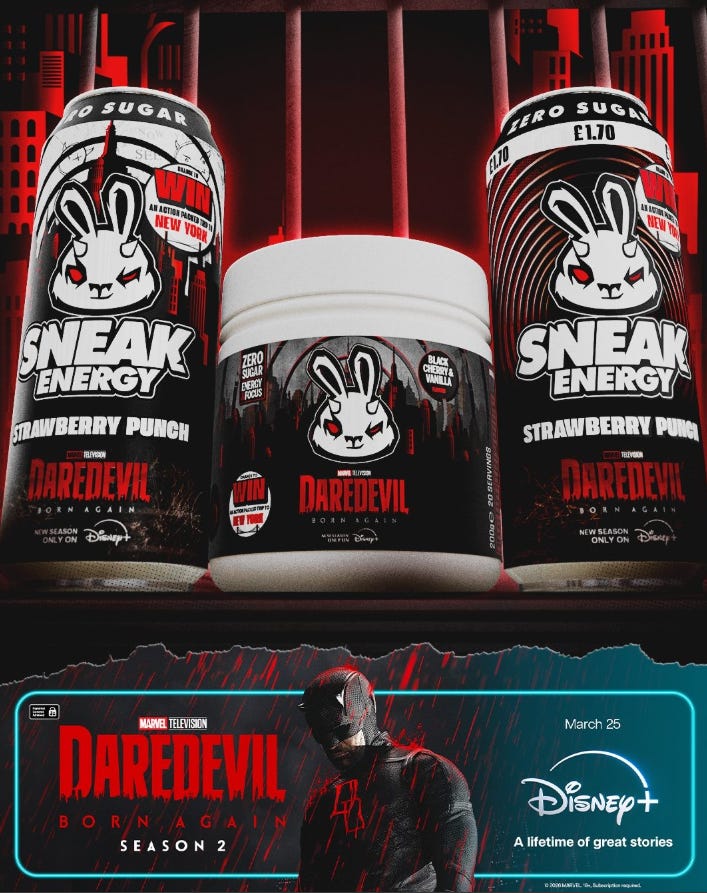
The Sneak Energy collab is another one worth noting. The brand’s aesthetic - rabbit and horns logo, gaming and gym cultural positioning - maps well onto the Daredevil audience: young, action-oriented, digitally native. It’s a smart adjacency play, reaching the gym-and-gaming overlap audience that Season 1’s UFC alignment had already started to cultivate.
The Blaze Pizza activation is arguably the most ambitious transmedia layer in the whole campaign. Disney and Marvel partnered with Blaze to create a “Sweet Heat” specialty pizza, a blood orange lemonade called the “Dare to Try” deal, and - this is the part that genuinely blew me away - a limited-edition prequel comic distributed exclusively at Blaze locations with the purchase of the pizza.
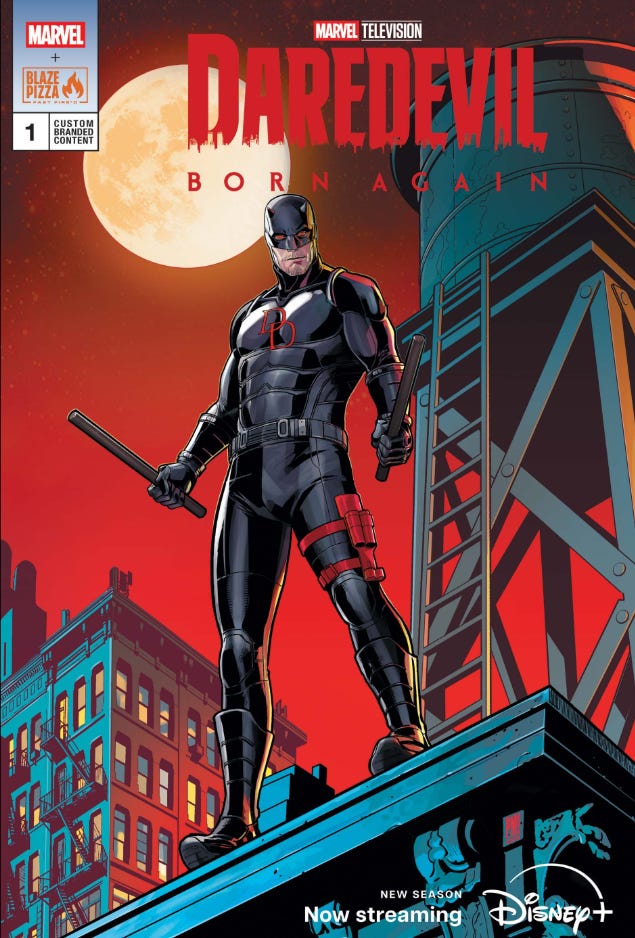
The comic told a story set during the Kingpin’s hunt for Matt Murdock, which directly connects to the Season 2 narrative. It was collectible, it was narratively meaningful, it was physically scarce. Only 25 copies in some locations. You can actually read the full thing online now via Marvel’s reading platform, but it’s the original physical item that’ll have collectible value. That’s transmedia working exactly as it should: a restaurant partnership extends into a story extension which extends into audience engagement which drives social currency. The chain is real and it’s deliberate.
The Kingpin Sideshow Collectible is a similar principle at the collector end of the spectrum: partner brands selling licensed IP to align with a cultural moment, reaching a different audience segment (serious collectors) while reinforcing the franchise’s premium positioning.
The Charlie Cox / Discussing Film discussion about Frank Miller and David Mazzucchelli’s original “Born Again” arc - published as a social video with the caption “Charlie Cox reflects on the Born Again comic arc that inspired the show” - is another example of the campaign meeting fans exactly where their interest already lives. Comics fans care about the source material. Giving them a thoughtful conversation with the lead actor about that source material is not just good PR, it’s audience respect.


Toronto Comic Con had a Daredevil pop-up with screen-worn props, including Wilson Fisk’s desk. I’ve been to the equivalent Batman exhibition in London and I remember the feeling of standing next to an actual costume from the various films I love; it’s one of those rare moments where the fictional world briefly becomes physically present. That sensory experience generates social content almost automatically, because people instinctively want to document and share it.
And honestly, the social output from this campaign as a whole deserves a nod before we move on. Beyond the set-piece moments I’ve already broken down, the always-on layer just kept delivering week after week. There’s a Kingpin character poster that hit 387k+ likes on its own. A black-and-white organic video asset using glitchy red effects and comic-style scribbles to tease the Devil’s return - genuinely one of the cooler pieces of streaming promo creative I’ve seen, and it clearly became a visual language the campaign kept coming back to, because a later “Give Them Hell” graphic using the exact same black, white, red, and chaos-scribble aesthetic pulled 329,000 likes. That consistency of tone across assets is harder to achieve than it looks.
Beyond that: fan review overlays used as social proof carousels, Tanner’s Kitchen cooking a Hell’s Kitchen-inspired pizza as a paid partnership, Charlie Cox casually sitting in his armchair before putting on the fan-made DD helmet to watch the show - low effort, totally charming - and of course going back to those Wanted posters that rolled out week-by-week; White Tiger’s one particularly caught my eye because she made her MCU debut in this show, and handing her a Wanted poster - also translated into Spanish - is a quiet but smart way to give her cultural moment some weight before audiences even meet her properly. D’Onofrio was also filmed scrawling on a Matt Murdock missing poster, which probably took five minutes to put together and is exactly the kind of thing that earns more goodwill than a produced asset twice the budget.
The point is: the campaign wasn’t a spike. It was a system. And that’s what always-on actually looks like in practice.
The Extended Universe: Defenders, Punisher, and What Comes Next
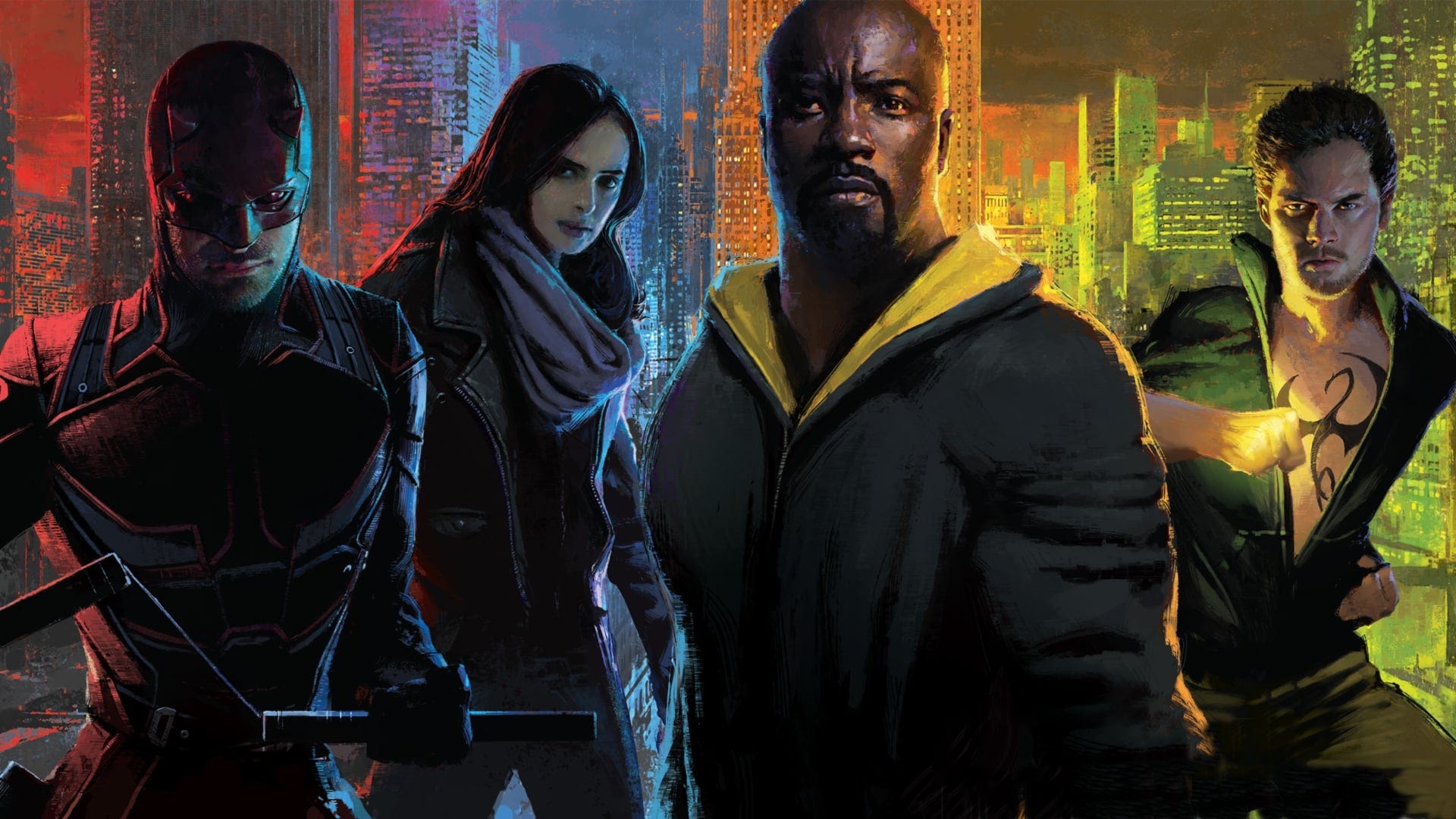
The band are back as an element of Season 2 is worth briefly flagging. Krysten Ritter’s appearance in the Season 2 TV spot was a deliberate signal; Marvel Television is reintegrating the Defenders-era characters into the main MCU continuity, carefully and on their own terms. Whether that means we see more Jessica Jones, Luke Cage, or Iron Fist material down the line is an open question, but the enthusiasm in the comments every time one of them appears tells you everything about the residual audience loyalty these characters carry.
But the real news, the one that changes everything, is Frank Castle.
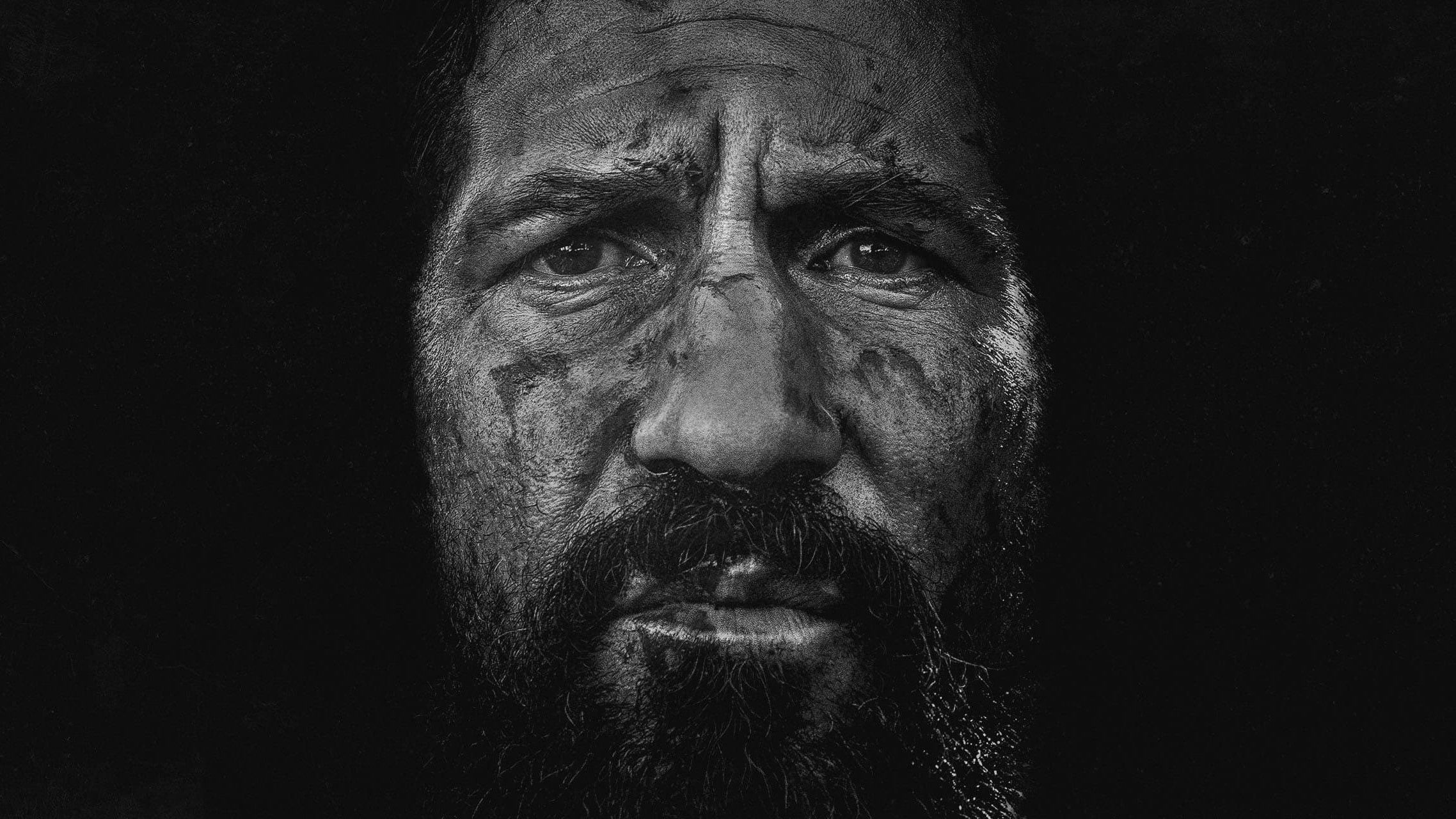
The Punisher: One Last Kill dropped as a Marvel Television Special Presentation on May 12th on Disney+. The reaction when Marvel announced it was remarkable: 1.1 million+ likes on the Instagram announcement post and 37,000 reshares. The official trailer hit 1.4 million+ likes. These are not modest numbers for a TV special. These are film-sized engagement figures.
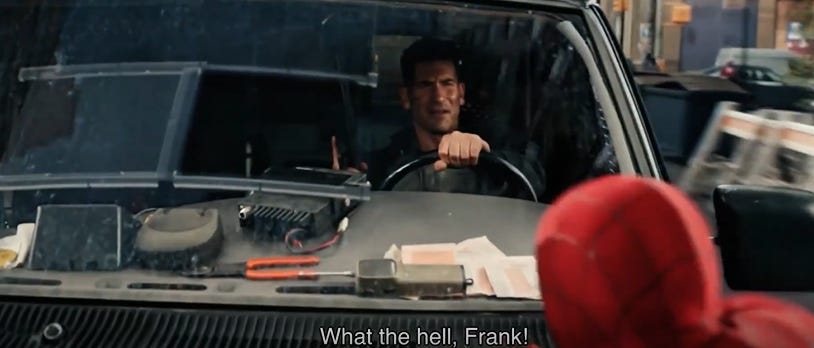
What makes this genuinely interesting from a transmedia and MCU architecture perspective is what the special is apparently doing narratively. It’s not a standalone side story because it’s being positioned as a direct prequel to Spider-Man: Brand New Day. The Punisher in the MCU is not optional homework for the next Spider-Man film; he’s become required context so to speak. It appears as though Marvel are attempting something WandaVision only gestured towards, but never quite pulled off: genuine back-to-back narrative continuity between a streaming special and a theatrical release.
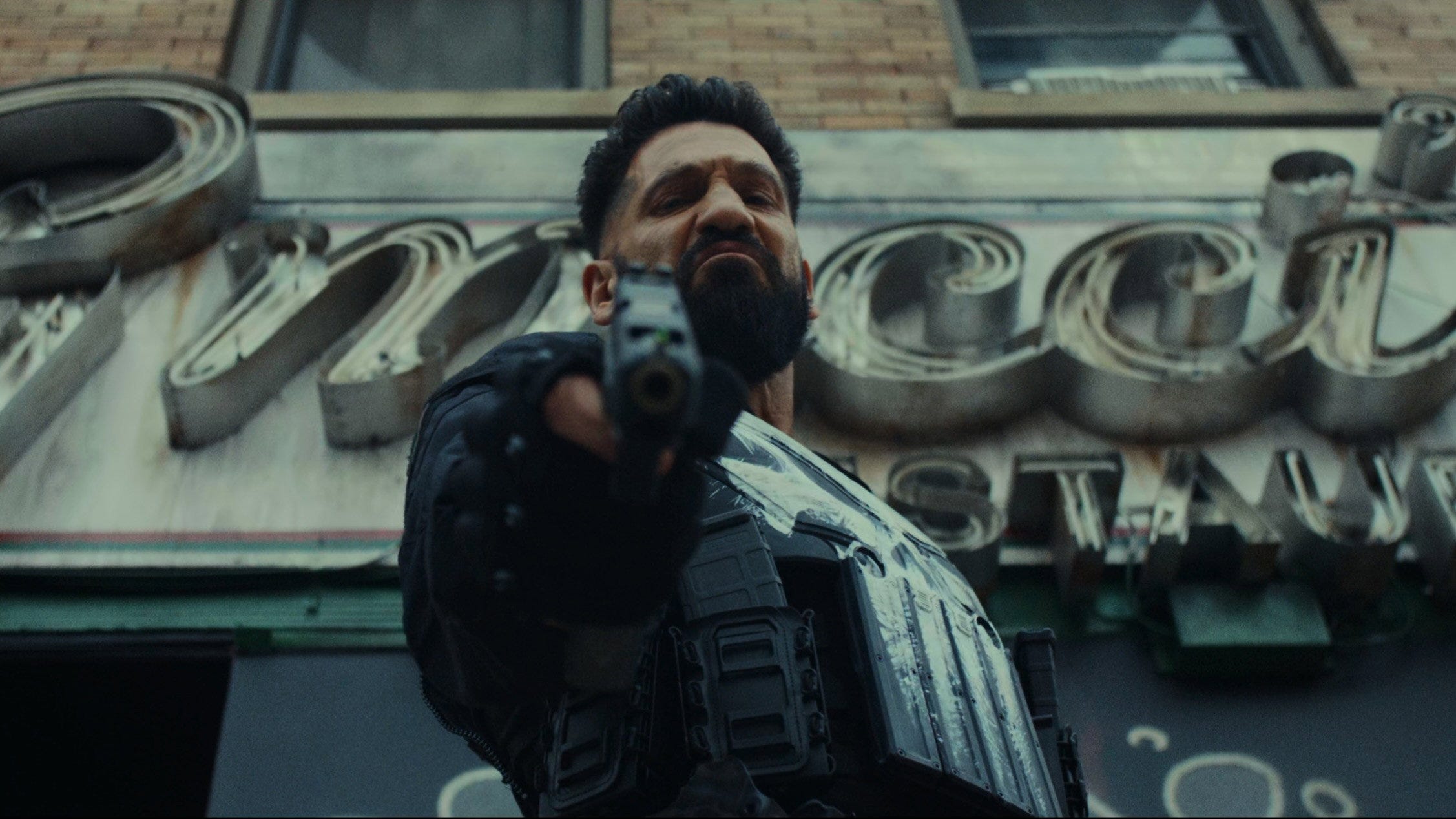
Deadpool & Wolverine opened the door to mature tones in the MCU. Born Again walked through it. The Punisher Special smashed it off its hinges. Testing whether audiences will follow a TV-MA-adjacent character from Disney+ into a PG-13 theatrical environment is one of the more interesting experiments Marvel has run in years.
Transmedia and the MCU: What Daredevil Actually Represents
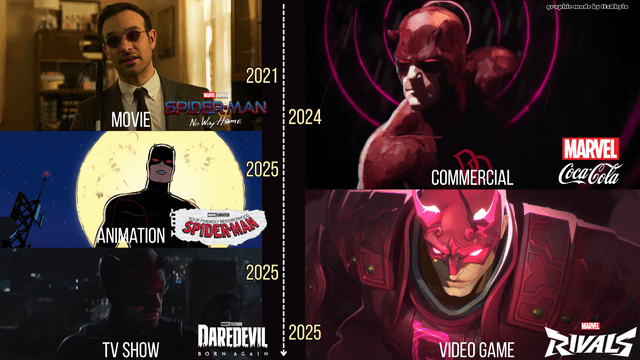
Here’s the thing about the Daredevil campaign that I keep returning to: it’s not a traditional “promote the show” campaign. It’s an IP stewardship campaign. Every touchpoint - the UFC alignment, the street posters, the Blaze comic, the Rivals skin, the supper club in Dubai - is doing something more than driving Disney+ subscriptions. It’s maintaining and extending the cultural presence of a character and a world that has existed across Netflix, a failed 2003 film, six decades of comics, and now the MCU canon.
The “Born Again” title is borrowed cultural equity. The TV-MA rating is a heritage preservation tool. The Missing posters in New York subway stations are a piece of in-universe storytelling that treats the audience as participants rather than consumers.
One observation I can’t stop thinking about is the comment on the trailer spoiler problem. You see, a user online noted that nearly every key visual from Season 2 could be reconstructed from the trailers. With theatrical films I learned this lesson personally via Spider-Man: No Way Home, which is why I now aim to watch one teaser and then nothing. But with a weekly series the logic inverts somewhat because you need episodic teasers each week to sustain momentum, which means you risk over-exposure. It’s a structural tension that doesn’t have an easy answer.
What Daredevil has demonstrated, though - across both Netflix seasons and both Disney+ seasons now - is that you can build a show universe that people actively live inside between episodes, not just watch. The comics. The collectibles. The fan rituals. The game skins. That is what makes the difference between a show people enjoy and a show people belong to.
The Spider-Man Segue (And Why You Should Stay Tuned)
The Punisher going straight into Spider-Man: Brand New Day isn’t just a fun narrative development, it’s a sign of how the MCU is maturing with its transmedia storytelling architecture. The television arm is no longer optional context for the films. It’s load-bearing structure.
Matt Murdock turned up in No Way Home and the internet lost its mind. Frank Castle is about to do the same thing, but with the addition of a Disney+ special that functions as his on-ramp, plus the indication he will be appearing via his prominence in the trailers. The question of how Marvel markets Spider-Man: Brand New Day - and how they balance the show-to-film continuity for audiences who may not have watched Born Again - is going to be fascinating.
And that, conveniently, is exactly what I’ll be digging into later this year!
So, If you want that breakdown when it lands, you know what to do:
In the mean time, you’ll be able to enjoy upcoming marketing breakdown pieces for titles like Project Hail Mary, Peaky Blinders: The Immortal Man, Mortal Kombat 2, The Devil Wears Prada 2, and The Mandalorian and Grogu!
If that sounds like something you’d be interested in, please do subscribe and share this with someone else who’d also care, or just come and say something in the comments; I genuinely read them all.
Until then, the Man Without Fear is back on his feet. And things are only getting more interesting from here.