

Scream 7
A legacy horror franchise navigating the algorithm era

Few horror franchises have managed to survive - let alone thrive - across three decades.
Yet somehow, Scream continues to do exactly that.

Nearly thirty years after the original film introduced audiences to Ghostface and redefined the slasher genre, the seventh instalment arrives in a very different media landscape; one dominated by social algorithms, influencer culture, and constant digital conversation.
Early projections suggested a $59–64 million domestic opening weekend, potentially making it the second-largest opening in the franchise’s history.
Those projections quickly translated into real momentum at the box office. Within just fifteen days of release, Scream 7 crossed $100.7 million domestically in North America, becoming the first film of 2026 to hit the three-figure mark at the North American box office. The milestone also places the film on track to become the second-highest-grossing entry in the entire Scream franchise domestically.
For a slasher series that began in 1996, that level of sustained commercial performance is remarkable.
It reinforces something Hollywood has increasingly come to understand about horror: the genre remains one of the most consistent theatrical performers, particularly when supported by recognisable IP and strong audience curiosity.
But it does raise a fascinating question…
How does a 30-year-old horror franchise market itself in an era where attention is fragmented across dozens of platforms and content formats?
The marketing campaign for Scream 7 offers an unusually rich case study; not just because of its promotional tactics, but because of the production drama, cultural context, and franchise legacy surrounding the film itself.
Performance, reception & the franchise’s continued resilience
Despite mixed audience reactions, Scream 7 reinforces a trend that has become increasingly clear in recent years: mainstream horror remains one of the most reliable genres in theatrical cinema.
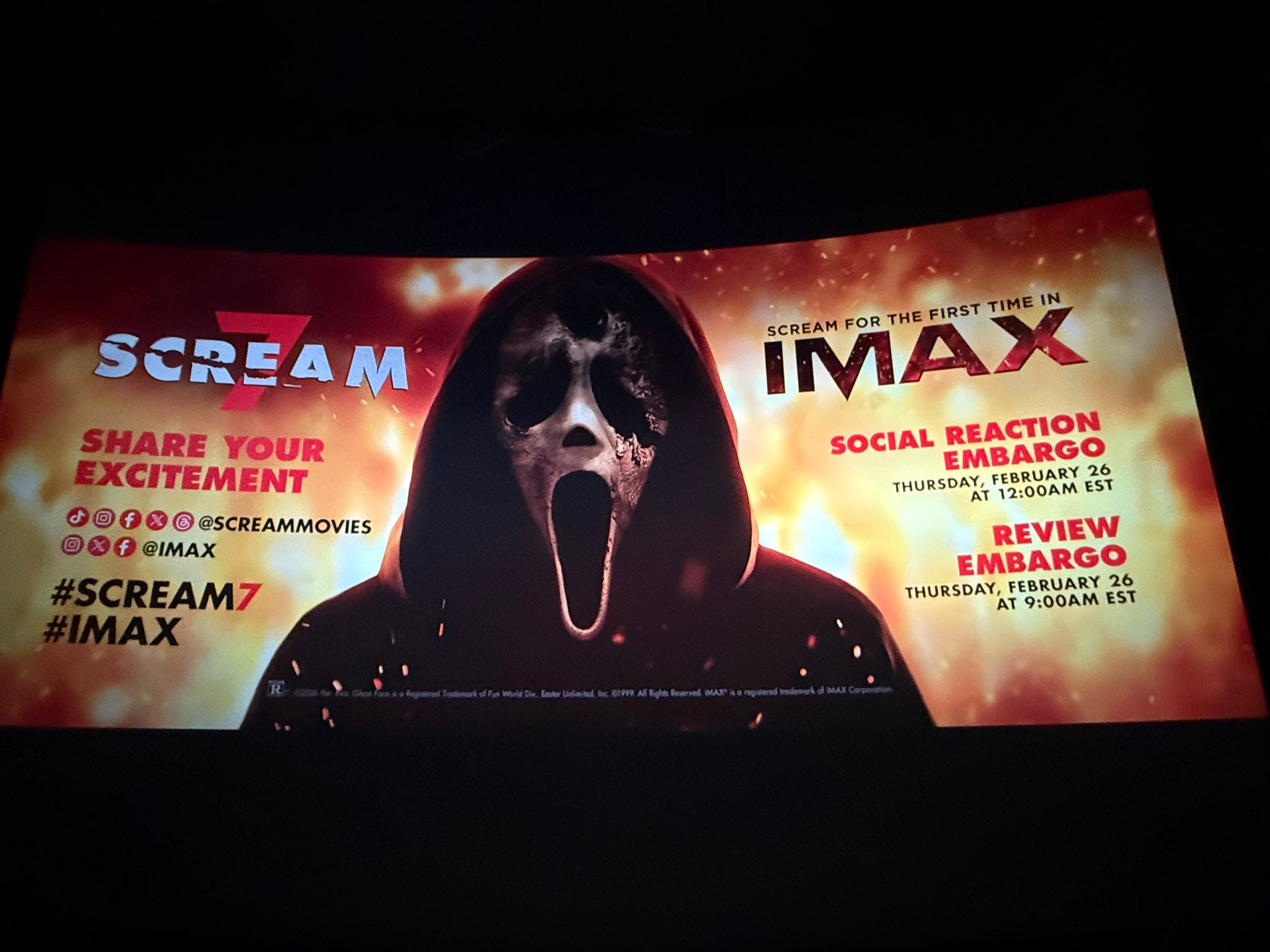
Industry reporting suggests that shifting the film’s release date allowed the studio to secure IMAX screenings, giving the film an additional premium format boost that helped drive box office projections upward.
Paramount’s marketing chief Josh Goldstine also highlighted another important thematic pillar of the campaign; the mother-daughter dynamic at the centre of the story.
The film places Sidney Prescott - once again portrayed by Neve Campbell - at the centre of the narrative alongside her daughter, creating a generational storyline that ties the franchise’s past to its future.
From a marketing perspective, this framing makes sense.
Family relationships tend to translate well across international markets and provide emotional accessibility even for viewers who may not have followed every entry in the franchise.
Still, early audience reception has been divided.
The film currently sits around 2.3 on Letterboxd and roughly 73% on Rotten Tomatoes’ audience score, suggesting a split between viewers who enjoy the franchise’s continued existence and those who feel the storytelling has struggled to maintain the momentum of more recent instalments.
Much of the online discourse has focused heavily on the film’s ending and narrative direction, with some viewers feeling the story became overly convoluted or underwhelming.
That reaction becomes even more interesting when placed alongside the real-world drama surrounding the production.
Behind-the-scenes controversy and its marketing ripple effects
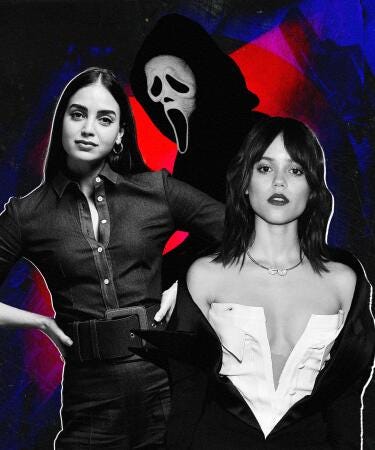
Few modern horror films have experienced the level of production turbulence that surrounded Scream 7.
The departures of Melissa Barrera and Jenna Ortega - alongside the exit of the film’s directors - forced the project into a substantial creative reset midway through development.
Barrera’s dismissal following social media posts about the Israel–Hamas conflict quickly became a major talking point online, while Ortega’s subsequent departure soon after added to the sense that the production had entered a period of instability.
From a marketing and audience perception standpoint, moments like this often become part of the wider narrative surrounding a film. Conversations about the cast changes and production direction circulated across social media and entertainment press long before audiences saw a trailer or stepped into a cinema.
Rather than simply existing as behind-the-scenes industry news, the situation effectively became part of the broader discourse around the film itself.
The practical result was that the project had to reorient its narrative direction, ultimately shifting focus back toward legacy characters and placing Sidney Prescott back at the centre of the story.
That shift is also visible in the marketing. The campaign leans heavily into legacy imagery, nostalgia, and the recognisable iconography of the franchise, anchoring the film around Sidney’s return and the continued presence of Ghostface rather than positioning the film as a direct continuation of the newer character arcs introduced in the previous instalments.
In many ways, this repositioning mirrors a broader strategy used across legacy franchises: when uncertainty surrounds a project, studios often return to the most recognisable and trusted elements of the property.
Campaign strategy: iconography, spectacle and social media visibility
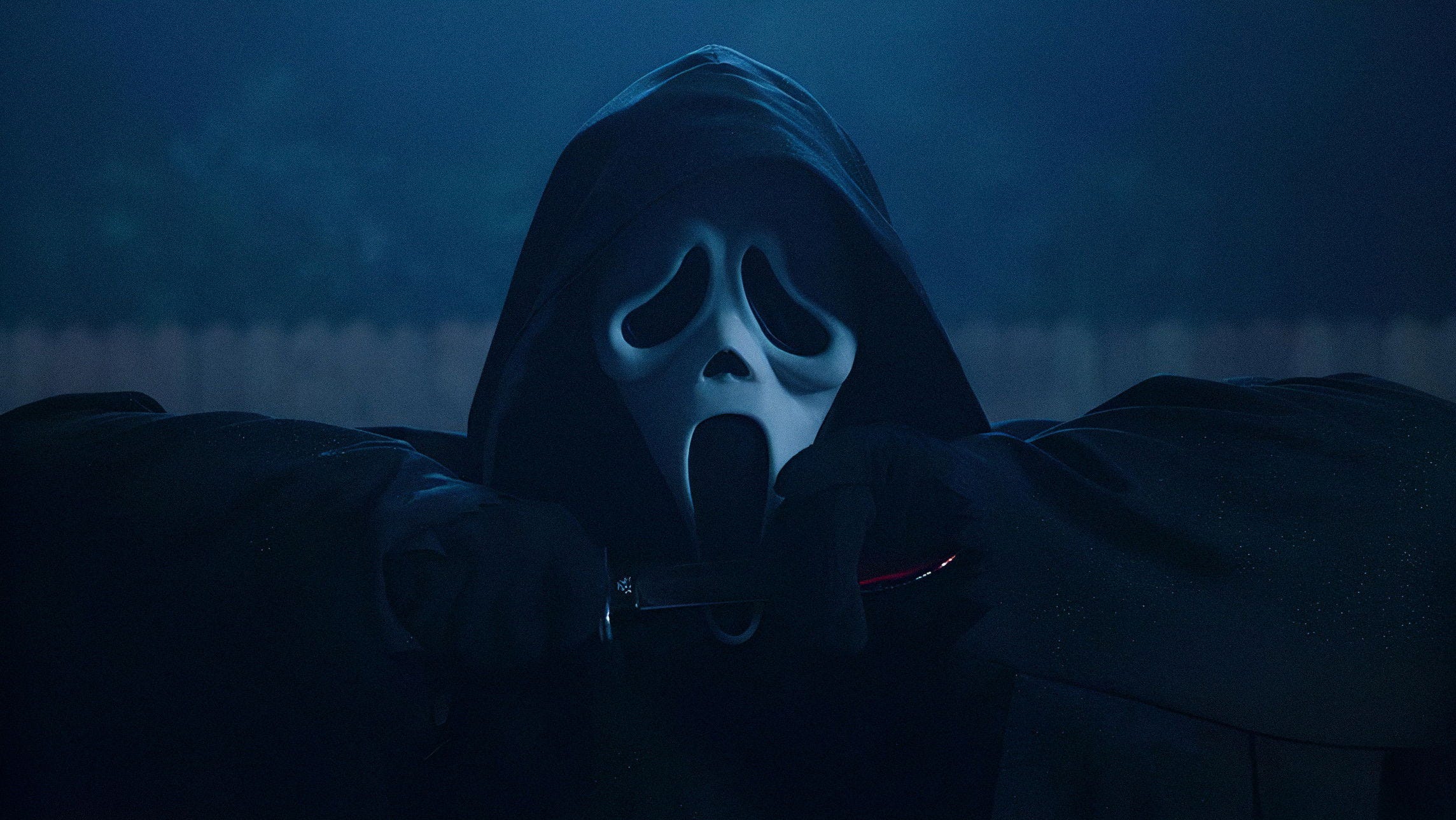
If there is one constant across the entire franchise, it is the cultural power of the Ghostface mask.
Paramount’s campaign leaned heavily into that iconography through a combination of large-scale visual stunts, experiential marketing and social-media-friendly spectacle.
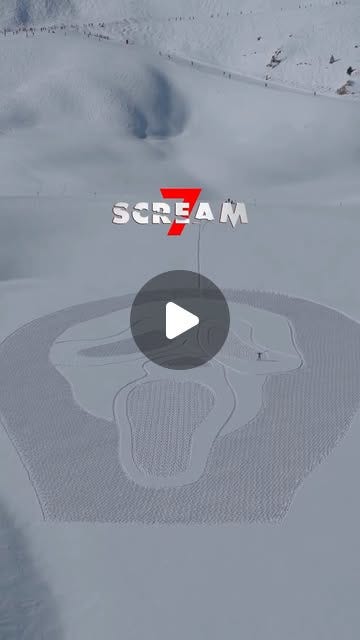
One of the most striking activations came from artist Simon Beck, who created a massive Ghostface design carved directly into the snow at the Les Arcs ski resort.
The installation functioned as both a traditional publicity stunt and a social media spectacle; the kind of visually striking image that spreads rapidly across platforms.
Unsurprisingly for a franchise that has always played with technology - phone calls, anonymous identities, and media commentary - a significant portion of the Scream 7 campaign lived on social media; as with most film campaigns.
This is where the franchise can experiment most freely, and while much of the output followed modern blockbuster playbooks, there were still a few interesting executions worth highlighting.
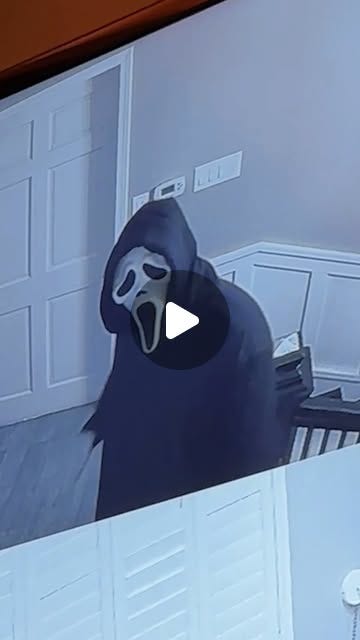
One of the more visible activations was “The Scream House”, a TikTok-focused creator experience built around Sidney Prescott’s house.
Rather than opening the experience to the general public, Paramount partnered with TikTok’s creator ecosystem and invited a group of influencers to explore the house while filming content for their audiences.
The activation functioned like a hybrid between a scare maze and an immersive film set.
Creators could explore rooms filled with props from across the franchise’s history - effectively turning the house into a miniature museum celebrating Scream’s legacy - before receiving a personalised Ghostface phone call prompting them to investigate the top floor.
Once there, the narrative escalated into a staged horror scenario: a hostage tied to a chair attempting to escape before being murdered by Ghostface, forcing the creators to flee through a maze-like route while the killer stalked them.
After escaping, the experience transitioned into a creator house-party environment with a DJ, food and drinks; essentially transforming the activation into a content-generation hub.
From a marketing perspective, this type of event is designed almost entirely for UGC amplification. The real goal isn’t the experience itself but the dozens of TikTok videos and social clips produced by attendees.
That said, there’s a small frustration here.
The concept is genuinely strong, but it’s a shame the experience appears to have been limited to creators rather than opening to fans as well. Horror escape rooms and scare experiences are hugely popular online precisely because viewers enjoy watching other people panic and react.
A similar activation designed as a ticketed horror attraction or escape room experience could potentially have created a larger cultural footprint by allowing fans themselves to step into the story world; major horror Intellectual Properties (IPs) such as IT, Saw, Blair Witch, and The Conjuring have all partnered with an existing horror attraction previously, so it’s not far fetched!
Imagine a Scream-themed escape room where participants sign media waivers beforehand, allowing the brand to capture and publish reaction footage. The format is already proven across social media - people love watching genuine fear responses - and the content would feel far more organic than influencer-only events.
If streamers were invited to take part, it could easily turn into a “you had to be there” moment online.
One can’t help but imagine what would happen if a branded Scream horror house captured the kind of attention something like IShowSpeed’s SCARIEST haunted house in America stream achieved; a single video like that can reach tens of millions of viewers.
Even a fraction of that attention would be a significant marketing win.
Social-First Creative Assets
Outside of experiential activations, the campaign also produced a range of bespoke social media content designed to tap into existing trends.
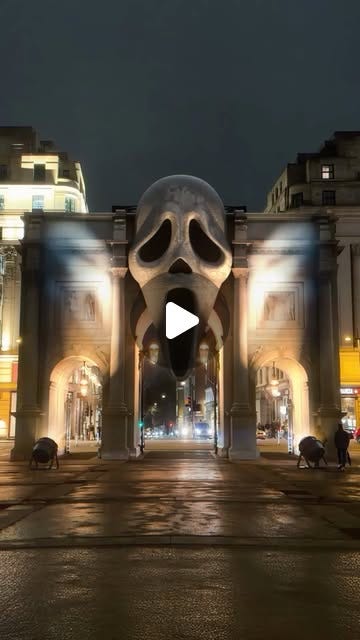
For example, one piece of content digitally placed Ghostface on London’s Marble Arch; also used in paid advertising too as boosted content.
In reality, physically branding a landmark like that would be extremely expensive. Instead, the campaign created a faux-OOH video where Ghostface appeared towering over the monument, a technique that has become increasingly common across blockbuster social marketing.
Films like Superman used similar tactics; digitally inserting characters into iconic locations purely for shareable online content:

Other creative leaned into engagement-driven formats.
One post encouraged users to “swipe to the beat,” turning the trailer footage into a rhythmic social interaction that encouraged longer dwell time. These kinds of gimmicks don’t necessarily add narrative depth, but they do increase engagement metrics and watch duration, which is often the real objective.
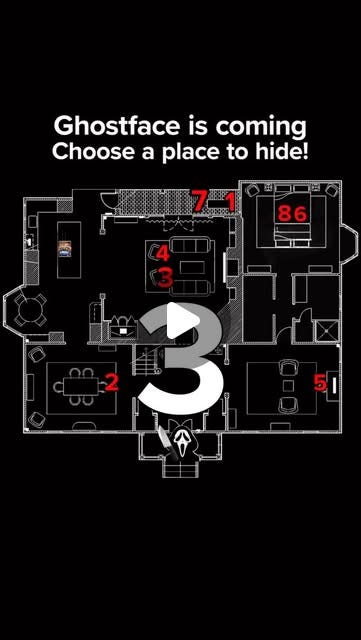
Another activation asked viewers to choose a hiding place within three seconds before Ghostface entered a house and hunted down the victims. The caption then directed users to continue playing the game on Discord or Reddit, effectively turning a short piece of social content into a funnel for a larger interactive experience; more on this shortly…
The post performed particularly well, drawing significantly more engagement than many of the campaign’s other assets.
Other posts experimented with lighter concepts:
IMAX employees attempting to outrun Ghostface in a playful “challenge” format
POV videos placing the viewer alone in a threatening scenario
None of these ideas are revolutionary, but collectively they reinforce the brand’s tone: playful, meta, and self-aware.
Ghostface Appearing in the Real World
Another consistent theme throughout the campaign was simply placing Ghostface in unexpected real-world environments.
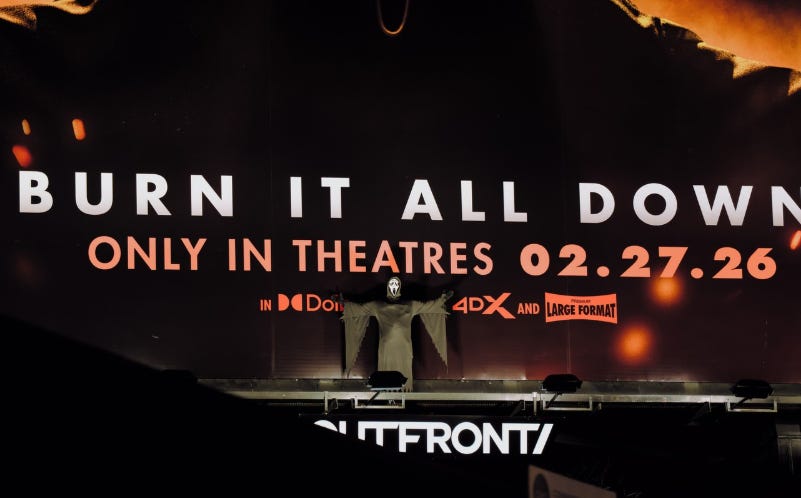
Social videos showed the character appearing:
These kinds of executions work because the character design is so instantly recognisable. Ghostface doesn’t need elaborate staging; just seeing the mask appear somewhere it shouldn’t is enough to capture attention.
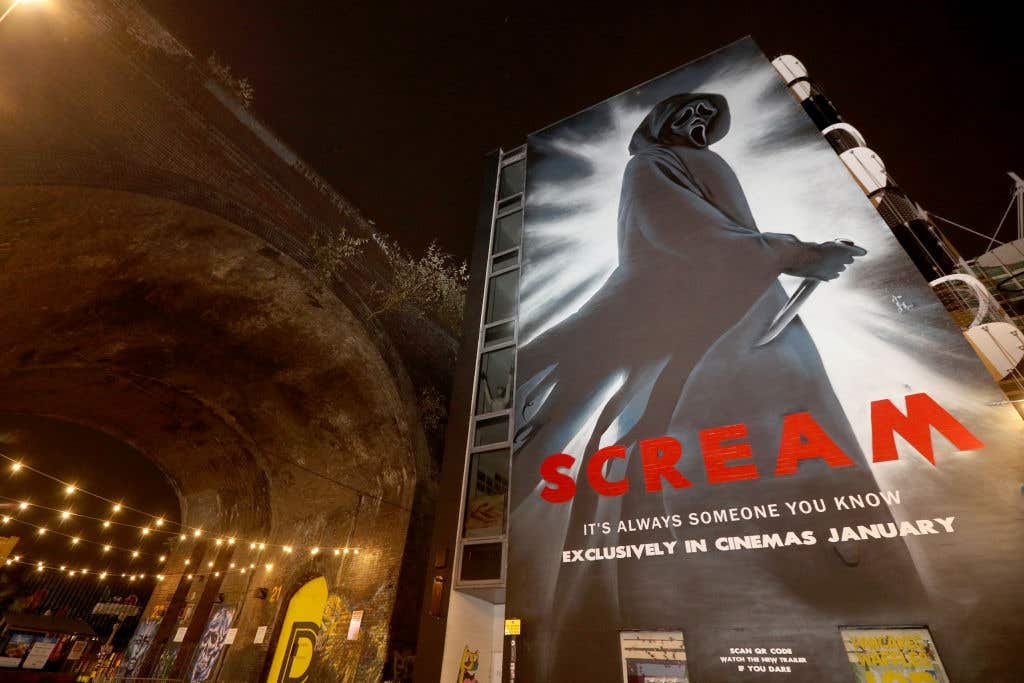
The campaign also featured a large Ghostface mural in Birmingham, located outside the Custard Factory. For me personally that one stood out; it’s literally right outside the windows of the office I used to work in, which made it feel oddly surreal seeing it pop up in the campaign.
It’s a good reminder that sometimes physical marketing still has a powerful impact, even in a digital-first world.
Music, Fashion & Cultural Collaborations
Beyond social media, the campaign also extended into music and fashion culture; an increasingly common tactic for horror franchises trying to stay relevant with younger audiences.
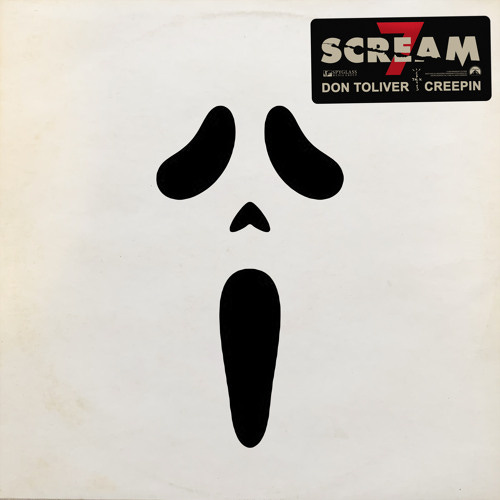
The most prominent example came through a collaboration with Don Toliver, who released an original track titled Creepin as part of the film’s soundtrack.
Produced by Don Toliver alongside BNYX® and 206DEREK, the song leans into dark, atmospheric hip-hop production designed to mirror the suspenseful tone of the franchise.
Music collaborations like this are rarely about chart performance alone.
They function as cultural touchpoints, introducing the film to audiences who may encounter the track on streaming platforms before they ever see a trailer; the Don had recently also released his latest album so the timing on this for awareness is pretty good.
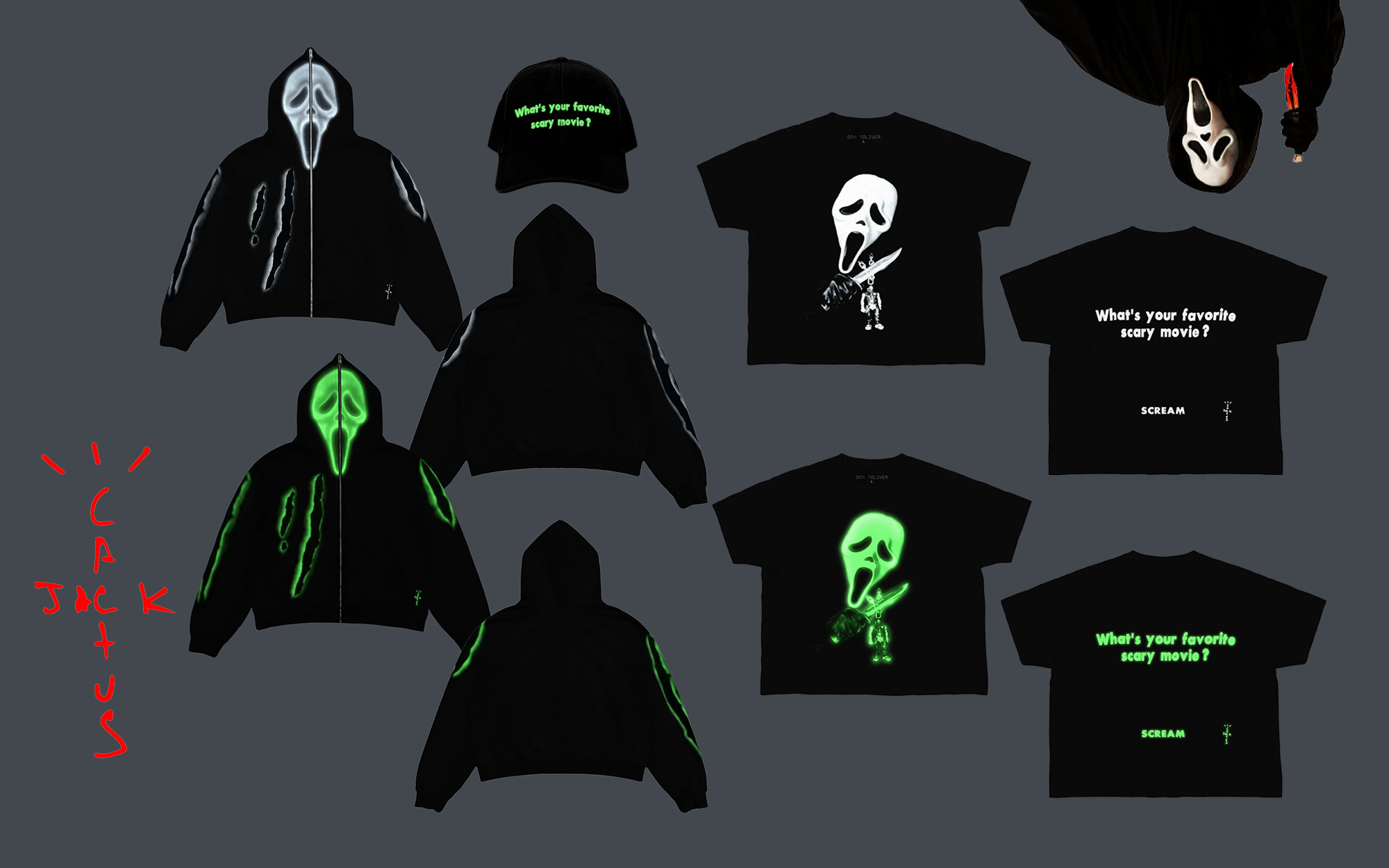
Following the song’s release, the partnership expanded into fashion through Cactus Jack, Travis Scott’s creative label.
The resulting capsule collection included:
Graphic T-shirts
Hoodies
Hats
A blood-splatter design blanket
Many of the items featured glow-in-the-dark Ghostface artwork and neon green graphics, along with the franchise’s iconic line: “What’s your favourite scary movie?”
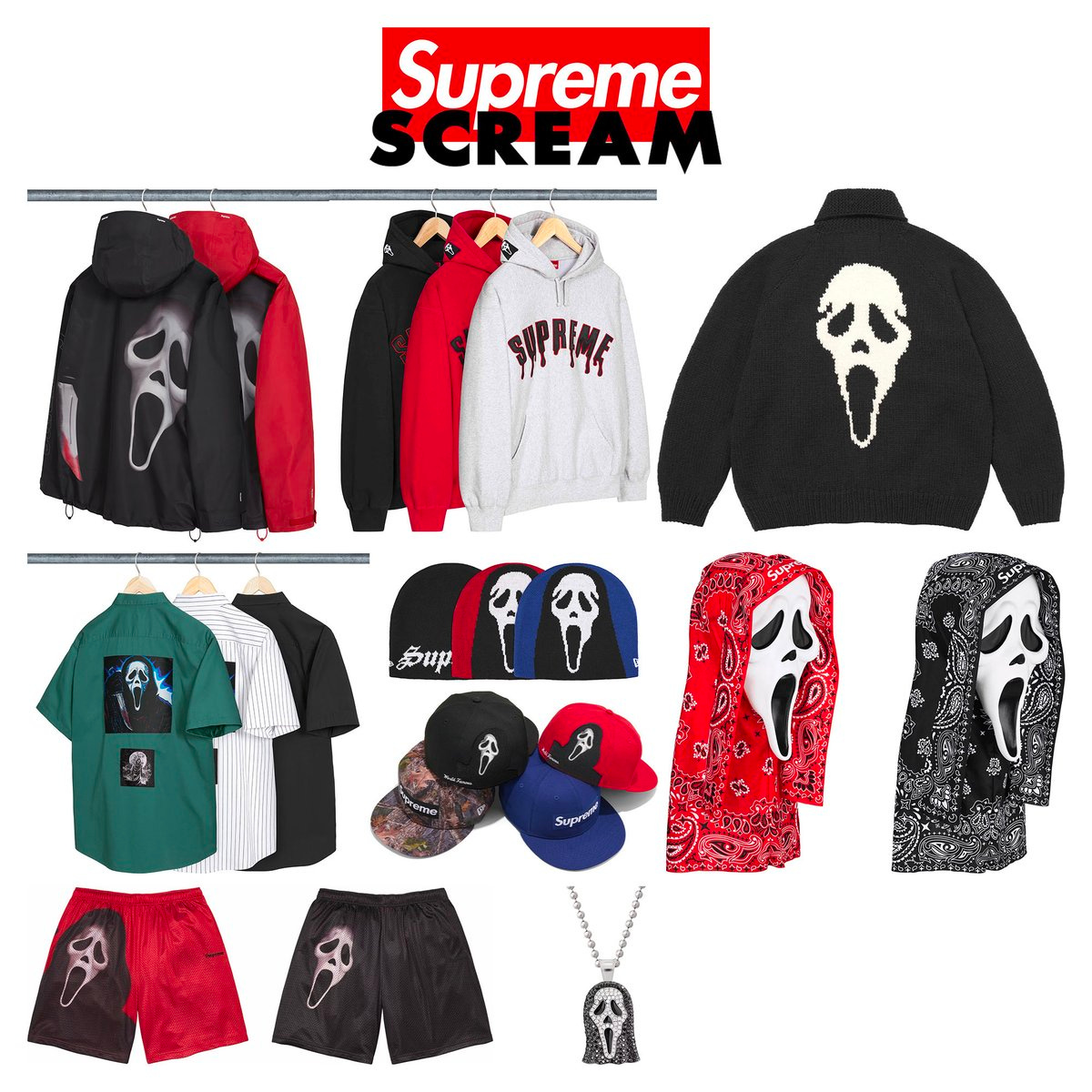
Not long after, another collaboration appeared with Supreme, as part of the brand’s Spring/Summer 2026 collection.
The standout item was a GORE-TEX Ghostface shell jacket, accompanied by accessories including a Jacob & Co diamond pendant and Ghostface bandana masks.
Fashion collaborations like this serve two purposes:
First, they reinforce the iconography of the character. Ghostface’s mask and silhouette are already culturally recognisable, making them ideal for graphic apparel.
Second, they allow the brand to exist in spaces outside the cinema; fashion drops, streetwear culture, and limited-edition collectibles.
In other words, Ghostface becomes more than a movie villain.
He becomes a lifestyle symbol for horror fans.
Gaming & Interactive Experiences
One of the more interesting aspects of Scream’s cultural footprint is its relationship with gaming.
Despite being one of the most recognisable horror franchises in cinema, Scream has never had a strong presence in dedicated video games; something that feels like a missed opportunity given how naturally the concept translates to interactive media.
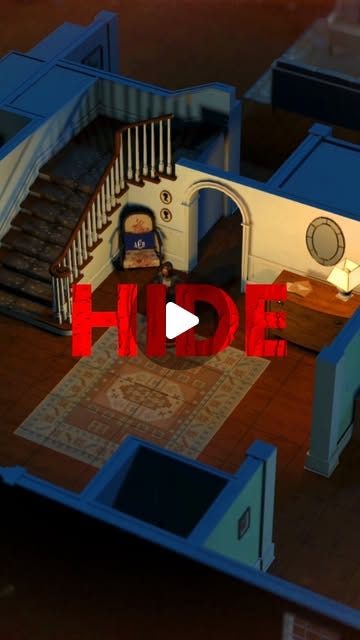
For Scream 7, Paramount experimented with a small but engaging browser-based experience.
Players could access the official Scream game, where they moved a chess-like piece around a house attempting to hide while Ghostface searched for them.
The mechanic builds directly on the social media “choose your hiding place” format but expands it into a playable experience.
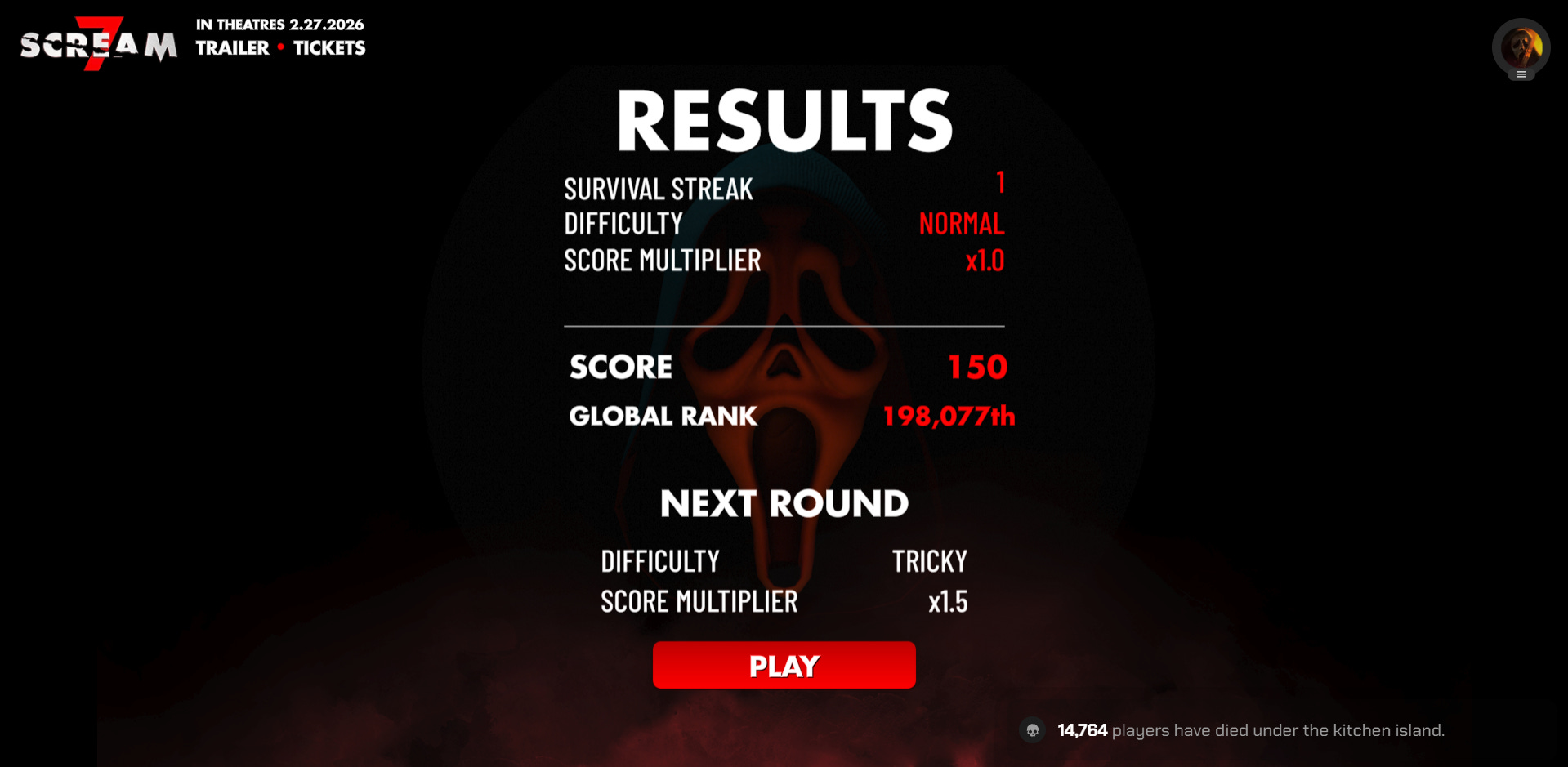
The game also incorporates live elements such as:
Leaderboards
Real-time player statistics
Notifications showing where other players died
Seeing that 31,000 players were killed in the same hiding spot adds a subtle psychological push to keep playing and experiment with different strategies.
It’s a simple experience, but it demonstrates how even small interactive touches can deepen engagement with the story.
Gaming Crossovers & Cultural Presence
Ghostface has also continued appearing across major gaming franchises.
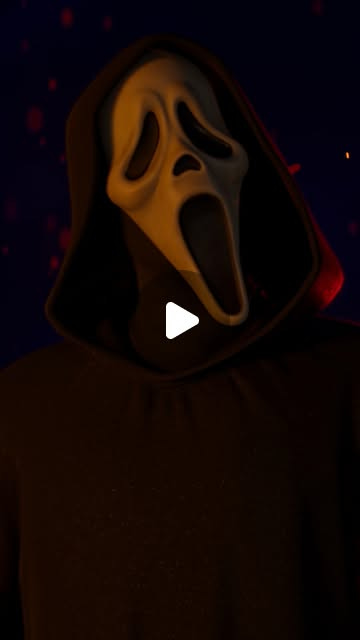
The character previously appeared in Fortnite during the Fortnitemares 2025 event, arriving as a purchasable skin within the item store. This kind of integration is standard practice for Fortnite, but it still provides massive visibility given the game’s scale.
Similarly, Ghostface appeared as a guest character in Mortal Kombat 1, introduced as part of Kombat Pack 2.
Interestingly, the game allows players to switch between multiple Ghostface personas - including assassin and enforcer variants - with customisable masks referencing both Mortal Kombat characters and classic Ghostface designs.
That appearance also ended a nine-year drought of slasher characters appearing in the Mortal Kombat series.
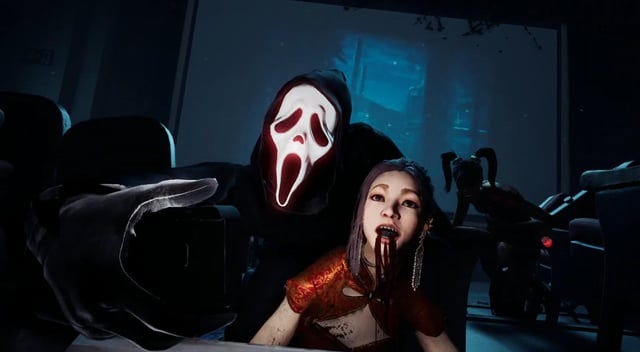
Meanwhile, Dead by Daylight already features Ghostface as a playable killer, though under a slightly unusual licensing arrangement.
The character exists in the game’s universe as Danny Johnson rather than any specific Ghostface identity from the films. Behaviour Interactive licensed the mask and visual design rather than the full Scream narrative universe.
As a result, the game currently lacks film characters like Sidney Prescott or locations such as Woodsboro.
From a marketing standpoint, that distinction creates an interesting opportunity. A full Scream chapter in Dead by Daylight - featuring Sidney as a survivor and a Woodsboro map - could function as a powerful transmedia extension of the franchise.
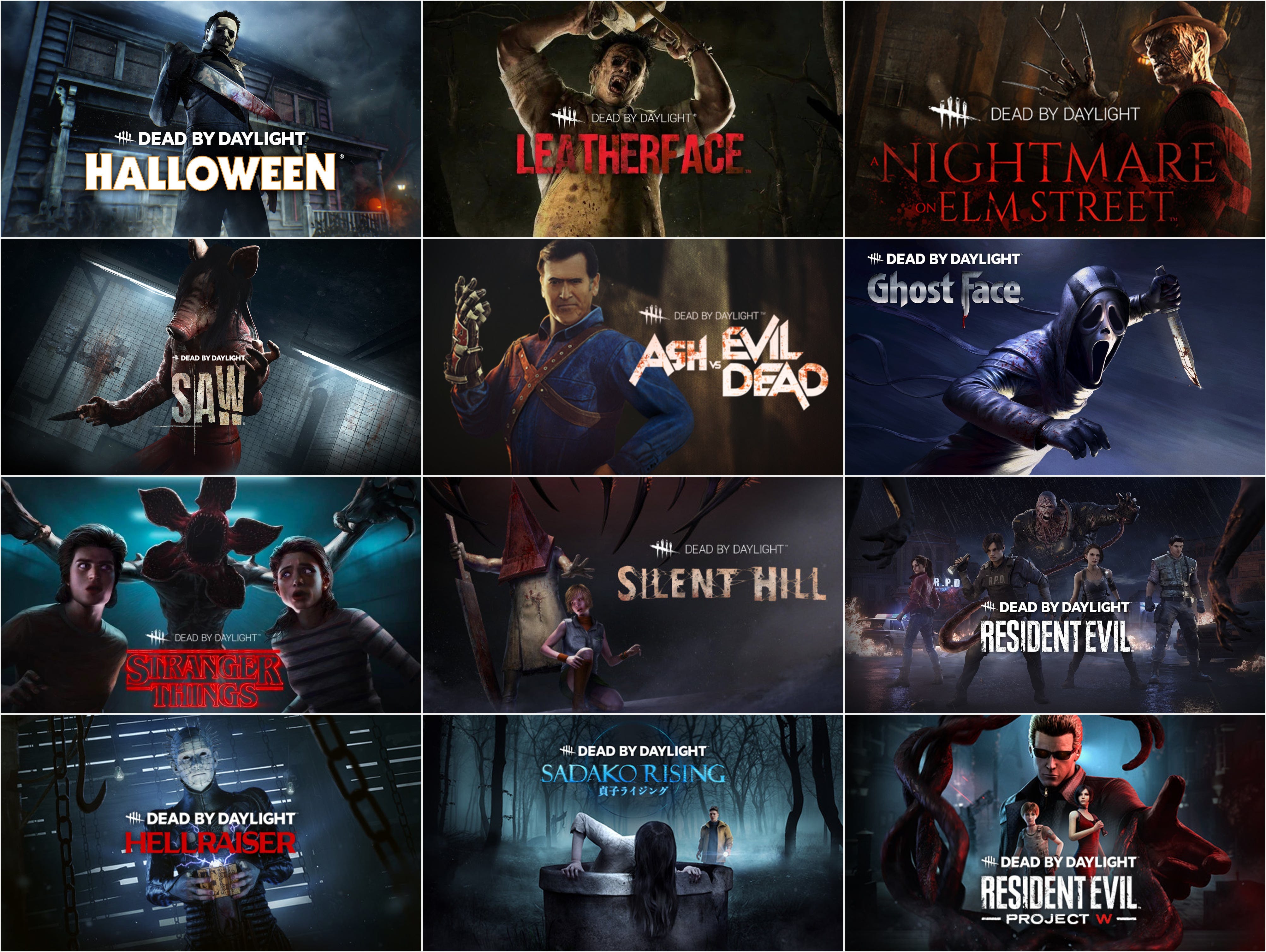
Other horror properties such as Resident Evil and Stranger Things have already demonstrated how effectively the game can amplify cultural visibility.
In fact, collaborations in live-service games often generate far more sustained engagement than traditional advertising, thanks to streaming, Twitch content, and user-generated gameplay videos.
So far Scream 7 hasn’t leaned heavily into this ecosystem, but the potential remains enormous.
Transmedia & Storyworld Expansion
One of the reasons Scream has endured for nearly three decades is that it has always been quietly transmedia-adjacent.
The franchise revolves around phone calls, anonymous identities, and media commentary; all narrative devices that naturally translate across platforms.
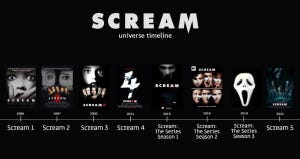
Over the years the series has expanded into multiple formats, including Scream: The TV Series, which aired on MTV and VH1 between 2015 and 2019.
While the first two seasons followed a separate storyline, the third season - Scream: Resurrection - reintroduced the original Ghostface mask and voice actor Roger L. Jackson, bringing the television universe closer to the films.
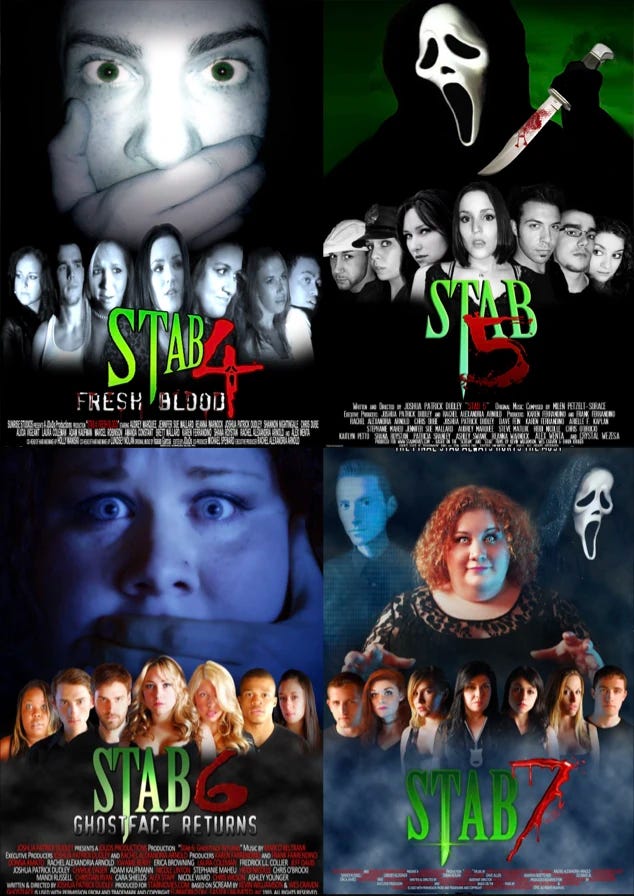
Another unique layer of transmedia storytelling exists within the films themselves through the fictional Stab movie franchise.
The Stab films function as a story-within-a-story, allowing Scream to satirise its own cultural impact while building a fictional cinematic universe inside the narrative.
As of the current timeline, eight Stab films exist within the story world.
Beyond television and film, the franchise has also explored immersive marketing.
For example, the 2022 release introduced a fictional TikTok account called @toobrashsarah, which posted videos from the perspective of a Woodsboro resident before eventually being attacked on screen.
Another campaign allowed fans to request personalised Ghostface phone calls, turning the franchise’s most iconic narrative device into an interactive experience.
Even real-world activations have leaned into the storyworld.
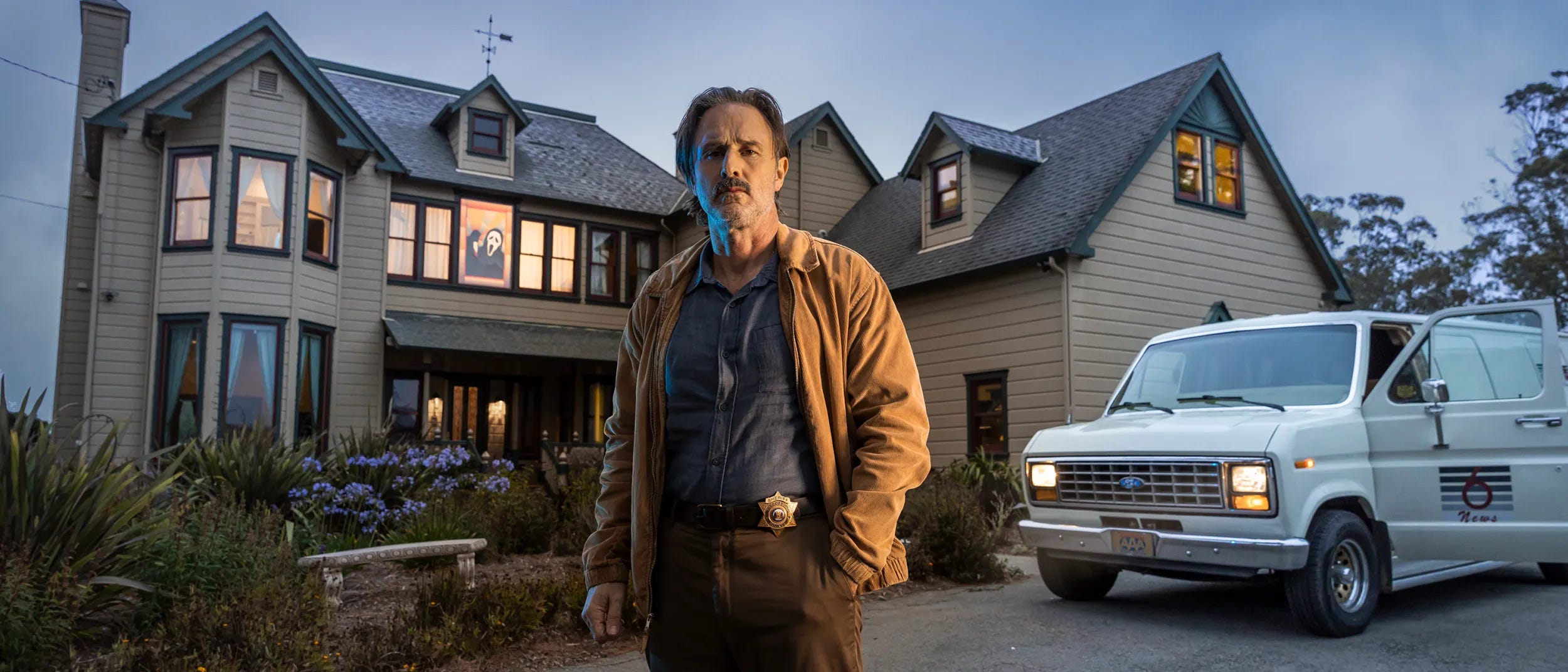
Airbnb once partnered with the franchise to allow fans to stay in the original 1996 Woodsboro house, complete with a virtual greeting from David Arquette as Dewey.
These kinds of experiences blur the line between marketing and narrative.
Future Transmedia Possibilities
Looking ahead, there are several directions the franchise could explore if it wanted to push further into participatory storytelling.
One of the most interesting possibilities would be a social-first horror series built specifically for vertical viewing.
Short-form narrative content is becoming increasingly normalised across platforms, and the entertainment industry is beginning to experiment with formats designed specifically for mobile consumption. Even traditional streaming platforms are now exploring this space. Disney+, for example, has recently announced their vertically formatted short-form programming titled Verts, signalling that studios are paying attention to how audiences increasingly consume content through their phones.
A franchise like Scream is uniquely suited to this format.
The entire concept revolves around phone calls, voyeurism, and digital communication, which naturally aligns with vertical video storytelling.
Imagine a short episodic series told entirely through a character’s phone:
Each episode could appear as a POV-style vertical video, following a new character in Woodsboro as they begin receiving mysterious messages and calls from Ghostface. The story could unfold through a mixture of:
TikTok-style confession videos
Instagram Stories and direct messages
security camera clips
livestream fragments
recorded Ghostface calls
Rather than presenting the narrative as traditional episodes, the story could appear as a stream of “found footage” posts across social platforms, gradually revealing the identity of the killer.
The audience would effectively be watching the story through the character’s own phone.
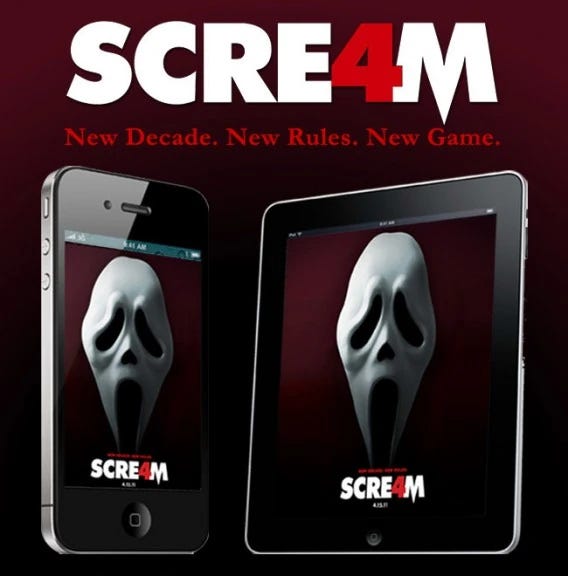
This approach would also allow for a strong interactive component. Followers could vote on decisions - whether the character should investigate a noise, answer an unknown call, or trust another character - subtly influencing how the story unfolds.
In other words, the audience wouldn’t just watch the horror.
They would help create it.
From a marketing perspective, this kind of project sits at the intersection of transmedia storytelling, social engagement, and audience participation. It blurs the line between narrative content and promotional material while generating continuous discussion online.
For a franchise built on self-awareness and media commentary, it would feel like a natural evolution of the series’ core ideas.
Because ultimately, Scream has always understood that horror spreads fastest when it travels through the mediums people already use every day.
And today, that medium is the phone in your hand.
Personal reflection
For me, Scream occupies a strangely personal place within the horror genre.
It was one of the franchises I ended up watching repeatedly during a period of recovery after surgery; long days spent at home slowly discovering the series.
Around that same time, I was also getting to know the person who would eventually become my girlfriend.
Not long after, we ended up watching Scream VI together in cinemas with a friend.
In a way, the franchise became tied to those memories.
And perhaps that’s part of why Ghostface remains such an effective horror villain.
Unlike supernatural killers such as Michael Myers or Freddy Krueger, Ghostface is always human.
Behind the mask is simply a person manipulating fear.
In some ways, the character feels closer to the classic reveal structure of a Scooby-Doo mystery than a supernatural horror monster.
That grounded simplicity may be one of the reasons the franchise continues to endure.
Three decades later, audiences are still asking the same question:
Who’s behind the mask?
If you enjoyed this breakdown
or enjoy exploring how films are marketed, how franchises build their storyworlds, and how transmedia storytelling shapes modern entertainment, that’s exactly what this newsletter is about.
Every week I break down real campaigns, creative strategies, and the evolving ways studios try to capture audience attention.
If that sounds like something you’d like more of, consider subscribing so you don’t miss the next post
And if you found this analysis interesting, feel free to share it with someone else who enjoys digging into the marketing behind the movies!
A really thorough and multi-perspective breakdown of everything connected to this franchise and its newest instalment — great work!