

The Devil Wears Prada 2
Inside the $250M Marketing Machine

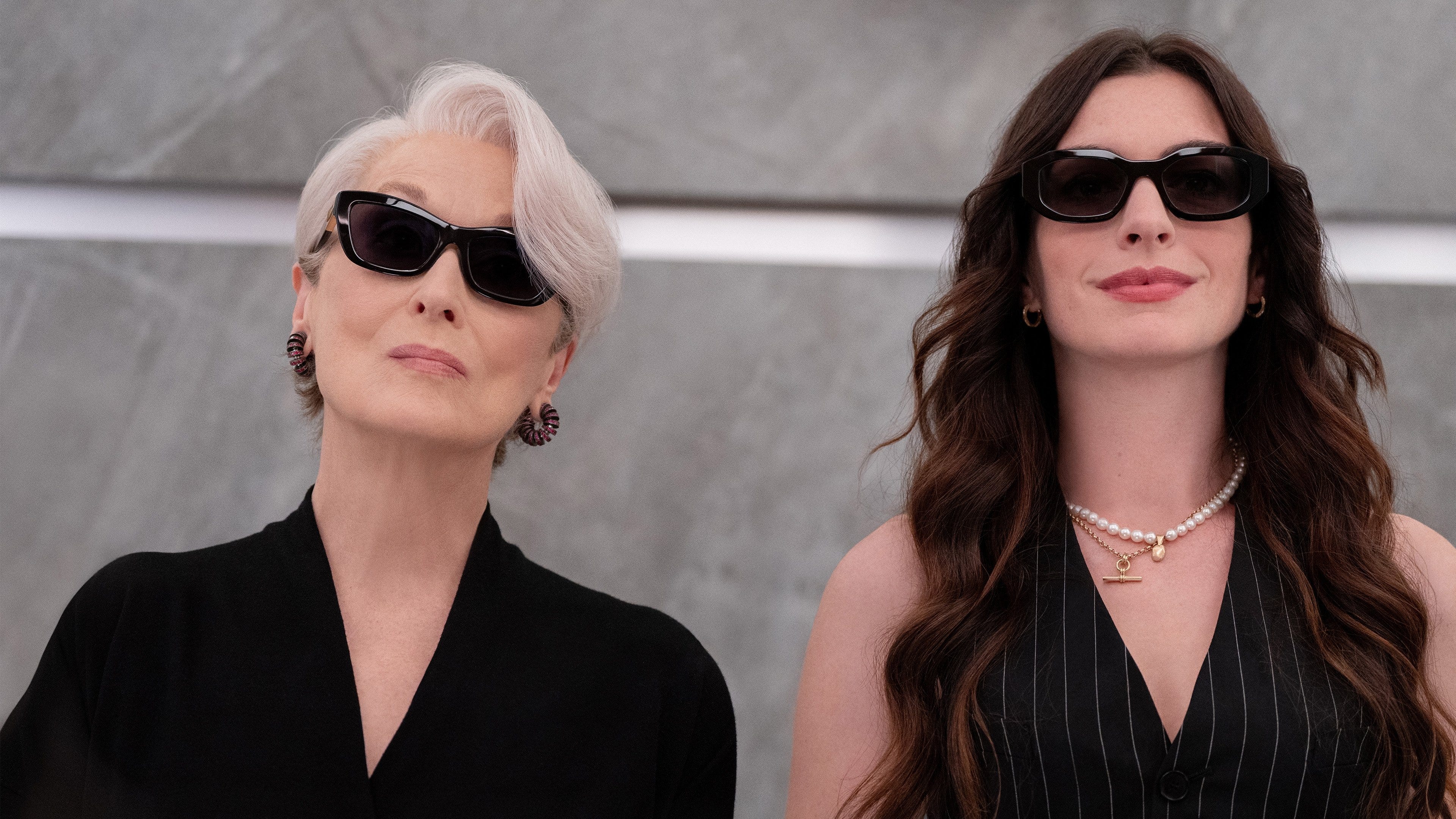
Okay so, this one’s been a long time coming, and honestly I kept pushing the deadline back on myself because every week I’d find three more brand partnerships I hadn’t logged yet!
Tiffany & Co showed up after I thought I was done. So did the Kardashians. So did the TJ Maxx spot and the Runway pop-up stalls. If I’m being fully honest, I had to go back in and add those after a first pass nearly missed them entirely.
But then again, at some point you have to just say “right, this is going out now” or you’ll be writing about The Devil Wears Prada 2’s marketing until Christmas; no one wants to do that!
Now, whilst this film has been covered to death by basically every publisher with a movies desk, I’m not going to pretend I’m breaking some exclusive here. Instead, what I want to do is bridge all of it together properly:
What this actually is, who it’s for, how it performed, how it got there (partnerships, influencers, media buying, all of it), how it connects to the wider Disney-verse, the transmedia layer underneath all of it, and what’s actually worth stealing from it.
Whilst individually, every single one of these partnerships has had its own little write-up somewhere. Nobody’s really sat down and looked at the whole machine at once.
So let’s do that.
What this actually is, and who it’s for


Quick scene-setting in case you’ve been living under a rock; if you have, fair enough, the original came out in 2006, two decades is a long ass gap.
But to catch you up to speed real quickly, The Devil Wears Prada 2 is the sequel to the 2006 Meryl Streep/Anne Hathaway fashion-industry comedy, picking the story back up roughly twenty years on, with Streep’s Miranda Priestly now fighting to keep Runway magazine relevant as print journalism collapses around her. Emily Blunt plays Emily Charlton, all grown up and means business. The budget was around $100 million to make, with roughly $80 million spent marketing it (Variety).
Who was this for?
Overwhelmingly, women. Specifically, the millennials who watched the original as teenagers and are now in their thirties and forties, running teams, raising kids, deciding what to spend money on.
As Will Posket put it in his own breakdown of the comms strategy, and I’m going to lean on his piece a fair bit here because honestly he nailed a few things I want to build on, that’s an obvious demographic prize for Disney to want to win back. But you can’t just lean on nostalgia without making the whole thing feel like a reunion that Gen Z scrolls past.
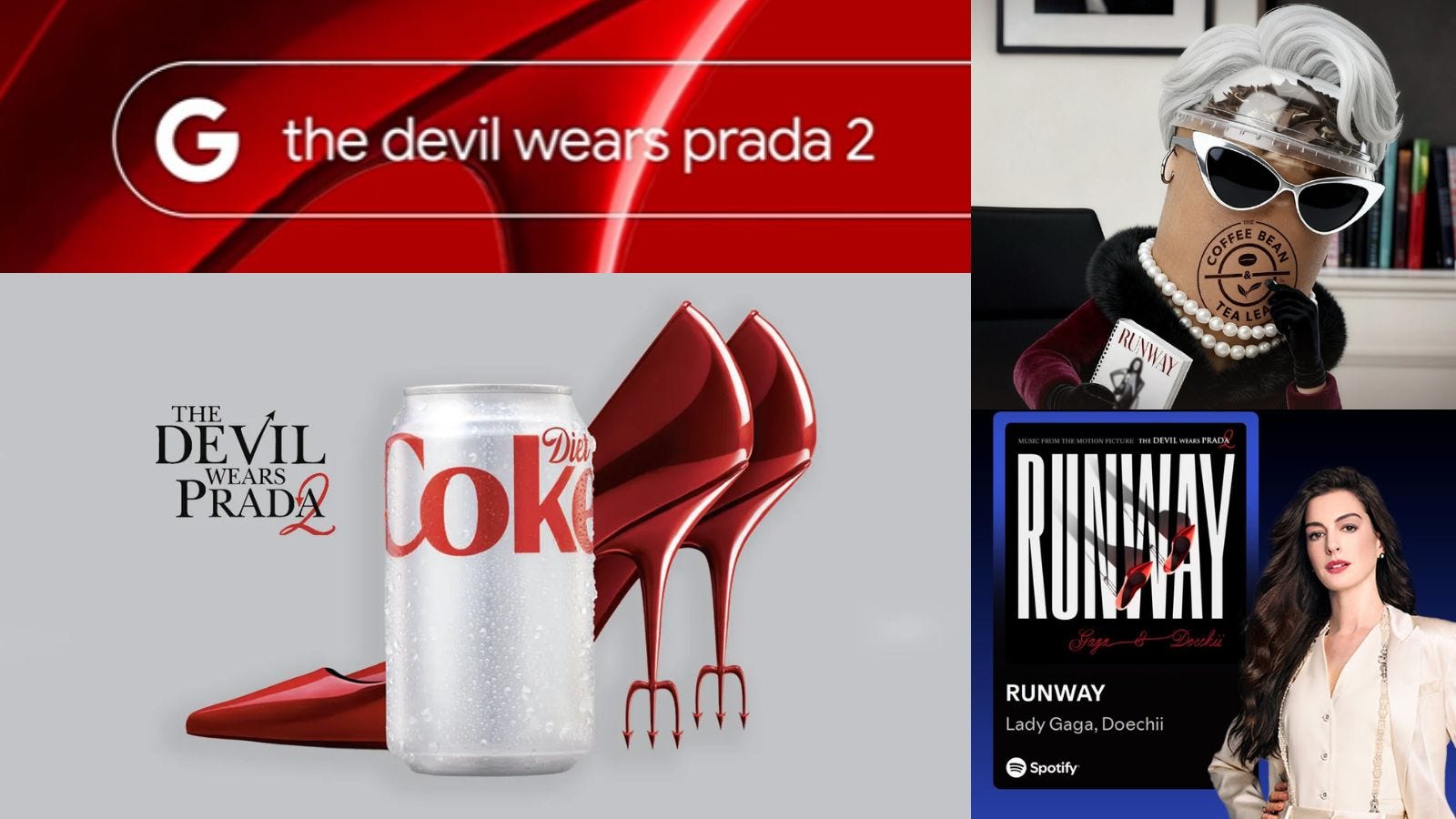
So the smart move - and I do think it was smart - was dressing the world in nostalgia rather than the marketing itself. Cerulean came back as a smartwater bottle. The coffee orders came back as four Starbucks drinks. None of it required you to have seen the original to land; if you had seen it, you got rewarded for it, and if you hadn’t, you just got a coffee or a lipstick or a TikTok.
The Hollywood Reporter actually got pretty deep access on this one, with Disney’s marketing leads Martha Morrison and Lylle Breier (who both report to Asad Ayaz, now chief brand and marketing officer for the whole conglomerate) walking through how they thought about audience.
Morrison said the biggest challenge from day one was winning over Gen Z and younger millennials specifically, since those two groups make up the most important moviegoing demos right now.
And it worked.
On opening Friday, the largest single quadrant of ticket buyers, 29%, was the 25-34 bracket, split roughly evenly between older Gen Z and younger millennials. The 18-24 group was 11%. That’s not nothing for a sequel to a film that’s old enough to vote.
How it performed
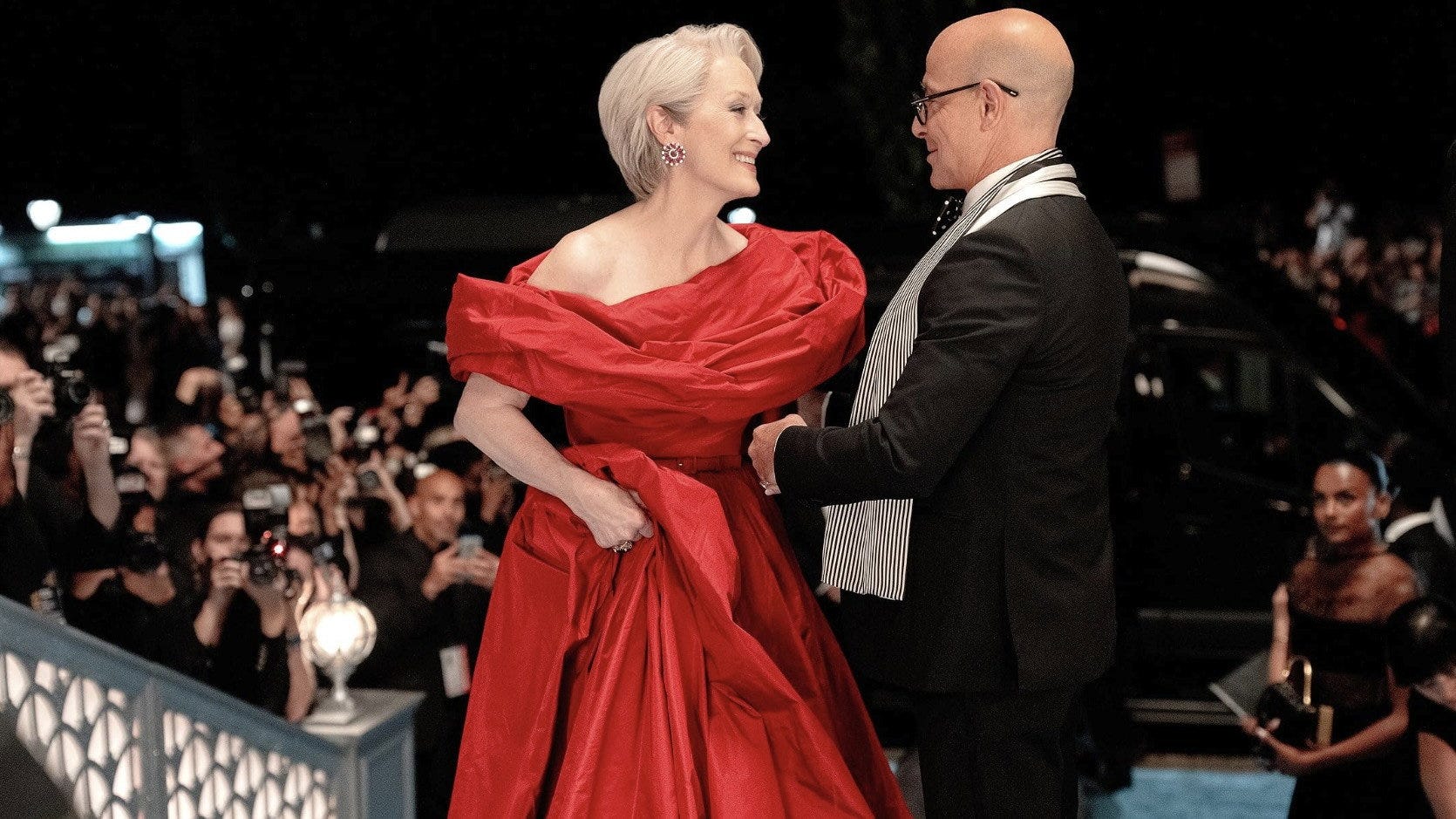
This is the bit that genuinely shocked me a little.
The Devil Wears Prada 2 has crossed $676 million globally, which pushes the franchise total (combined with the original’s $326 million unadjusted lifetime) past the $1 billion mark. On a $100 million production budget and $80 million marketing spend, that’s an enormous return, and Disney will absolutely turn a tidy profit on it.
The film also beat Mortal Kombat II domestically in its second weekend, falling only 43% week-on-week domestically (46% overseas), which in box office terms is the actual signal that a film is becoming a “water-cooler” hit rather than a one-weekend curiosity, because the second-weekend drop is always the real indicator.
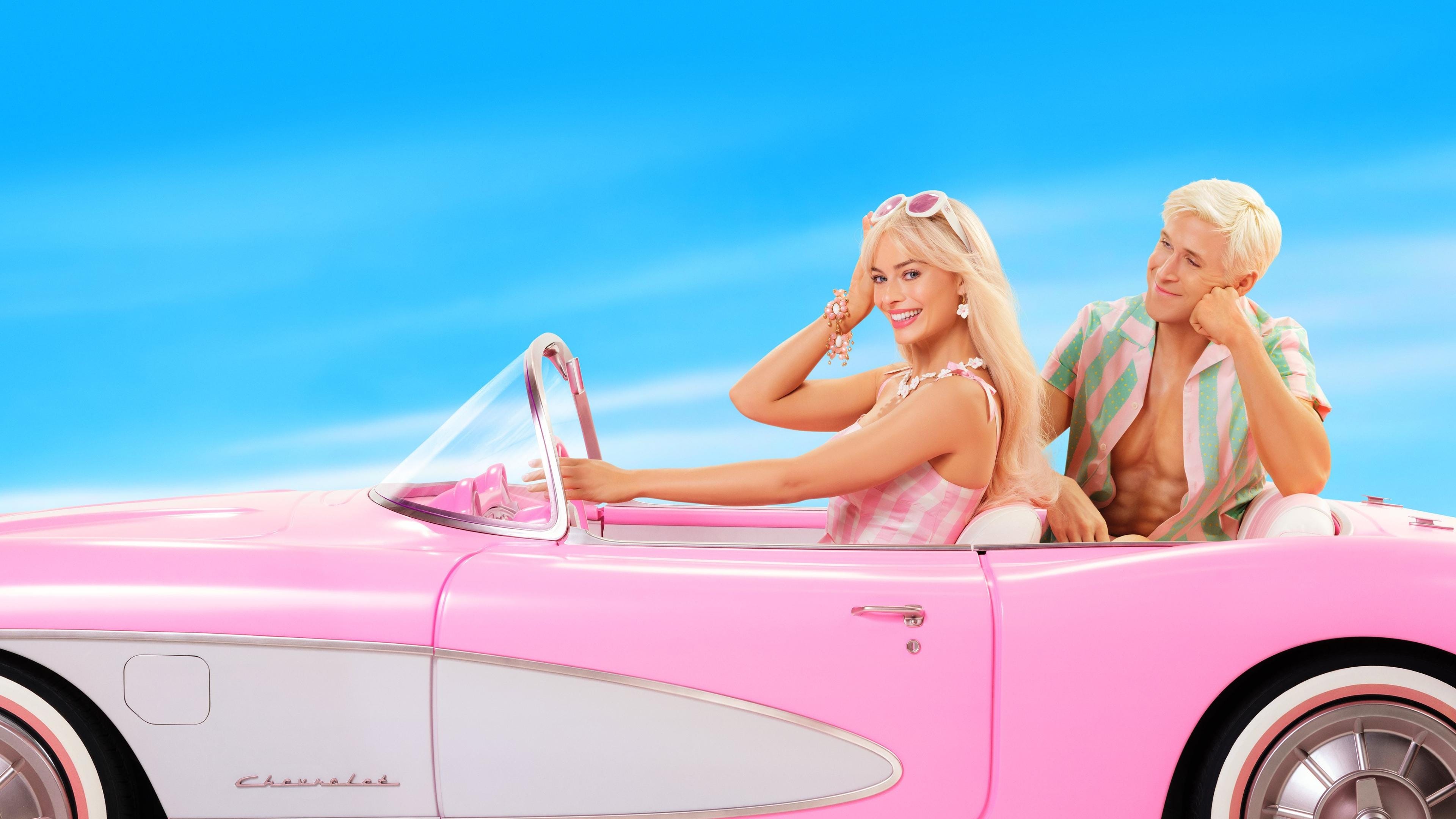
It’s also been talked about, fairly explicitly, as the biggest female-led hit since Barbie. THR’s headline practically says as much. And I think it’s worth sitting with that for a second, because there’s a structural reason cinema skews male as a default audience; the “Peter Pan Syndrome” in marketing circles holds that young men dictate group viewing choices because boys won’t watch anything coded “girly,” whereas girls and mixed groups are more willing to go along with male-driven content.
Studios lean into four-quadrant action and adventure because it’s the safest bet for reaching everyone. So when something like this - or Barbie, or “Wuthering Heights”, or The Drama (the latter 2 I’ve written at length about) - manages to pull a predominantly female audience into cinemas in real numbers, that’s a genuinely harder marketing problem to solve than another action tentpole, and it’s worth recognising as its own skill rather than a fluke.
Adding on top of that a side note, because I can’t help myself: I can count on two hands how many times my girlfriend has come to the cinema with me this year, The Devil Wears Prada 2 was one of the films we saw together; Mortal Kombat II, The Drama, Hamnet, Peaky Blinders: The Immortal Man, “Wuthering Heights”, Toy Story 5, Obsession and we’ve literally just seen Supergirl. That’s it for 2026 so far, and that is impressive. So when a film pulls her off the sofa and into another seat, the marketing clearly did something right, even if - more on this in a minute - the film itself didn’t quite land for either of us.
The partnership ecosystem (and there is SO much of it)
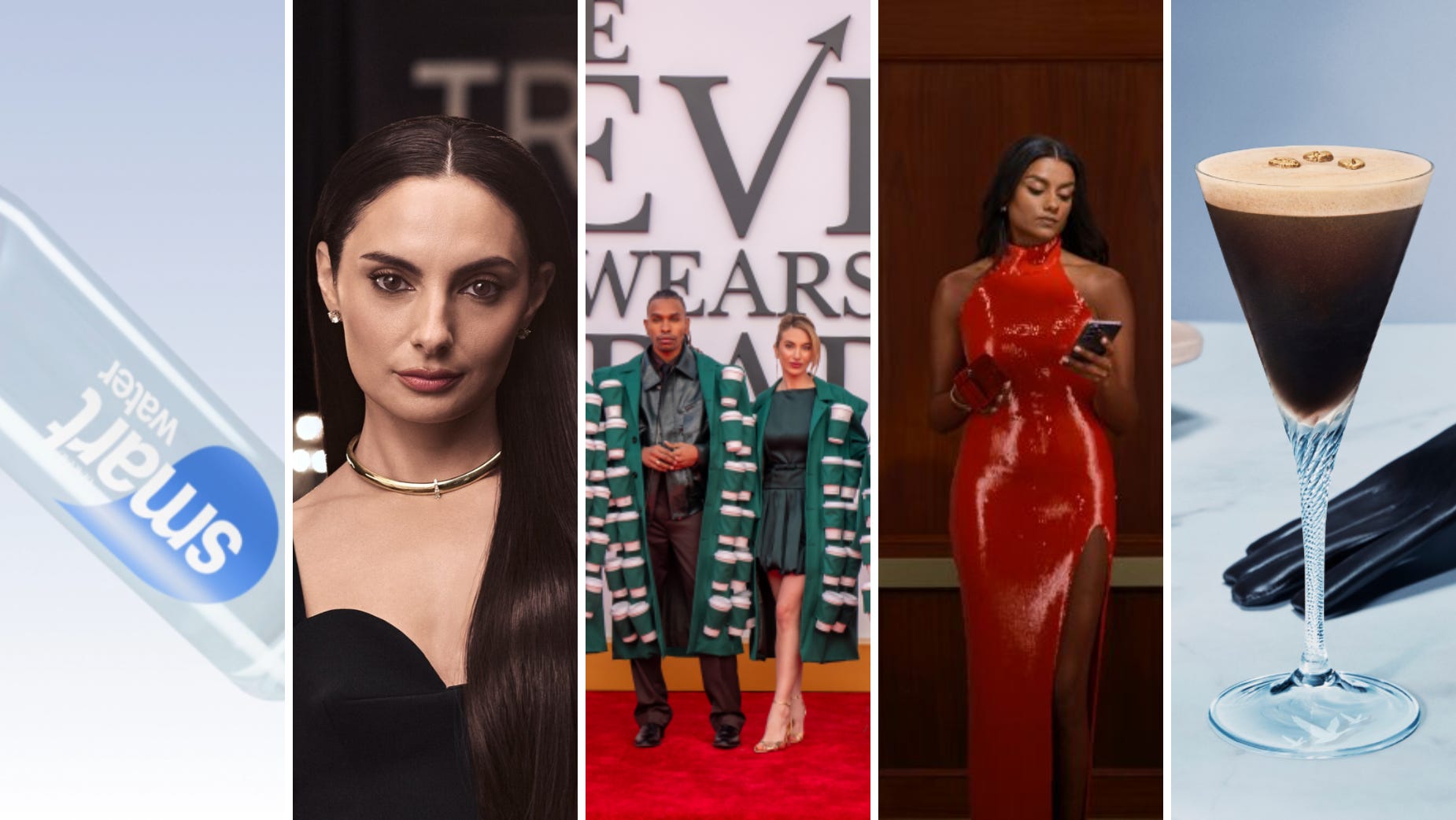
Right, this is the part of the post that’s going to begin to get long, because the partnership list for this film is genuinely one of the most extensive I’ve ever tracked for a single release. THR exclusively reported that the official brand partnerships alone are valued at $250 million; separate from the $80 million Disney spent on its own marketing mind you.
“The partnership campaigns are incomparable to anything we’ve done before... We set out to have it be the best marketing partnership program that’s ever launched.”
That’s a bold claim from a studio that also owns Marvel, Lucasfilm, Pixar, and Avatar. But her reasoning made sense to me: unlike The Avengers or Avatar, Prada lives in the current world, at the literal intersection of fashion, media and pop culture, which gives a marketing team way more real-world surfaces to play with.
Now before I try to group this sensibly - because there’s a lot - please do consider subscribing to The Harperverse which is a free publication!
Tech: Samsung and Google going head to head (sort of)
Samsung’s partnership is probably the most narratively clever of the bunch. Instead of the front-facing consumer “try-on” angle Google went for, Samsung targeted the frantic backend of the fashion industry; positioning its Galaxy S26 Ultra and Bespoke AI Laundry Combo as survival tools for surviving Miranda’s impossible demands.
The ad above (30 million views) captures Helen J. Shen reprising her role as Jin, a Runway staffer handed an impossible last-minute task, who pulls out the S26 Ultra and uses Circle to Search to instantly locate an obscure vintage garment; explicitly framed as a narrative “cheat code” to avoid getting fired.
It’s a genuinely smart transmedia move too: in the original 2006 film, the frantic communication was visually defined by characters clicking open T-Mobile Sidekicks. Swapping that for a Galaxy phone is an organic way of saying “time has passed” without anyone having to say it out loud.


Samsung also ran the official “Runway Cam” at the Lincoln Center premiere, replacing standard broadcast gear with the S26 Ultra on a custom robotic rig, and took over Piccadilly Circus with a 3D anamorphic billboard for the laundry machine angle (the pitch: an AI machine that senses a coffee stain on a red silk dress and self-adjusts to save it; high fashion problems solved by a washing machine, basically).
Google went for the more consumer-facing “Try On in Search” angle, with Stanley Tucci (back as Nigel) and Simone Ashley starring in a short film where a styling emergency gets solved via Google’s AI outfit-try-on tool.
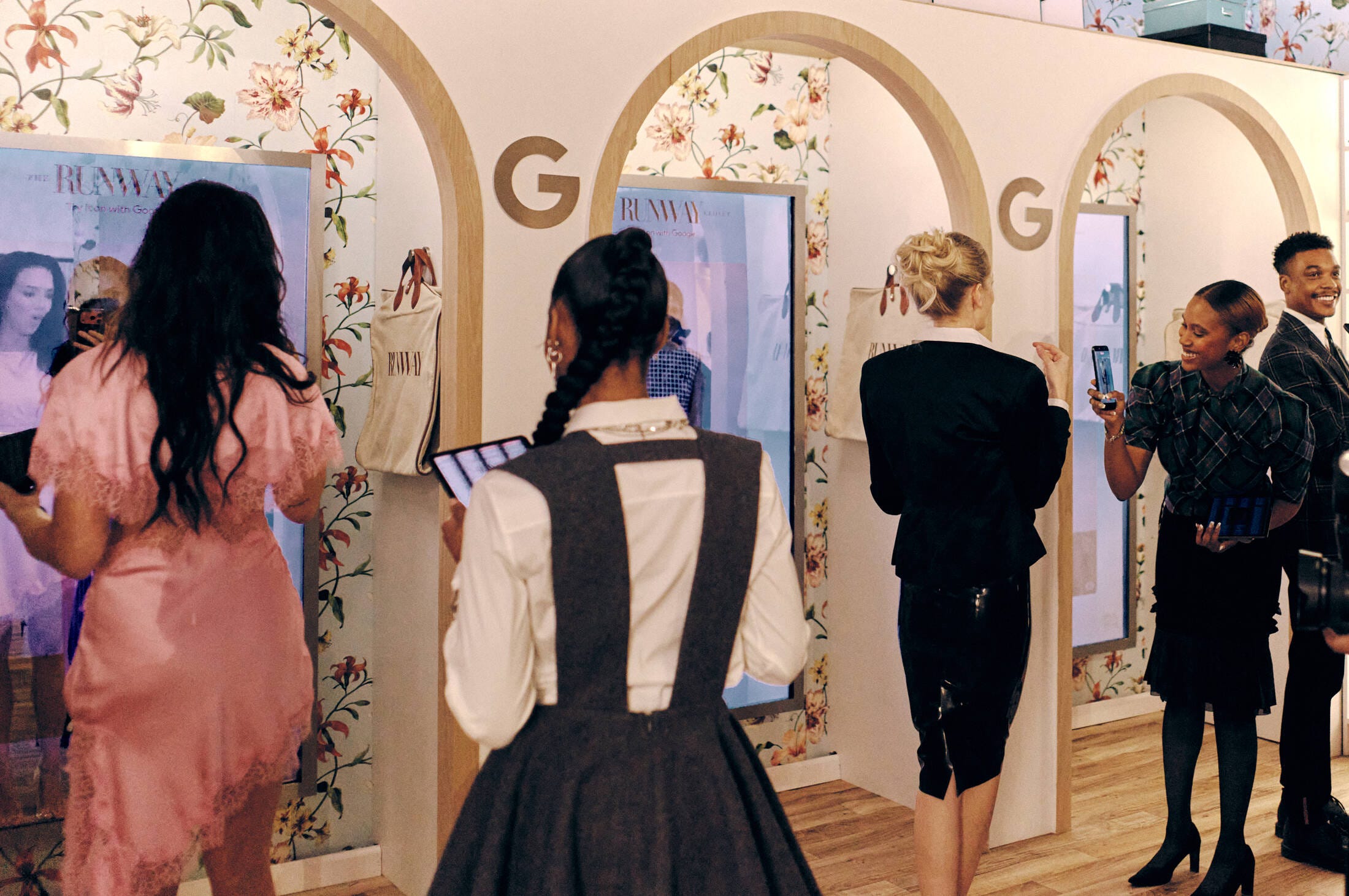
They also built a full physical “Runway Closet” experiential activation at the premiere, and - this is the bit I genuinely love - when you Google “The Devil Wears Prada 2,” an interactive red stiletto heel pops up, and clicking it makes Miranda’s iconic shoes strut across the screen:
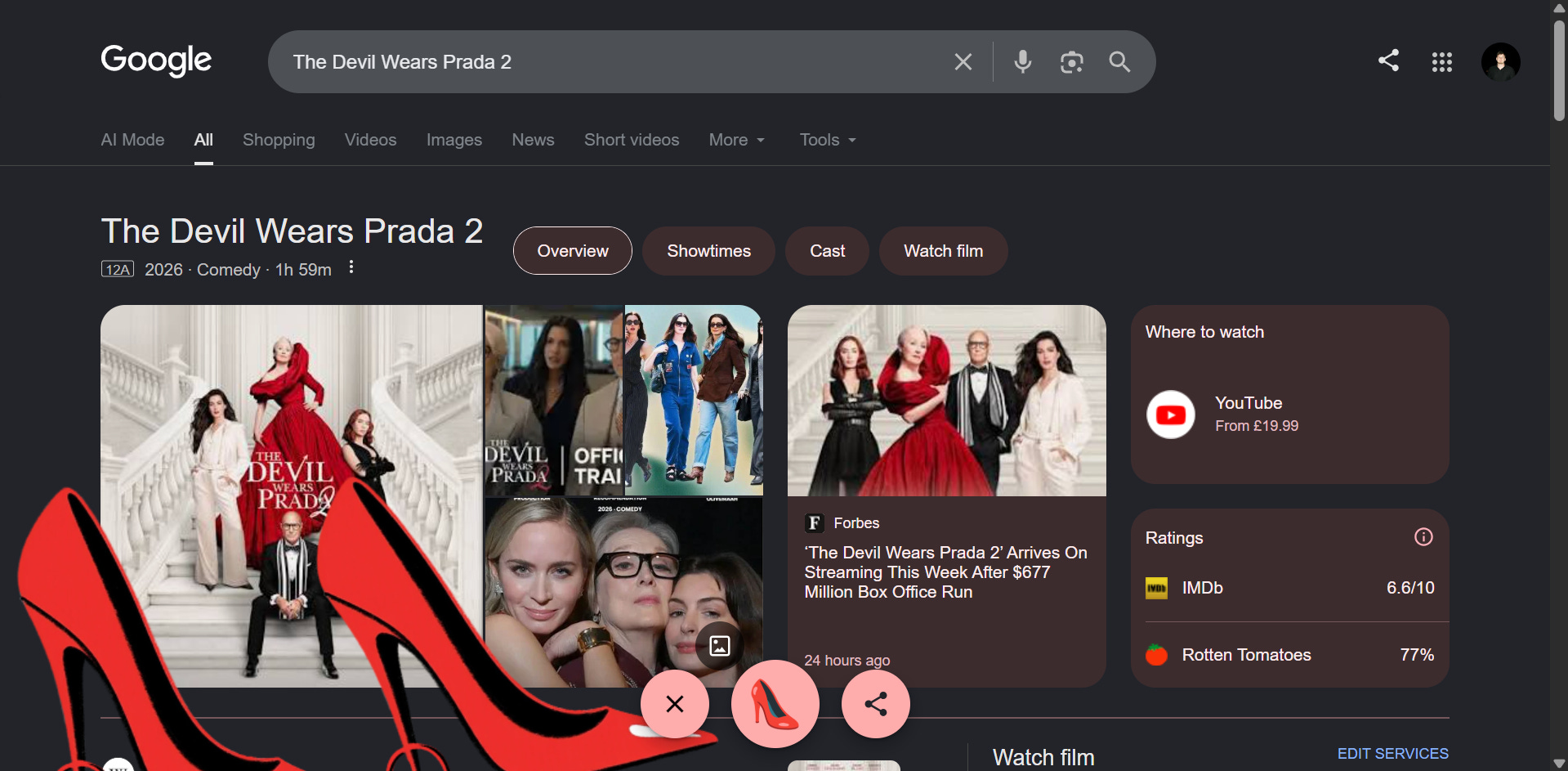
Ironically, I came across this intentionally, because Google didn’t hide even try to hide this easter egg the way most studios do (like the Spider-Noir one I found a while back); they actually told people to go look for it. Posting to Instagram “Have you searched ‘the devil wears prada 2’ yet? That wasn’t a question,” doing a pitch-perfect Streep impression in text form.
Drinks: I hope you’re thirsty for some ‘partnersips’
Diet Coke and smartwater both made what Coca-Cola itself called their “Runway debut.” Diet Coke’s campaign, via Ogilvy, centred on a short film called “That’s All” where Miranda leaving the office triggers a much-needed Diet Coke break for the Runway staff; the genuinely funny detail is “The Canny Pack,” a silver fanny pack purpose-built to hold a single can.
Lylle Breier’s quote on this one stuck with me: “In The Devil Wears Prada 2, taste is everything,” paired with the line that Diet Coke and smartwater “embody the kind of style and confidence our audience - and Miranda Priestly herself - expect.”


The media buy on this was enormous: Piccadilly Lights deep screen, London Underground 48-sheets, Sainsbury’s entrance wraps, bus wraps, in-store packaging promos, cinema ads, a 3D billboard build in Leeds (above a Chicko’s, somewhat undercutting the high fashion energy, but still) and Open Media’s ABC Cinema Banner Wrap opposite Liverpool Limes Street. I also found the Value Pack in my local Morrisons, which felt like a nice full-circle moment for tracking this thing; haven’t included just because it’s less glamorous!
Grey Goose became the official global vodka partner, tapping Heidi Klum to push “The Devil’s Roast,” an espresso martini riff on Miranda’s coffee order:
1.5oz Grey Goose, 1oz espresso, 0.75oz coffee liqueur, a pinch of salt, gold-dusted coffee beans on top, if you’re interested in making one at home.
There were pop-up trucks in Zuccotti Park and Manhattan West, limited-edition co-branded bottles, and a whole menu of other drinks (The Scarlet Step, The Cerulean Goose) for anyone who doesn’t fancy the signature one. I don’t drink myself - stopped about a year ago now - but I’m still a sucker for the collectible angle, I’ve actually still got my Game of Thrones whisky bottle sitting in my kitchen doing nothing; in fact it’s this White Walker one and I reckon I’ll hold onto it for a while longer!
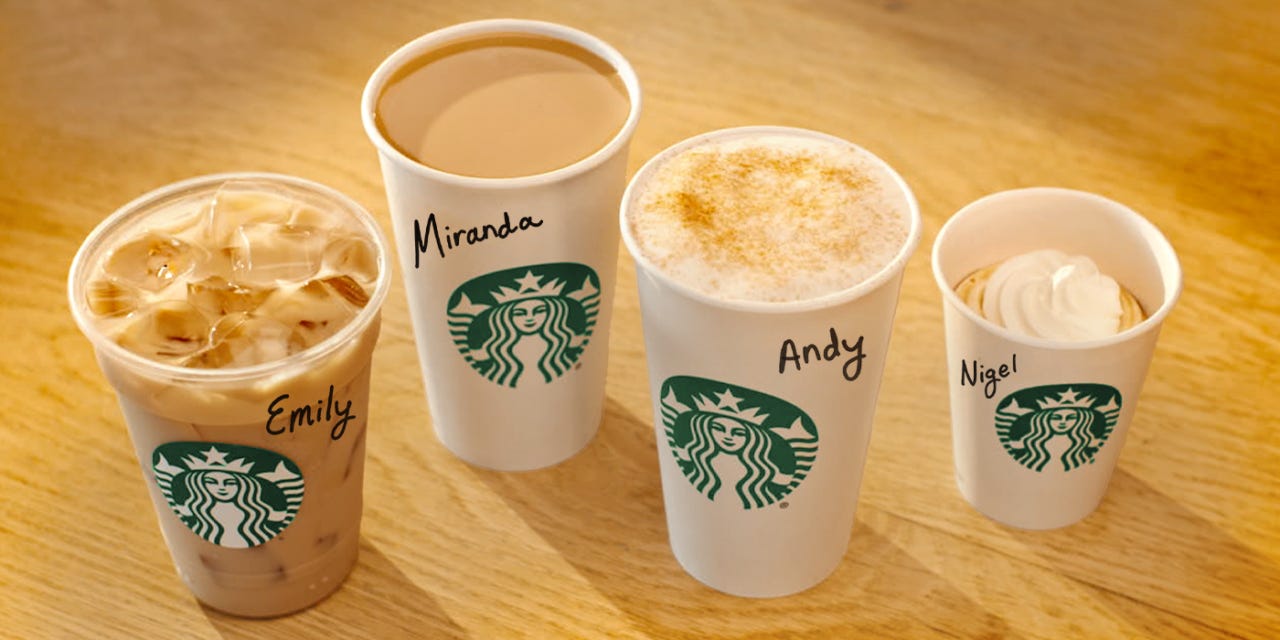
And then Starbucks, who I think had the most fun of anyone. A secret menu with four character drinks (119k likes on Insta; The Miranda: nonfat caffè latte, no foam, extra hot, extra shot. Obviously), a limited-edition Runway magazine handed out at the Empire State Building Starbucks, and - another favourite stunt from this campaign - they sent interns and assistants on coffee runs around NYC wearing bespoke jackets that could hold 18 cups of coffee each (16k likes on Insta), then surprised them with premiere invitations (see brand innovators for more details on this).
That’s how you stunt on an otherwise glamorous red carpet and actually stand out. They also brought back Adrian Grenier as Nate (191k likes on Insta; Andy’s ex from the first film) for a Starbucks Energy Refresher ad that leaned into the joke that he didn’t get cast in the sequel; self-aware enough that I actually liked it, despite never really rooting for Nate’s character to begin with.
Beauty: Lancôme, L’Oréal, TRESemmé, Tangle Teezer
Lancôme became the official skincare brand - its first ever official Hollywood film partnership - with products supplied to cast and crew during production. Notably, per Lancôme’s GM Ramzy Burns, product placement wasn’t even guaranteed in the contract; what mattered to them was access to the IP itself, the characters, the culture, the ability to film on set.
TRESemmé announced as the “signature hair brand” at the Oscars, with a campaign starring Christian Siriano and Paige DeSorbo set backstage at New York Fashion Week.
L’Oréal ran a spot during the Oscars with Kendall Jenner and Simone Ashley in an “awkward mix-up” at the Runway offices; also how the Kardashians cross-promo happened, since Kendall’s L’Oréal spot and Kris Jenner dressing up as Miranda for the Kardashians’ Hulu-on-Disney+ promo both landed in the same window.
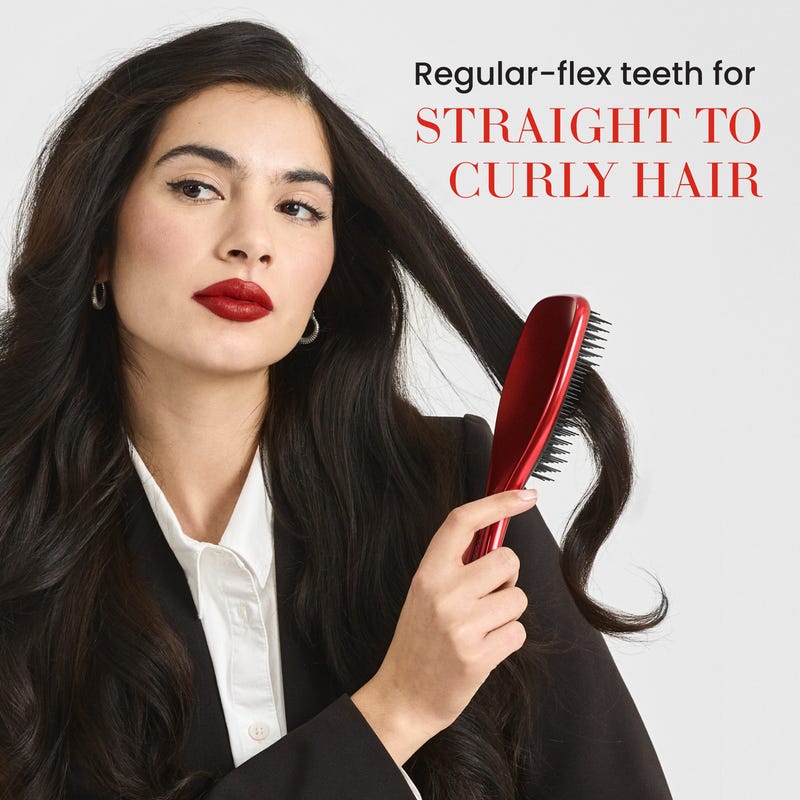
And Tangle Teezer released a red-and-black detangling brush as a tie-in, which also shows up as a prop in the actual film.
Fashion and luxury: the part that’s actually closest to the film’s DNA
Continuing the trend of partnerships that feel less like ads and more like the film extending itself into the world. Tiffany & Co. put its Blue Book high jewellery and Elsa Peretti® Bone Cuffs on screen, plus the striped eyewear Streep wears as Miranda; the Instagram spot above pans from the cerulean sweater script scene straight into the actual Tiffany necklace, which is a clean piece of “diegetic prop” marketing if I’ve ever seen one; add on top that some Tiffany Windows were framed to incorporate a silk-draped 2 as a backdrop for their jewellery, and you essentially bridge the gap between digital and physical!
Mercedes-Maybach is maybe the cleanest case study in the whole campaign for why studios and automakers partner the way they do; it was also the first piece I dove into for this title. THR has again got the real quotes here worth sitting with: Mercedes CMO Melody Lee said flatly that the original cast returning meant a near-guaranteed box office hit, and that the original film’s audience “have grown up and become our target customers,” meaning the demographic alignment wasn’t a coincidence, it was the entire pitch.


Disney’s VP of marketing partnerships, Ty Ervin, made a point that’s stuck with me since reading it: “Cars aren’t just background. They tell us just as much about a character as their costume and environment.” Mercedes seem to me like they’re having a moment, having acted as the in-film sponsor for Brad Pitt’s fictional team in last year’s F1 movie, and even working two cars into the animated film GOAT; “you wouldn’t think Mercedes-Benz would be in an animated movie, but it’s part of our strategy to reach the next generation,” per Lee.
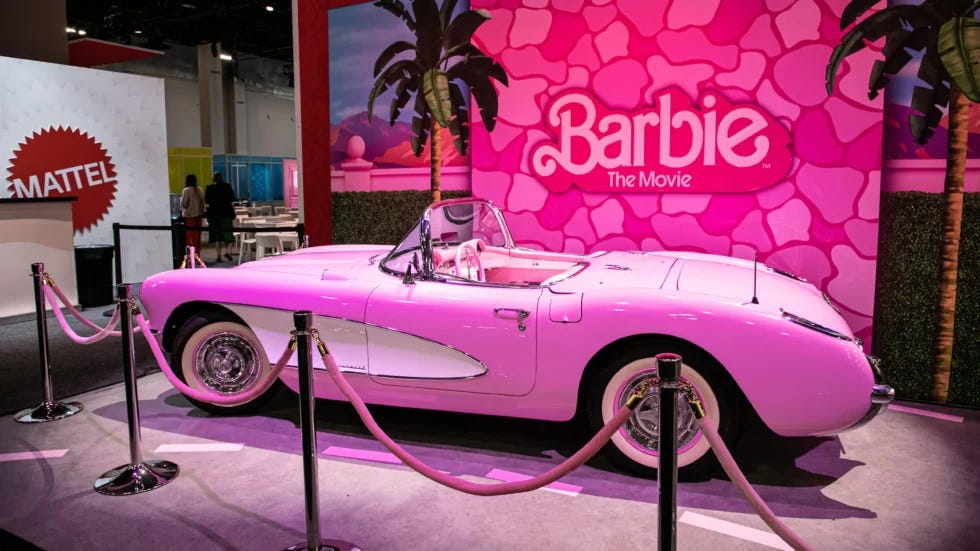
And the insight that really got me: Lee adds that in “one study, three-quarters of viewers searched for a brand after seeing a placement, and more than half went on to buy a product from that brand.” The GM/Barbie partnership also reportedly got 10x the social engagement of any other post in the company’s history. Its these kinds of numbers that explain why every major studio release now comes with an automaker glued to it.
There was also “A Night with Runway” at the National Gallery. A one-night British fashion event with looks from Vivienne Westwood, Stella McCartney, Richard Quinn, Zandra Rhodes and others, all hand-selected by costume designer Molly Rogers. British Fashion Council CEO Laura Weir made the point that while the world of Prada is set in New York, its sharpest edge is “undeniably influenced by British fashion, its wit, its tailoring, its fearless point of view.” I only found out about it via an Instagram post, which after nearly two years living in London still feels like the way I find out about literally everything happening here.
And then there’s Crocs, who weren’t an official partner at all but became the funniest unpaid storyline of the entire press tour purely through talk show appearances; Colbert wearing bright red Crocs to Streep’s deadpan, top-to-bottom Miranda once-over (a clip that hit a million likes on its own), and Hathaway doing the same bit with Jimmy Fallon, reenacting the Chanel boots scene from the original film with “Cerulean Crocs? For spring? Groundbreaking” (581k likes). I’ll be honest, I love my own Crocs and the charms I got for them - not for work, mostly the gym or travelling - so this whole bit landed for me on a personal level too.
Toys, merch, and the Disney machine doing what it does
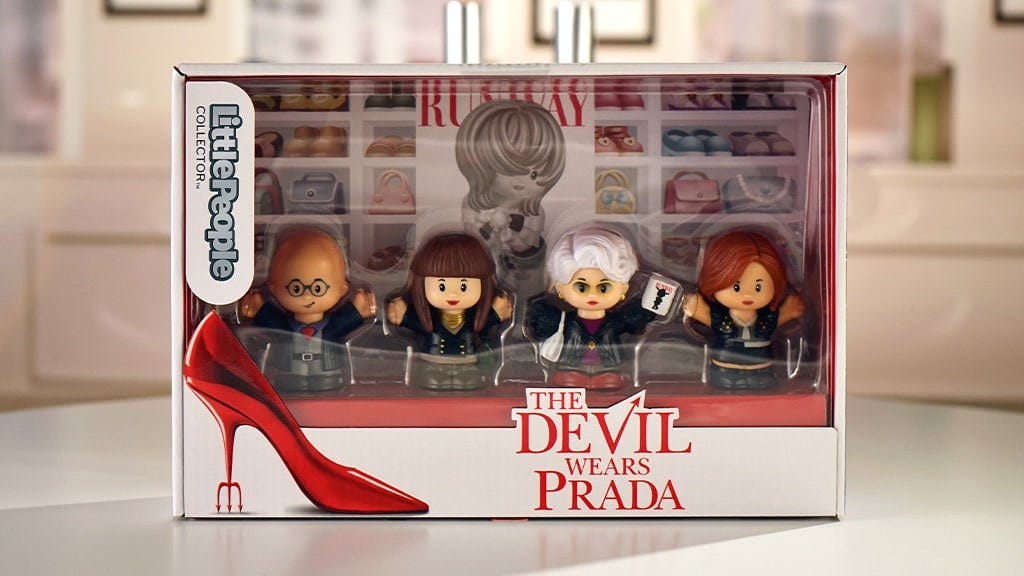
Fisher-Price (under Mattel) released a Little People Collector set with all four leads in the chunky 2.5-inch format, clearly aimed at adult collectors rather than kids, which made me laugh more than it probably should have; when I say I was so confused I mean it on this one, I just so happened to stumble across it when I was scrolling through - would you believe it - Instagram.
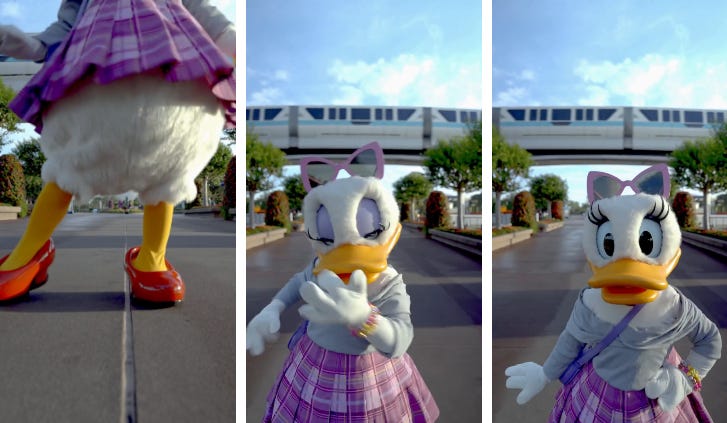
Disney parks went full crossover too; Daisy Duck strutting around Epcot’s Flower & Garden Festival in a spring outfit, a “Fashion Emergency” vending machine at the Disney Springs AMC, purse-shaped popcorn buckets, Funko Pops, Little Words Project bracelets. None of this needs to make sense on its own; it just needs to exist across enough Disney-owned touchpoints that the brand reach compounds.
Travel: United and Zillow, two very different angles on “moving on”
United Airlines cast one of its own flight attendants, Tanya Hutchison, in a scene opposite Streep, Hathaway and Tucci (her character tells Miranda there’s no champagne in economy), swapped its seatback flight-tracker plane icon for a red stiletto during the promotional window, and ran a “Fly the Cerulean Skies” campaign.
Zillow’s angle was smarter than I expected going in, their hero spot is set inside the Runway offices, with editors scrambling to find Miranda a new apartment after she declares she’s “sick of the skyline,” using Zillow Rentals to filter for impossibly specific criteria. It’s another example of borrowing the “impossible task” trope from the original film, repurposed as a real-estate ad. Given Andy’s actual arc in the sequel involves an apartment search and a new love interest, I do wonder how early this partnership got baked into the script; Zillow’s VP of brand Beverly Jackson added to the conversation with: “Renting is a huge, emotional decision, and we want Zillow to be the first place people think of when that moment hits.”
In essentially what is another in-link opportunity here, I just wanted to say that whilst I am from the UK and Zillow is pretty much alien to me, the last time I saw it in a films marketing campaign was for:

Ironically, it’s the first example I reference because I absolutely loved it and remember it to this day; getting that behind-the-scenes access has always been an interest of mine for Marvel - and comic books for that matter - because it shows you more about the story, characters and how they realistically live day-to-day for example; food for thought: where can you replicate that desire with your own film?
Got a house you only show one room of? Why not explore what the rest of the house looks like in an interactive webpage (like the one Amazon did for Project Hail Mary) or even a simple single drawn out blueprints; digital or physical. Take this X-Mansion Floor plan as a simple example.
Music: Gaga, Doechii, and the sonic layer nobody talks about enough
“Runway,” the Lady Gaga and Doechii single that soundtracks the final trailer (with Gaga also cameoing in the film), is exactly the kind of transmedia layer that outlives the marketing window.
Much like my Mortal Kombat II piece showcased with audio and music, this is a layer that will live alongside the film and the wider IP forever; once a song like this exists, hearing it anywhere, a gym playlist, a car radio, pulls your brain straight back to the film, the same way 2 Fast 2 Furious is permanently fused to “Act a Fool” in my head, or how Spider-Verse and “Sunflower” are basically the same memory now; survey of one for sure, but I bet you can also come up with an example for yourself, be it a soundtrack, song or score, there’s bound to be some sort of connection!
Get a big enough artist to make a genuinely good song for your film, and they become a permanent extension of the brand whether they intend to stick around or not.
Press and culture: the Vogue play is the one I think people will study for years
If I had to pick the single cleverest piece of this entire campaign, it’s the Vogue partnership, and full credit to Will Posket again for laying this out clearer than I’d seen anywhere else: the anchor was a May 2026 cover with Meryl Streep and Anna Wintour photographed together, in conversation led by Greta Gerwig.
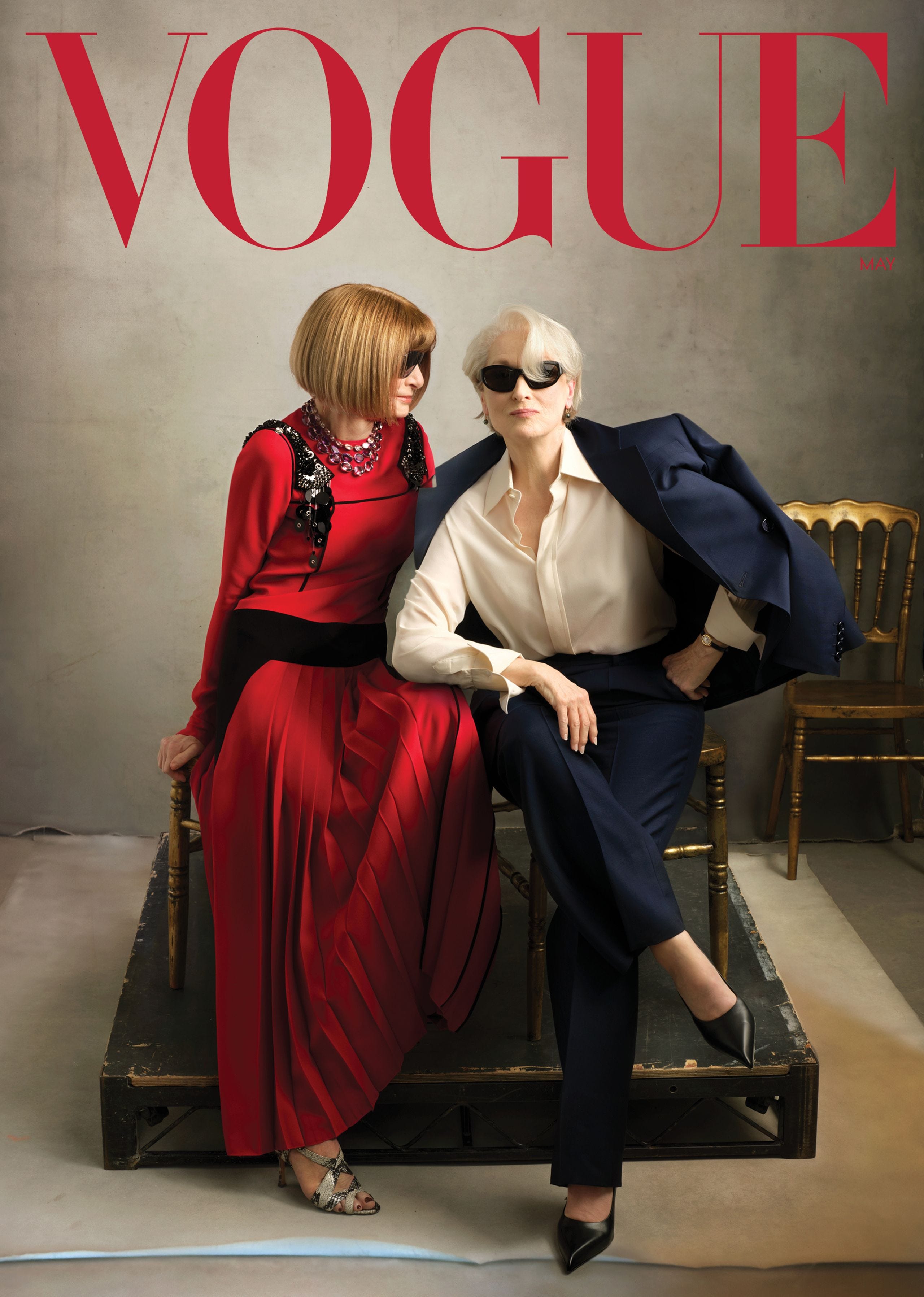
Think about what that actually is for a second; the actress who plays the fictional editor everyone compares to Wintour, photographed with Wintour, hosted by a third major cultural figure.
Variety covered it as a cultural event in its own right, not a celebrity booking, which is exactly the point. Around that cover, Vogue built out a book club reread of the original novel, a subscriber-only advance screening at Metrograph, a live Run-Through podcast episode, a written recap pulling in former Vogue assistants as an oral-history chorus, more podcast episodes with the costume designer and former magazine assistants.
As Will put it, when you add it all up - cover, book club, screening, podcast, recap, oral history, more podcasts - every piece extends the launch in a way that feels editorial rather than promotional. The fictional Runway magazine gets treated by the actual fashion press as if it’s a real, living thing, which deepens immersion in a way no straightforward ad campaign could.
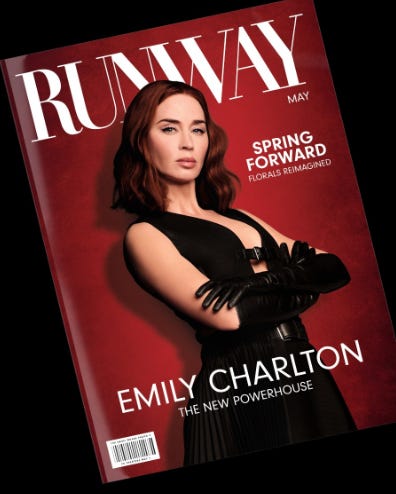
And speaking of Runway-as-a-real-thing: a genuine 96-page collector’s edition of Runway magazine was published as a marketing object, featuring Emily Blunt as Emily Charlton on the cover, complete with an Editor’s Letter “from” Miranda Priestly and contributions from Andy Sachs and Nigel.
UK fans could only get it online via a dedicated Runway Online site (resale copies are going for £20-30 on eBay), and that site itself is a small transmedia ecosystem on its own; blog posts “written” by Andrea Sachs, partner-brand content (Mercedes-Maybach has its own blog section on there), sections for Fashion, Beauty, Travel, and a ticket-buying CTA at the bottom. It’s connective tissue for the whole IP, dressed up as a magazine website.
There’s also a genuinely fun run of social clips of Streep, Tucci, and various critics receiving copies of the physical magazine on camera; Stanley Tucci reading it before being called back to set, Streep visibly unimpressed with the cover (in character, obviously).
As I mentioned, this magazine is a physical object, so naturally it didn’t just live online. In fact, there were physical pop-up stalls to ‘sell’ it, kitted out with a giant red heel as set dressing and a TV looping content on the wall; one creator’s Instagram carousel from a visit to one of these makes it look genuinely like a little newsstand experience rather than a marketing booth.
There was also a separate, bigger version too - the “Runway Magazine HQ” separate to Google’s ‘Runway Closet’ I mentioned earlier - a full experiential exhibition with outfits from the films, a layout modelled on the magazine’s actual office, and a photo-op section built to make you feel like you’re walking the runway yourself. The only catch: it never made it to Europe. One commenter summed it up pretty well: “This pop up was absolutely wonderful. They played Vogue. Everyone loved it. Everyone except Europe… because, sadly, it was not there.”
Fair point really, but I imagine moving an experiential build like that across continents isn’t cheap, so it makes sense that they picked their markets carefully.
It’s also worth flagging: the cast leaned into this press cycle with a level of self-awareness that a lot of franchise press tours don’t bother with. Stanley Tucci did a TJ Maxx spot where he breaks character entirely to address backlash over a line his character delivers - “It has come to my attention that a line delivered by a character I portray has created a bit of a kerfuffle” - before TJ Maxx “helps him stand corrected and well dressed.” It’s a different move to the other partnerships, but it’s the same instinct: let the actors comment on the discourse around the film rather than just promote it, and the promotion ends up feeling a lot less like promotion.
And then there’s the sheer cameo density, which deserves its own mention. There’s a clip going around - “LAWranda Priestley,” a Law Roach edit - that ties back to a wider point about just how many people are crammed into this film’s background. One Instagram account captured the “Holy Grail” scene specifically to call out who’s actually in the room: Marc Jacobs, Lucy Liu, Calum Harper (no relation), Wisdom Kaye, Heidi Klum, Amelia Dimoldenberg, who literally shouts out her own Chicken Shop Date format and more!
The videos overlayed text put it well: “the budget for this movie was beyond the stars.” There’s even a creator who posted about exactly how much he got paid for his three seconds of screen time in the Met Gala scene - $239, for the curious - which is a fun, slightly absurd bit of transparency content that a film this stacked with cameos was always going to generate.
The cross-promo cluster: Rivals and the Kardashians
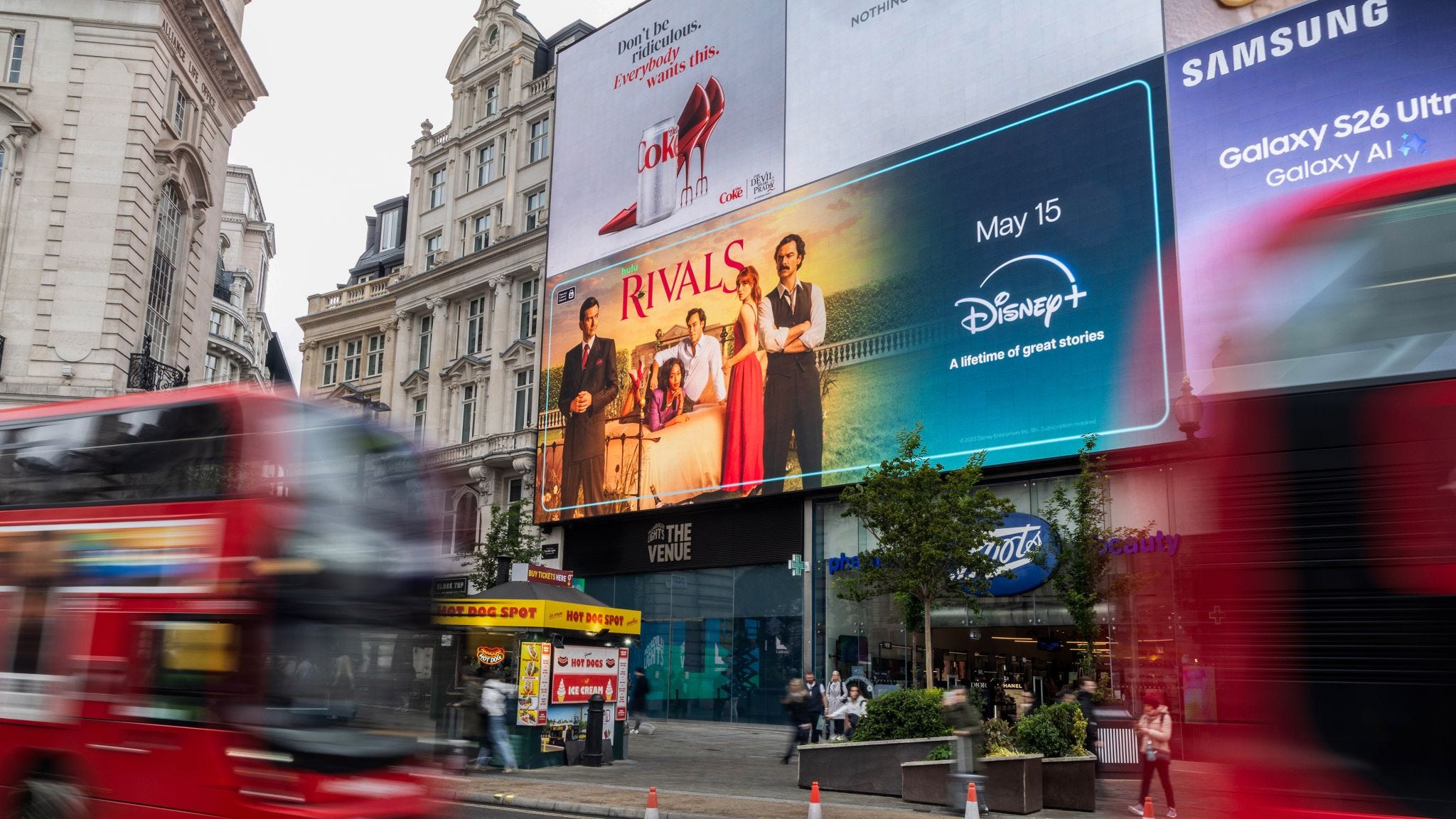
This is the cluster that only really makes sense once you remember Disney owns both halves of it. Because Rivals Season 2 lives on Disney+ and Prada 2 came out of 20th Century, the studio could run a coordinated push across both at once; dominating the theatrical box office and streaming numbers simultaneously, with the same media spend doing double duty.


Antoine Chapuy, the UK&I Marketing Director for Disney+, actually posted images of the above placements on LinkedIn, and the sheer scale of it is wild once you see it laid out: a Piccadilly Lights takeover, a BFI takeover, segmented Lights ad space that put a Diet Coke x Prada 2 spot directly above the Rivals one, plus Ocean Outdoor banners, London Underground DEPs, and JCDecaux roadside billboards.
His caption flagged “Don’t miss Episode 4 of Rivals Season 2, streaming this Friday on Disney+,” which is a strange beat to push mid-season rather than at the premiere; or so I thought at first.
You see, episode 4 dropped on the 22nd of May, three weeks after Prada 2 hit cinemas on the 1st, so this reads less like an odd choice and more like budget pacing, spreading the spend out to sustain awareness rather than blowing it all in premiere week and hoping it coasts.


Then there’s the one I actually managed to photograph myself: a 3D special-build billboard at Canary Wharf - courtesy of Ocean Outdoor, linked is their much better video - pairing the two titles directly; one giant red shoe, captioned “When two cultural hits collide… Endless drama.” I went past it more times than I’d like to admit before actually getting a usable photo; missing it entirely on the way to and from the cinema a few times, got it on the Tube with terrible lighting once, and only really clocked how big a deal it was after my girlfriend pointed it out to me once we tubed past it the first time!
The Kardashians got pulled into the same orbit, on the same Disney+ logic; you’re already promoting that you can stream The Kardashians on Hulu via Disney+, so why not dress it up as a Prada 2 tie-in too. Kris Jenner did exactly that, as the clip captures, she’s styled as Miranda Priestly and pulls in 80k Instagram likes: demanding four looks for Milan instead of two, complaining that 7am is “practically lunchtime,” and insisting the family watch the movie with her grandchildren.
It’s a small thing, but it’s the same trick as the Kendall Jenner/L’Oréal spot from the beauty section above; once a brand or a personality has any plausible reason to gesture at Miranda Priestly, apparently nobody can resist taking the shot.
Media planning and the bits that aren’t glamorous but matter
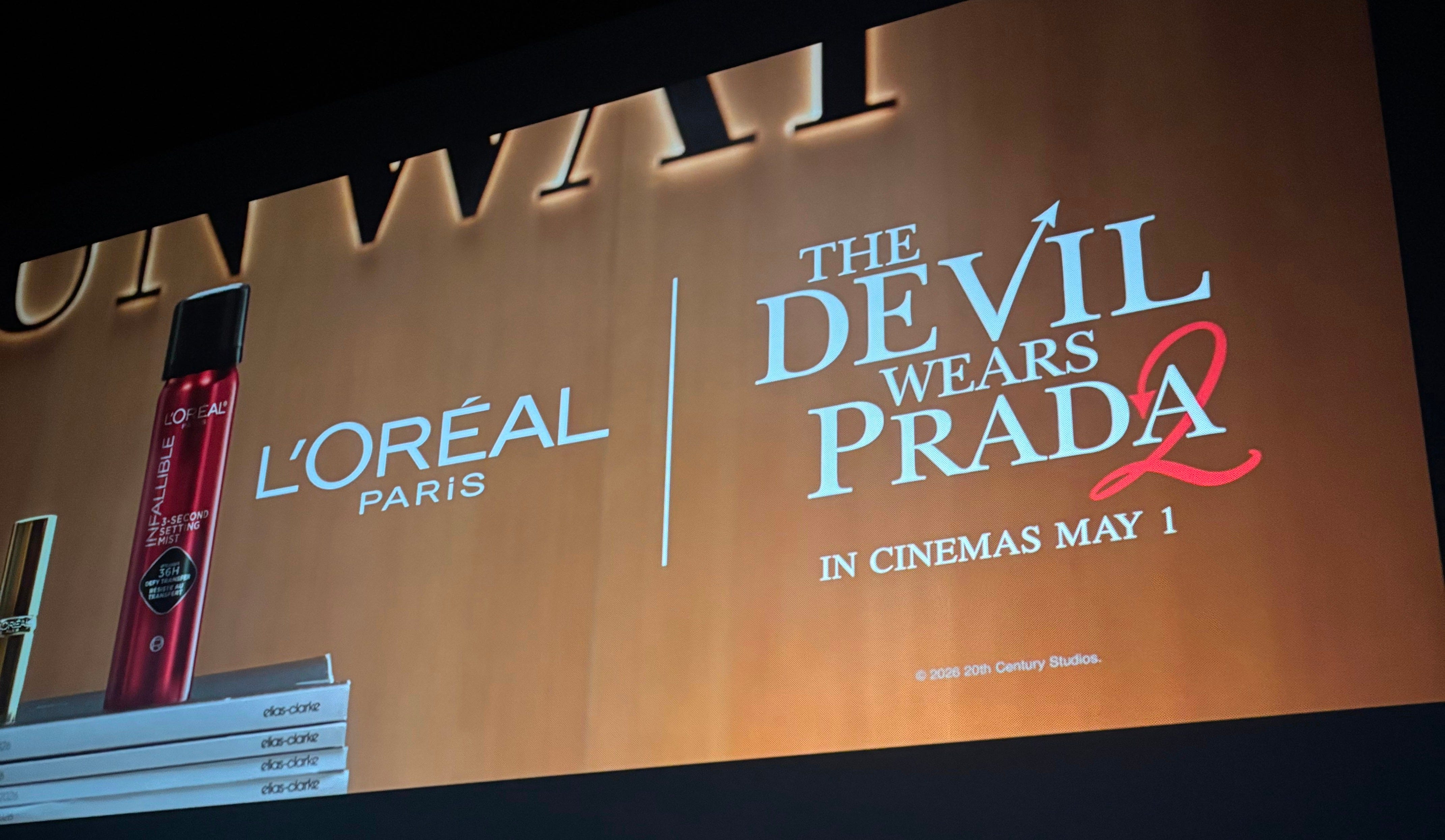
Outside of all the bespoke creative, there was a genuinely substantial UK media plan running underneath everything, and whilst I didn’t get a chance to capture these examples myself I can confirm this is what I saw at a minimum: bus T-sides, London Underground 48-sheets and digital six-sheets, roadside 98-sheets, 20-second radio spots, and pasted walls in shopping centre (I spotted one in Westfield Shepherd’s Bush, conveniently near to the Vue and including seeing it there in the messaging).


I’ll also flag a fun bit of self-correction: I initially thought a Tattu London dining collaboration was tied to the film, since the timing lined up with a work lunch I had there. Turns out it’s actually paired with The Devil Wears Prada: The Musical at the Dominion Theatre, which is literally across the road from Tattu’s Now Building Rooftop location; contextual, not filmic. Easy mistake given how much this name has been flying around this year, but worth correcting myself here rather than letting it muddy the marketing picture!
The transmedia layer, properly broken down
Strip away the brand logos and what you’re actually looking at is a fictional magazine being treated, almost everywhere, as if it’s real. That’s the connective tissue holding this entire campaign together, not Miranda, not even the cast, but Runway itself as an object you can hold, subscribe to, and read blog posts from.
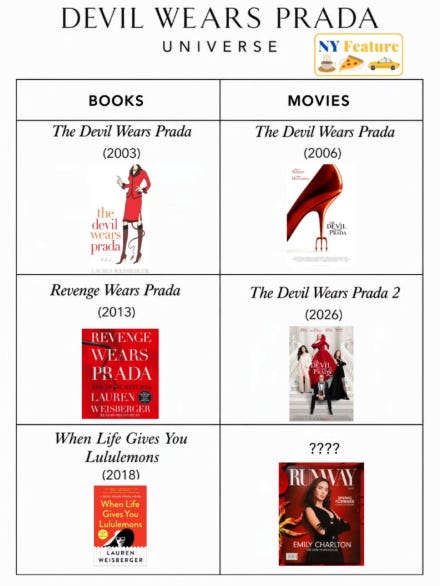
There’s a great Instagram post from New York Feature that mapped the actual “Devil Wears Prada Universe” as a chart: the original novel and 2006 film, Revenge Wears Prada (the 2013 book, set about ten years later), The Devil Wears Prada 2 (2026, jumping roughly twenty years on), and When Life Gives You Lululemons (the 2018 book centred on Emily Charlton, with no film adaptation), plus a question mark hovering over the Runway magazine itself given how heavily it’s been used promotionally; raking in 26k Instagram likes purely off people being interested in how the timeline hangs together.
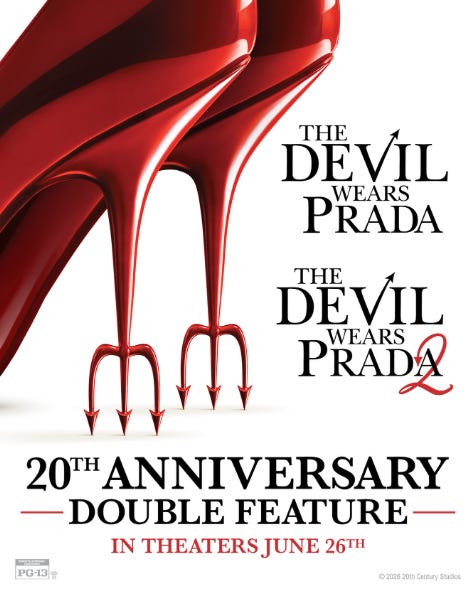
The one thing missing from that “universe” diagram, as far as I can tell, is the West End stage musical; a separate, fully original-score adaptation that expands the IP into theatre entirely. Funnily enough whilst we’re talking about both films, 20th Century also just re-released both films as a 20th-anniversary double feature in cinemas, which reads pretty clearly as a way to squeeze a bit more box office out of the franchise while the cultural conversation is still warm.
What makes the whole campaign function as transmedia rather than just heavy advertising is that the brand objects are mostly diegetic. Essentially they’re props the characters would plausibly use, not just logos slapped on a poster. Samsung’s phone replaces a Sidekick. The Starbucks order is the same order Andy ran in 2006. None of it requires you to suspend disbelief about why a brand showed up; it’s just dressing the world Miranda already lives in.
What I actually thought of the film (and why the marketing matters more than the movie does)
Right, here’s the part I’ve been building towards the whole post, and it’s lifted largely from my own Letterboxd review, because I don’t think I can say it better a second time:
My girlfriend wasn’t a big fan of this one, although there were parts we both enjoyed - I had a genuinely decent time at the cinema - but the sequel doesn’t quite land the same way the first one did. The story feels a bit shallow, and it’s hard not to notice how much screen time goes to ad placements and partnerships rather than plot, which, given everything you’ve just read, isn’t exactly a shock.
Miranda still slays, but she’s noticeably held back this time; her old sense of total autocratic control is softened, which tracks given how much workplace culture has shifted in twenty years, even if it costs the central dynamic a bit of its old bite. Andy fares a bit worse too, she’s supposed to be the relatable everywoman so many people loved in the first film, and this time round she comes across a touch more self-absorbed than expected.
None of that seems to have put audiences off though, the numbers speak for themselves. But there is something almost too neat about a film whose actual plot is about the death of print media and AI replacing creative jobs, marketed by monetising every available surface of that exact same dying media landscape to sell tickets. It’s a stark little mirror of the consumerist culture it’s depicting, and credit to Disney either way, they’ve done a genuinely impressive job cultivating that for a specifically female audience. I find it fascinating enough that I wanted to write all of this down.
For what it’s worth, I’ve since watched Toy Story 5 too, which shares some of the same DNA (brand partnerships everywhere, a plot also about change) but tells its actual story without leaning on its partners quite as hard, using its platform to sell the idea of imaginative play rather than just product. Different campaign, similar bones; stay tuned and that’ll land in your inbox in the coming very soon!
What’s worth stealing for your own playbook
Pulling this all together, here’s what I think holds up if you’re building a campaign of your own, regardless of category:
Dress the world, not the marketing, in nostalgia.
If your audience has aged up since the original, give them a tap on the shoulder rather than a full reunion. Let new audiences experience the references as aesthetic rather than homage.
Treat your partners as props, not sponsors.
The strongest activations here weren’t “Brand X paid to appear,” they were objects the characters would plausibly use anyway. That’s the difference between borrowing attention from the IP and becoming part of its world.
Build an aspiration-to-access ladder.
This campaign ran from Anna Wintour and a Lincoln Center premiere at the top down to a Walmart capsule and a £4 detangling brush at the bottom, and none of those entry points felt like a downgrade. Most brands collapse this choice by picking one lane; this one refused to.
Partners can fund your media dominance, not just your reach.
Paying for the Piccadilly Lights alone is eye-wateringly expensive, but when Samsung, Diet Coke, and the Rivals cross-promo are all paying to be on or near that same screen, the studio gets to dominate the most expensive inventory in the country without footing the bill solo. Picked right, partnerships aren’t just a creative add-on; they’re a way to buy media presence you couldn’t otherwise afford, freeing up your own budget for everything else.
Let your fictional object become a real one.
The actual Runway magazine - printed, sold, resold on eBay - did more for the believability of this universe than any amount of trailer footage could have. If your story has a fictional brand, product, or publication inside it, ask whether it could exist in the real world too.
The marketing can outshine the film, and that’s a risk worth sitting with.
It happened here. The campaign is, by a fair margin, more interesting and more thoughtfully executed than the film it’s selling. That’s not necessarily a failure on Disney’s part - clearly it worked, financially - but it’s worth sitting with as a creator or marketer: at what point does the promotional machine become the actual product?
Anyway. That’s everything I’ve got on this one, and I think it’s the most thoroughly I’ve ever tracked a single campaign in real time. If you spot something I’ve missed - and given how much kept surfacing while I was writing this, I wouldn’t be shocked if there’s more - let me know!
That’s The Harperverse breakdown of The Devil Wears Prada 2.
If this kind of breakdown is your thing - film marketing, transmedia storytelling, the business behind the stories - subscribe to The Harperverse.
The Harperverse is a free publication, if you want to support what I’m building here, a paid subscription is £4 a month, less than a coffee in London!
For related reading:
The Drama • “Wuthering Heights” • The Bride! • Romeo + Juliet & Moulin Rouge!
~ most uncredited images will have been taken from the films TMDB page!