

The Drama
A24’s Most Controversial Marketing Playbook Yet

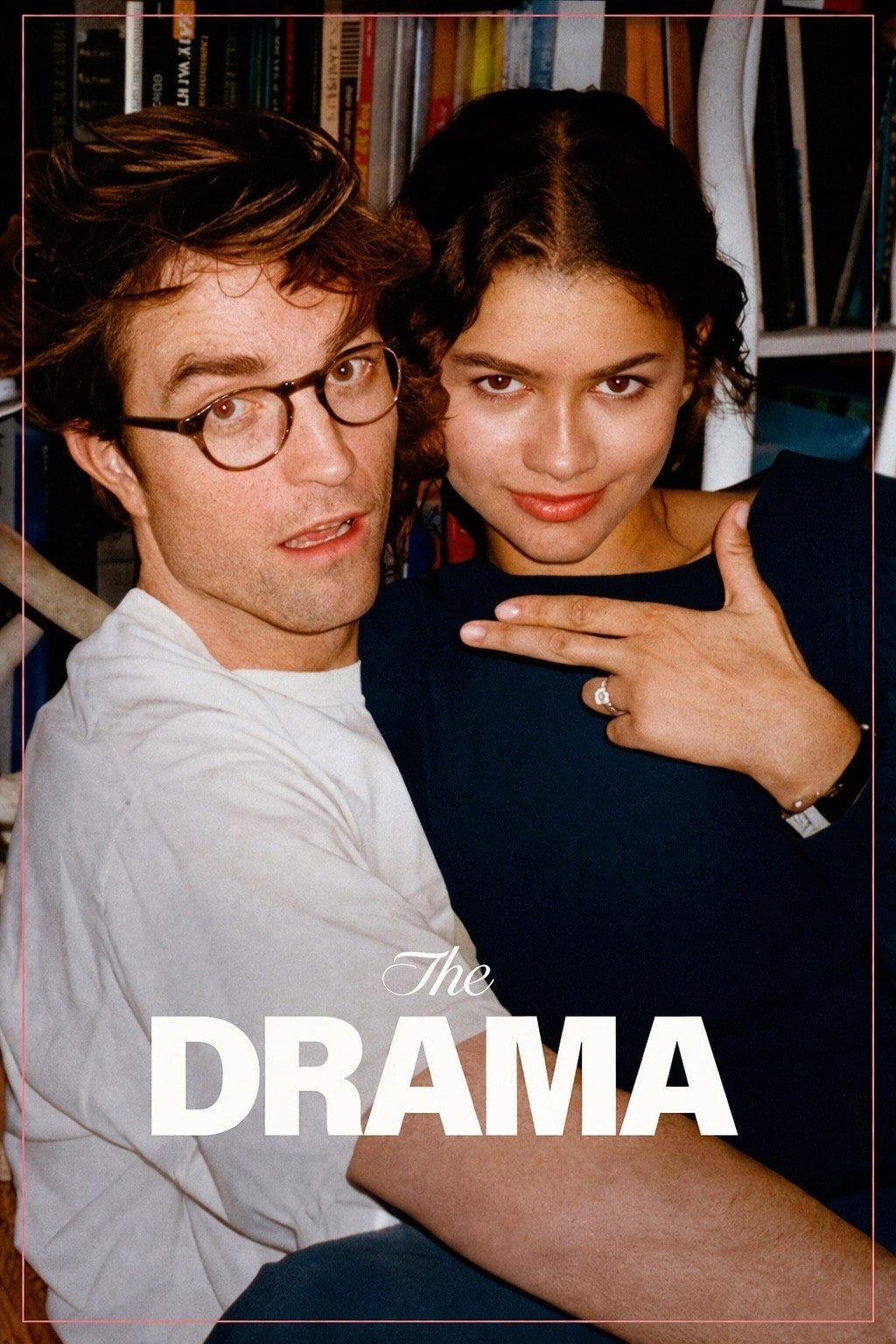
There’s a moment in every A24 release cycle where you stop and think, okay, they’ve done it again.
With The Drama, that moment came slightly differently for everyone.
For most audiences, it was sitting in a cinema and realising the film they’d been sold was not quite the film they were watching. For marketers and media planners like me, it was watching the whole thing unfold in real time and genuinely not being sure whether to admire it or raise an eyebrow about it.
Maybe both.
Because here’s the thing: The Drama is, by virtually every commercial metric, a success story.
$122 million worldwide on a $28 million budget, A24’s fifth-highest-grossing film, a third-place domestic opening behind only Civil War and Marty Supreme, and a chart-topper on PVOD platforms the moment it hit Apple TV and Amazon in early May.
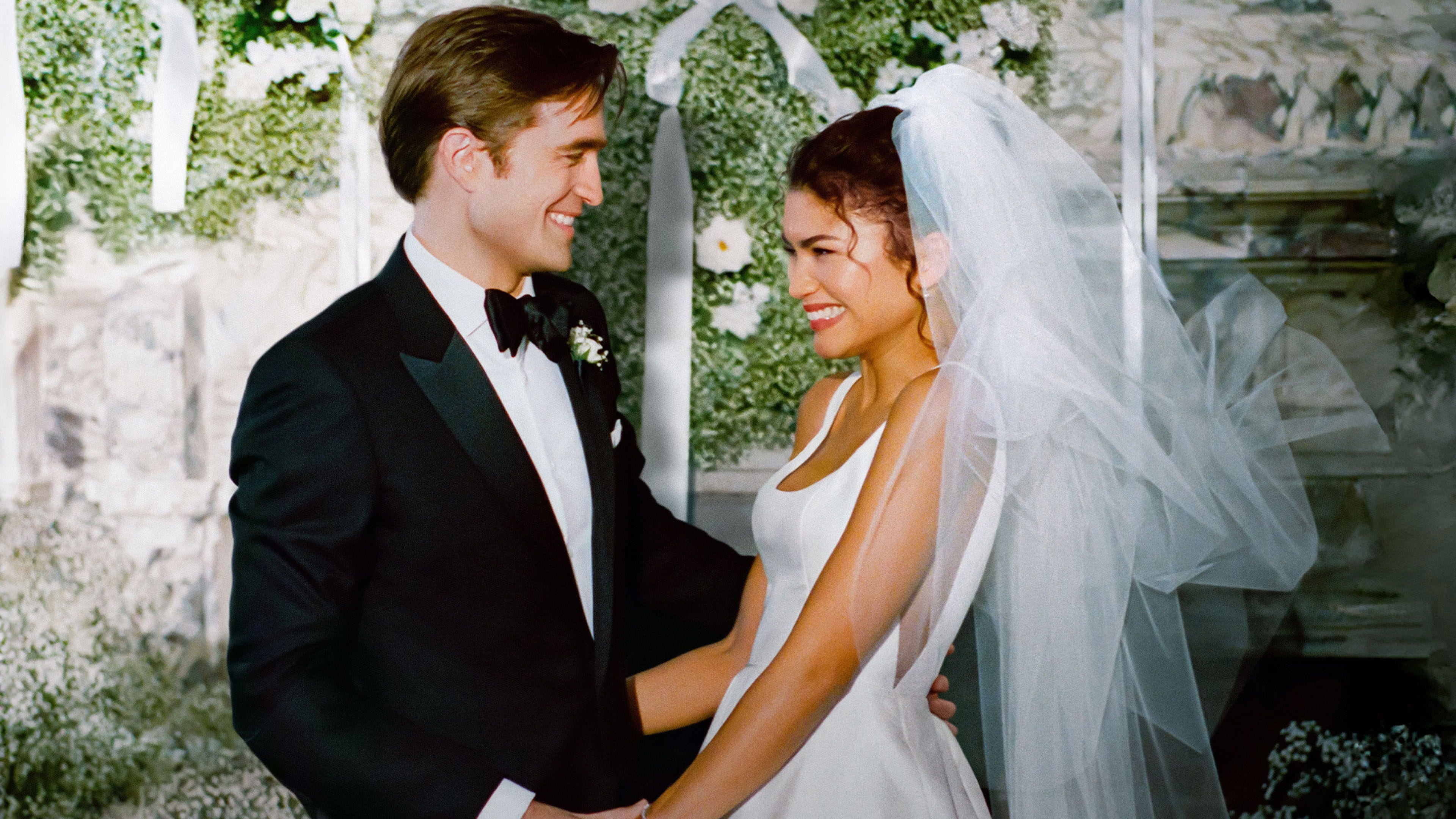
Kristoffer Borgli directed it. Zendaya and Robert Pattinson star in it. And the studio built a campaign that made people feel like they were experiencing something rather than just being advertised to.
But then there’s the other story - the one running parallel to all those numbers - about what exactly was being sold, what was being hidden, and what responsibilities come with that choice.
I want to get into all of it. The media strategy, the planning and buying, the experiential, the merch, the discourse, and what this campaign means for how we think about movie marketing and transmedia storytelling in 2026. No corners cut.
Let’s go.
What Is The Drama Actually About?
Before we get into the campaign mechanics, it’s worth making sure we’re all on the same page about the film itself; because the marketing was, deliberately, designed to ensure you weren’t.
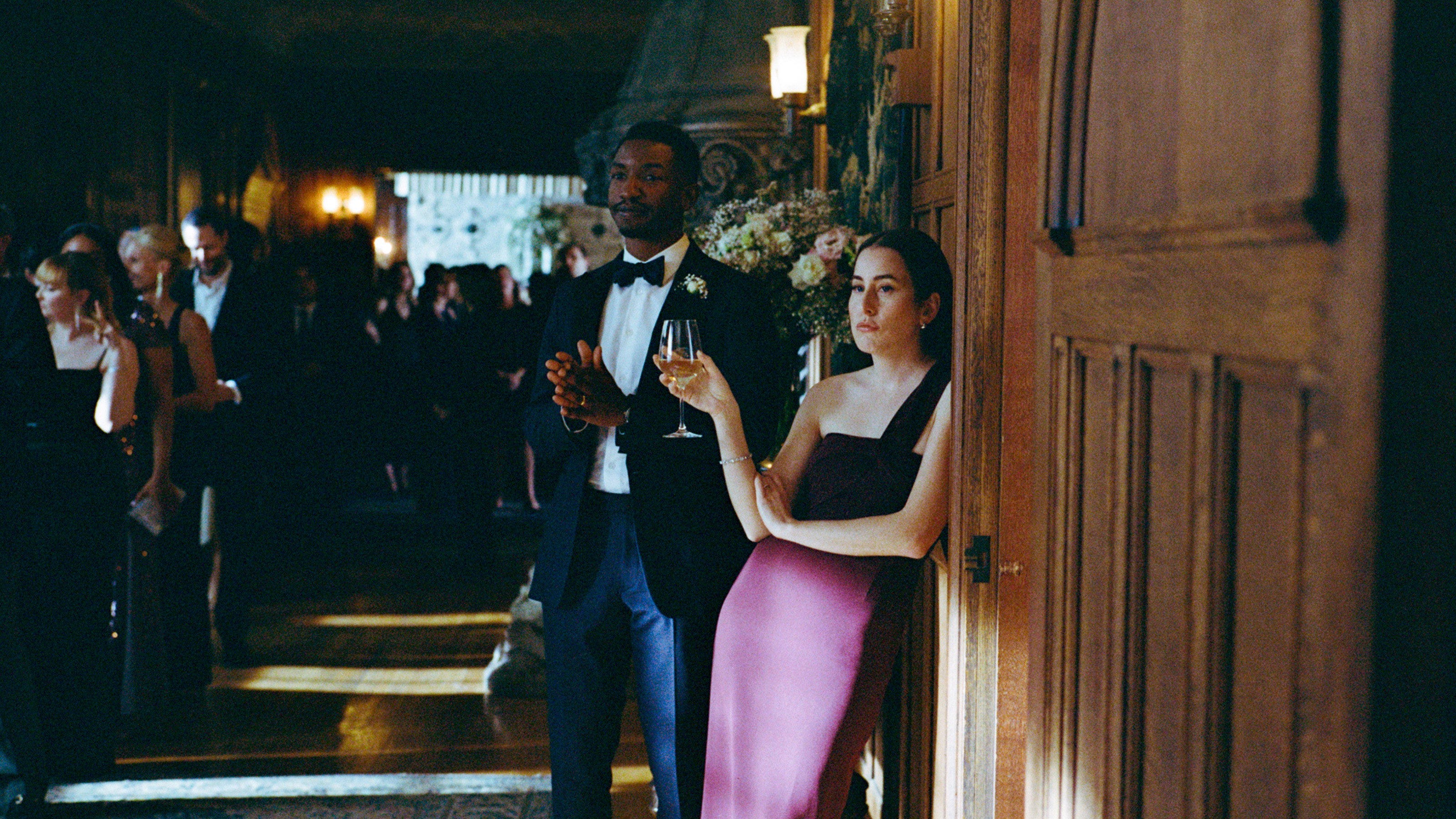
The Drama follows Emma (Zendaya) and Charlie (Robert Pattinson), a couple in the final stretch before their wedding. A rehearsal dinner, family in town, that specific tension of a relationship being stress-tested in public. Alana Haim is in there too, as a character called Rachel who becomes the internet’s designated villain within approximately 48 hours of release.
It was positioned as an absurdist dark comedy - Borgli’s follow-up to Dream Scenario - and it leans into the same energy: mundane social situations pushed past the point of discomfort until they become something stranger and more unsettling.
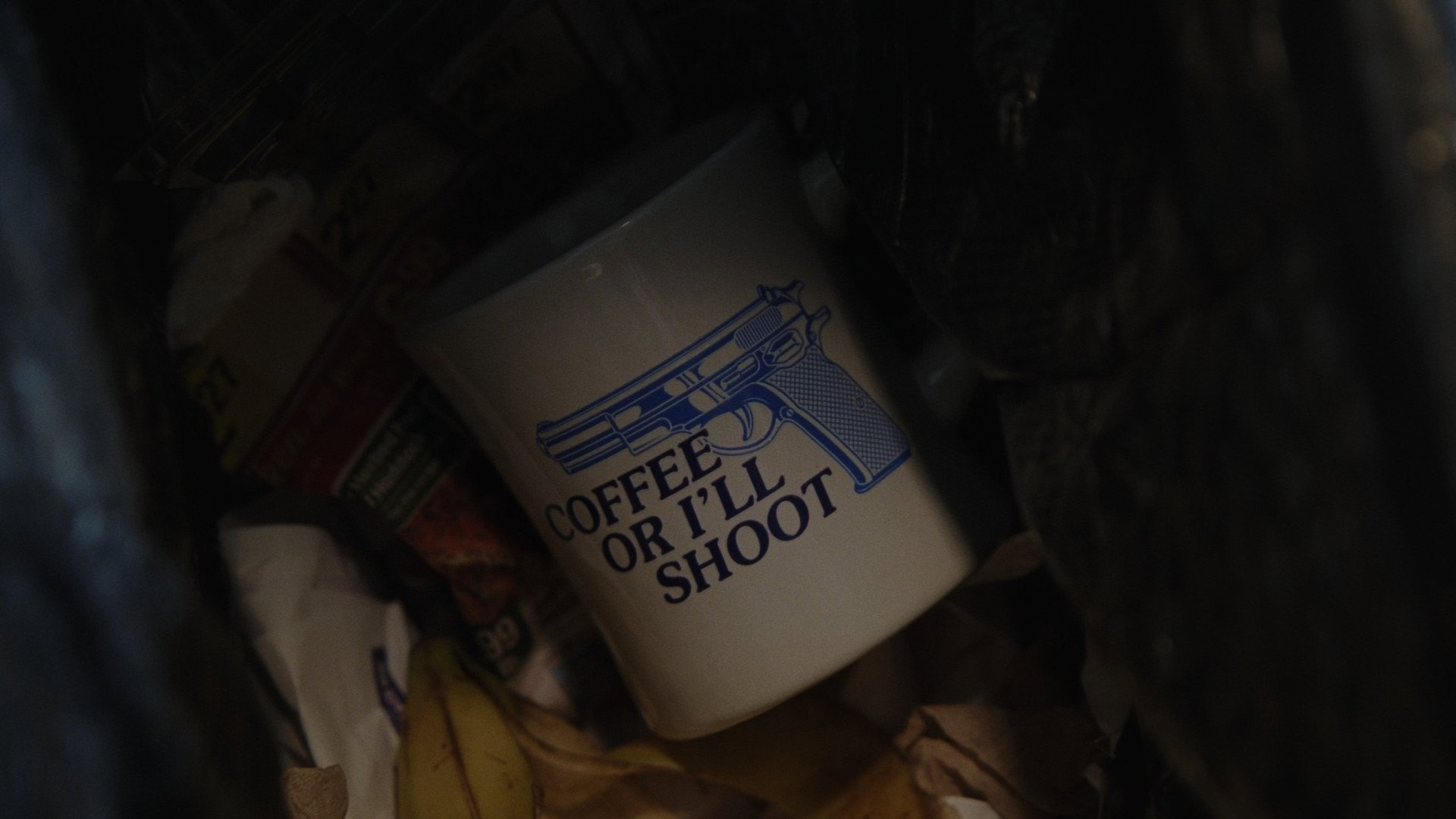
The twist - and this is the part A24 explicitly asked press not to mention in reviews ahead of release - is that Emma confesses, during a dinner table game, to having planned a school shooting at age fifteen. She didn’t go through with it. But she planned it.
That’s the drama. And the marketing, almost entirely, pretended it wasn’t there.
The Media Strategy
Building a World, Not Just Awareness
Let’s start with how this campaign was actually structured, because the media planning here is genuinely worth studying; even if some of the later choices complicate that admiration.
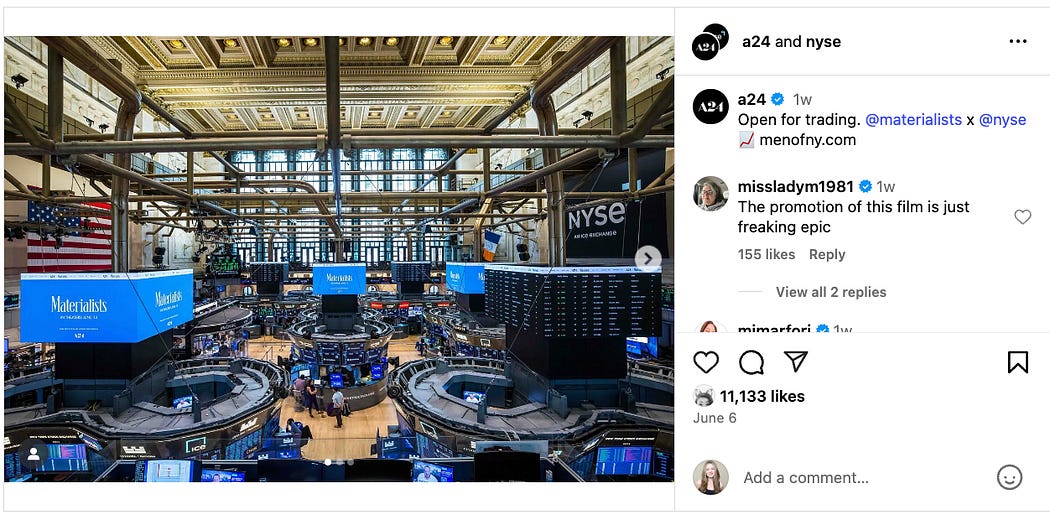
A24 have never been a traditional studio in terms of how they approach marketing. Their budgets may be smaller than the major players, their audiences more specifically cultivated, and they’ve historically relied on a combination of critical word-of-mouth, prestige festival positioning, and smart social amplification rather than blanket saturation.
The Drama does all of that, but it also goes further - into a kind of immersive, in-character world-building that most studios still treat as experimental rather than core strategy.
The campaign essentially operated on three layers simultaneously.
The first was the traditional awareness funnel. Trailers rolled out across YouTube and paid social, giving audiences the cinematic language of the film without the subject matter. You got the aesthetics: the naturalistic performances, the intimacy, the tension of two extraordinarily famous people playing ordinary people in a relationship under pressure.
Press appearances were kept deliberately light. The cast’s real-life dynamic - their friendship, the Twilight-era nostalgia around Pattinson, Zendaya’s status as arguably the defining cultural figure of her generation - did a lot of heavy lifting here.
Deadline’s post-release breakdown noted that 80% of audiences polled by A24 cited both leads as their primary reason for attending, and 60% of the audience skewed female, with 80% under 35. That’s not an accident; that’s the targeting working exactly as intended.
The second layer was the in-world campaign; where things get genuinely interesting from a media planning perspective.
A24 built a fictional wedding around the film. Not just a social handle. A whole apparatus: newspaper engagement announcements that appeared with the kind of quiet, plausible detail that makes you do a double take, character biographies with backstories (Emma earned her B.A. in English from Boston University; Charlie holds a Ph.D. in Art History from Tufts - more on where those details surfaced shortly), and eventually the centrepiece: The Drama Wedding Chapel in Las Vegas.
One week before release, A24 dropped what they framed as Charlie Thompson and Emma Harwood’s official 16mm wedding video, captioned simply: “One week until THE DRAMA. Only in theaters April 3 - get tickets at thedrama.movie.” Shot in the warm grain of actual 16mm film, it looked like something you’d find in a drawer at your grandparents’ house, not a studio promotional asset.
This is the bit that gets me every time: the film never shows a completed wedding. The whole in-world video was built from on-set footage of something that, in the narrative, falls apart. Unused footage from production repurposed as transmedia world-building, creating a version of reality the film itself doesn’t allow. That’s genuinely clever filmmaking logic applied to marketing.
Back to the chapel. One day only. Fourteen real ceremonies performed. Alana Haim as the DJ (credited on the promotional material with a trademark too!). A merch booth, photo ops, and an exclusive Praying collaboration hoodie that sold out fast enough to validate the entire activation before Zendaya and Haim even showed up as surprise guests. When they did, the images that circulated online didn’t look like a studio event. They looked like a genuinely joyful wedding day that happened to feature two extremely famous people.
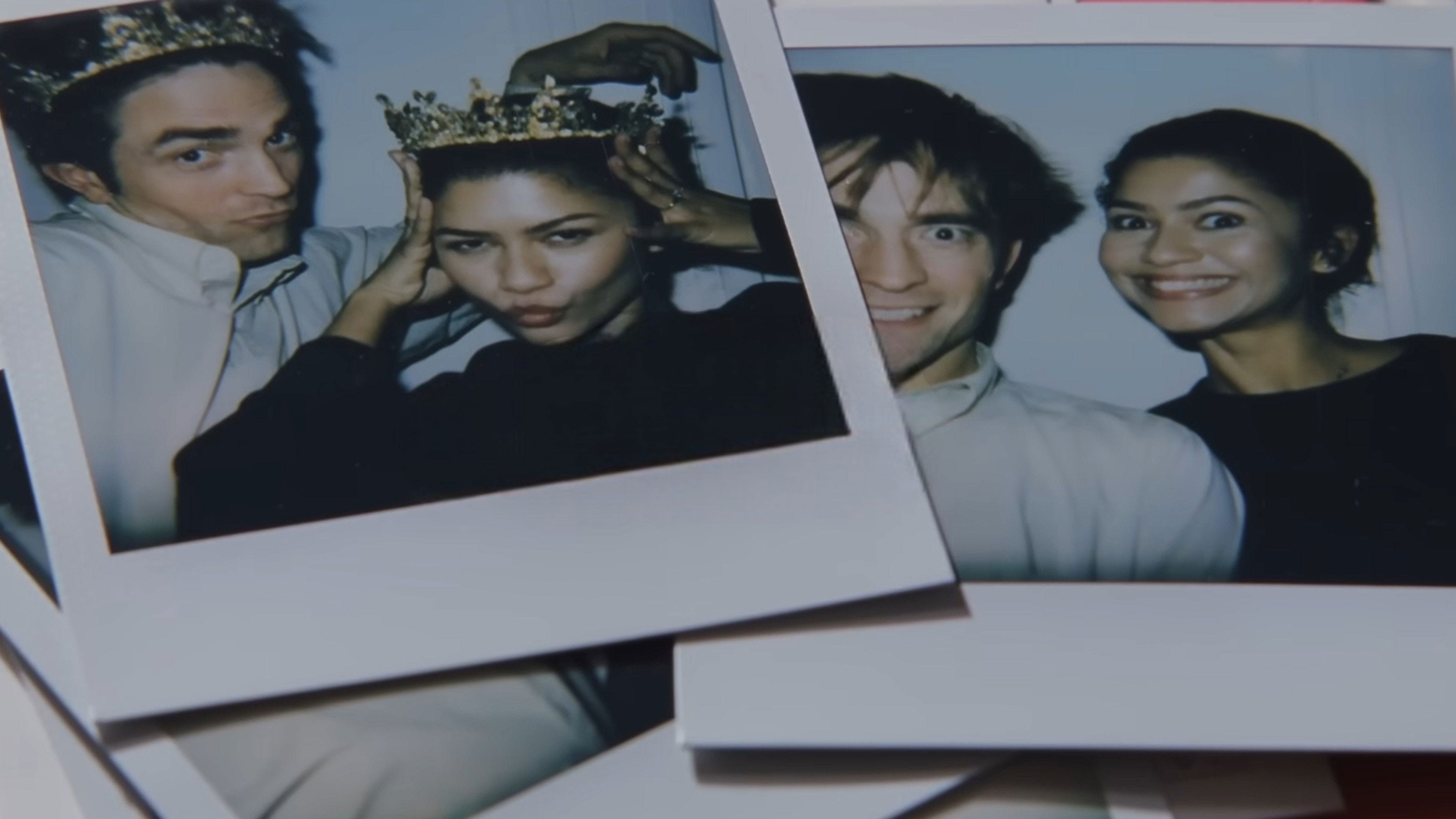
Polaroid came in as a partner for that same event, shooting the couples in their signature format and posting a carousel that felt like found content rather than branded content. That’s the move, right there; making the marketing artifact feel like something that already existed in the world rather than something created to promote the film.
Even the machinery around the LA premiere was done in-world. Fandango, partnering with A24 and Rotten Tomatoes, sent physical wedding box-themed invitations to influencers and attendees; white boxes with blue ribbon and wax seals, containing calligraphy invitations and a three-photo booth strip of Zendaya and Pattinson together. The kind of tangible, collectible thing that ends up on someone’s shelf and in their Instagram stories. It also meant that when those influencers showed up to the premiere, they’d already been inside the world for days before the film started.
Zendaya and Pattinson also visited Piazza del Campidoglio in Rome - the actual civic venue where Roman civil marriage ceremonies take place, where the city’s mayor welcomed them - and Taiwan ran their own version of a wedding chapel stunt.
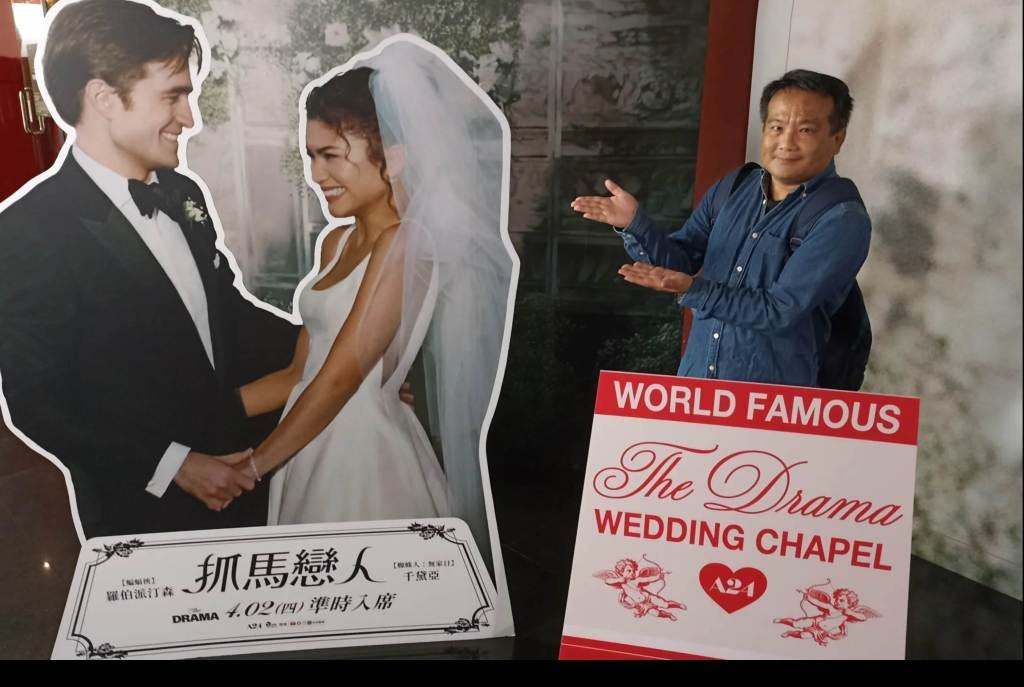
The world tour wasn’t a press junket with cameras pointed at a backdrop; it embedded the cast, and the fictional relationship they were promoting, into real civic and cultural spaces.
The third layer was the merch and product ecosystem; A24’s own pillar of brand strategy entirely.


The Drama: The Card Game launched before the film did, positioned as a couples’ activity and packaged with prompts designed to surface uncomfortable honesty. “What’s something you resent them for?” “Which of their friends do you find most attractive?” The caption across A24’s channels described it as “a dangerous game for two.” A top comment - “Cards against happy relationships” - got tens of thousands of likes. The comments were the marketing. That’s the point.
Then there were the “To Be Loved Is To Be Known” tees, hand-sourced vintage garments individually printed by artist and designer Emily Dawn Long, who later wrote about the whole experience on her own Substack (she broke A24’s website in the process, which is the kind of brand story that writes itself). Limited run, collectible, artist-driven; the kind of merch that signals cultural legitimacy rather than just monetisation.
Then there’s Clique, a local LA nail salon, which ran a limited partnership between March 28 and April 10 around the film’s release. The Drama Mani came in two tiers: a Basic Art French mani with wedding-inspired colour blocking and Drama decals, and a Tier 3 Art with a full curated set for the “big day.” The first ten guests to book got 50% off, framed as a gift from “the happy couple.” The whole thing ran for less than two weeks and was hyper-local.
But, this is exactly the kind of ground-level brand alignment that A24’s marketing ecosystem thrives on; small, targeted, entirely coherent with the film’s world. It’s not Nestlé. It’s not a global CPG deal. It’s a nail shop in LA doing something that feels true to the film’s female-skewing audience and the specific cultural moment of a pre-wedding flurry. You don’t need a million dollar budget to be in the room.
The full merch ecosystem mirrored the in-world logic of the campaign. Everything looked like it could plausibly exist inside Emma and Charlie’s relationship rather than outside it, as promotional material.
The Hollywood Press Playbook - And Its Modern Update
Before we get deeper into the transmedia layer, it’s worth talking about the press and premiere circuit; even with a campaign this immersive and in-world, the traditional Hollywood machinery was still fully operational underneath it all. And the way A24 ran it alongside the world-building is instructive.
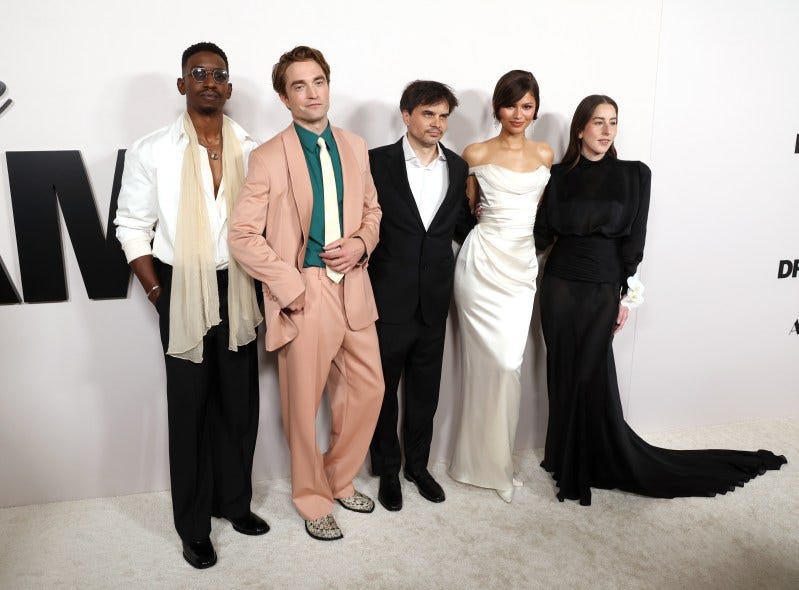
Premieres happened. LA, Paris, New York City. At the world premiere, Maura Higgins interviewed Robert Pattinson on the carpet and couldn’t help herself; she brought up Twilight. Classic. BTS style content from both the Paris and NYC premieres was shot professionally and released to social, blending seamlessly into the in-world content that had been dropping in the weeks prior. These weren’t low-fi press moments; they were produced assets.
The talk show circuit ran in parallel. What’s interesting about 2026’s version of this playbook is that “talk show appearances” is no longer just Fallon and Kimmel. It’s Ladbible’s Agree to Disagree series, it’s Chicken Shop Date energy, it’s digital content formats that sit somewhere between editorial and entertainment. The Ladbible appearance in particular, where Zendaya and Pattinson were asked to debate whether Spider-Man would kick Batman’s ass; a question so perfectly engineered for two actors whose real-life relationship is half the marketing story, clocked 530,000 likes on a single clip.
That’s not press. That’s content. The distinction matters to a media planner, because the value isn’t in the reach of the slot; it’s in the shareability of the moment.
Then there was Tom Holland - Spider-Man & irl husband to Zendaya - who posted his support publicly: “I honestly couldn’t be more excited for you to see this movie and believe me when I say it’s gonna floor you. Get your tickets now!” It’s a three-sentence Instagram post from the real husband. It’s also, functionally, a piece of earned media reaching Holland’s audience that no media buy could replicate. The question you’d ask in any planning meeting - was that organic or coordinated? - is almost beside the point. It worked either way. And it’s the kind of asset that makes A24’s campaigns feel warm in a way that bigger studio campaigns often don’t.
The Transmedia Layer: Where A24 Built a World
This is the part I think about most, and it’s also where the most interesting creative decisions were made; including the ones I find complicated.
Starting with Vogue. Both Vogue and Vogue Weddings ran a shared Instagram post on the film’s release date - April 3, 2026 - that read: “Congratulations are in order for Emma Harwood and Charlie Thompson, the couple is officially married! Now based in Boston, Harwood - who earned her B.A. in English from Boston University - works at Mission Books, while Thompson holds a Ph.D. in Art History from Tufts University and serves as Director of the Cambridge Art Museum. The two first met in a coffee shop, in a meet-cute worthy of the big screen, and tied the knot today, April 3, 2026.”
Read that again. Vogue, one of the most culturally authoritative media brands in the world, announced the marriage of two fictional characters as if it were news. Full bios. Real-feeling employment histories. A coffee shop meet-cute. It’s an extraordinary in-world move, and it raises a question I genuinely can’t answer with certainty: did Vogue know what The Drama was when they agreed to this?
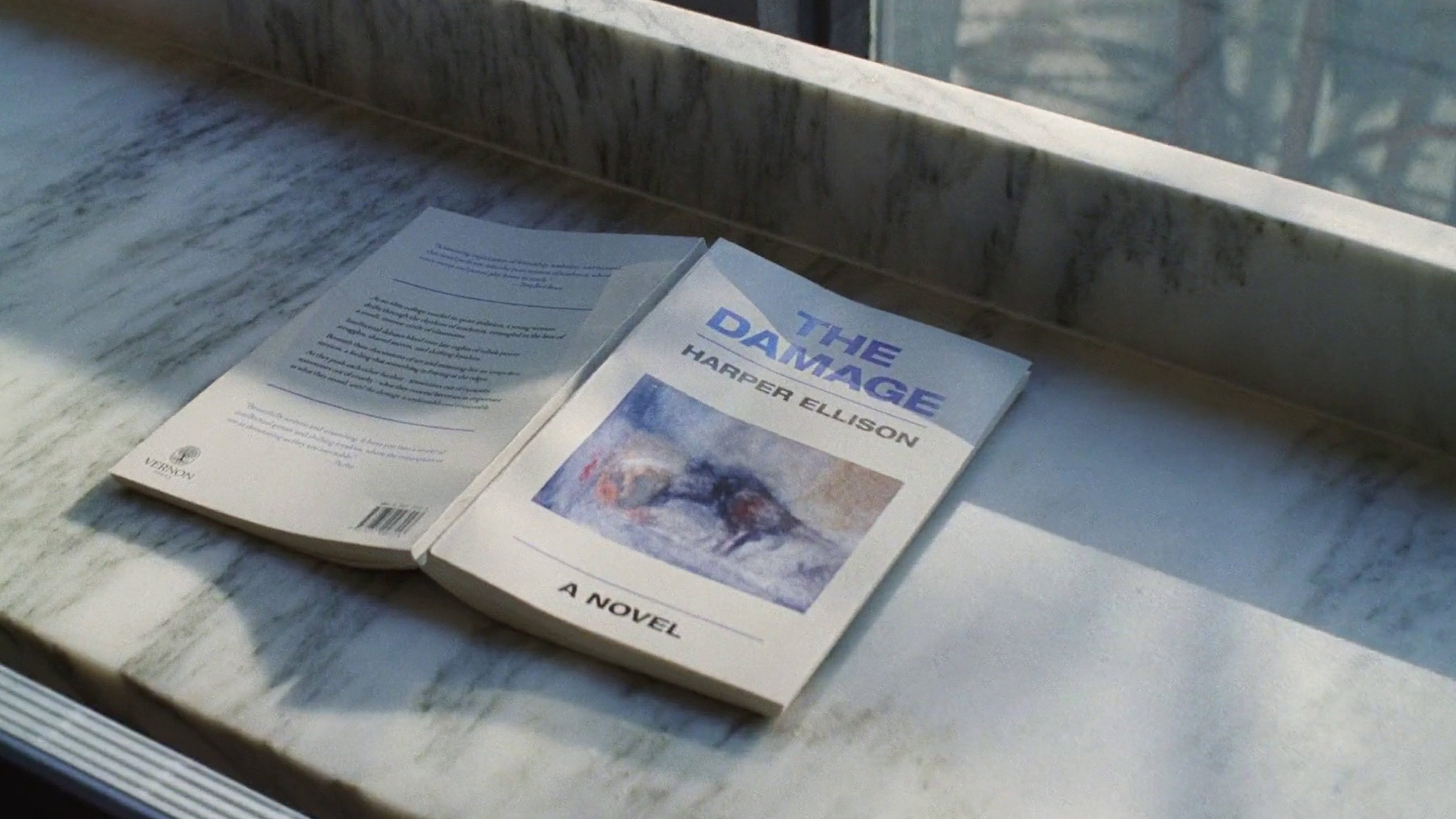
I imagine they did; the alternative is that A24 pulled off a remarkably unethical campaign activation by keeping one of the world’s biggest fashion publishers in the dark about the school shooting element at the centre of the film. But even if Vogue was fully briefed (I think they were, given their editorial content), the decision to participate in a campaign that presents these fictional characters as aspirational, celebrated newlyweds - on the same day a film about a thwarted mass shooting is opening - is a tonal choice worth sitting with. Vogue’s contribution adds legitimacy to the fictional world. It makes Emma and Charlie feel real, feel notable, feel like the kind of couple you’d aspire to be. Which is exactly the point. And also exactly the tension.
A24 went further with the Vogue adjacency by sending Zendaya - in character, essentially - to go wedding dress shopping with a real bride-to-be. The footage was released with the caption: “Dream wedding dress shopping with @zendaya & @luxurylaw… for another bride.” Zendaya surprises a real woman planning her real wedding.
The emotional reaction is genuine. The content is beautiful. The framing is unambiguously joyful. As a piece of creative content marketing it’s extremely well executed; it puts Zendaya inside a real human moment that audiences can emotionally access even without knowing the film’s plot. As a piece of context-free content sitting alongside a film about a woman who planned a school shooting, it’s another layer of the coating A24 applied to make sure the surface of the campaign stayed entirely warm and wedding-adjacent.
The relationship hotline was another genuinely inventive activation. A24 set up a real phone number - (323) 515-1405 - where audiences could call in and leave their relationship drama for the cast to hear. The Instagram post framing it read: “Confess your relationship drama to the cast of The Drama and they’ll decide if you’re built to last or should call it quits.” A 10-minute YouTube video followed, showing the cast responding to real voicemails; Robert Pattinson’s clearly less PR-managed reactions becoming the standout moment, as audiences in the comments noted how much more authentic he seemed than the rest.
Comments on the initial post included “the promotion is getting better and better and i’m living for each and every promotion” (1.9k likes) and “Oh marketing is back back.” The hotline generated real UGC, real emotional investment, and gave the cast something to react to rather than perform around. But again - and this is the thread I keep pulling - the framing is “your drama vs their drama,” implicitly positioning a planned school shooting as a relationship problem roughly on the level of calling your ex’s fake brother or thinking about an old flame. That’s the tonal choice. You can clock it and still think the mechanic was brilliant. Both things are true.
Now, going back to the 16mm video for a sec, A24 directed audiences to thedrama.movie for tickets, a domain that functioned as the campaign’s ticketing hub, themed around the film’s world. Combined with the in-universe engagement announcement, the Vogue bios, and the 16mm footage, audiences had been handed a fairly complete picture of Emma and Charlie as real people before they’d bought a single ticket. The world existed first. The film completed it.
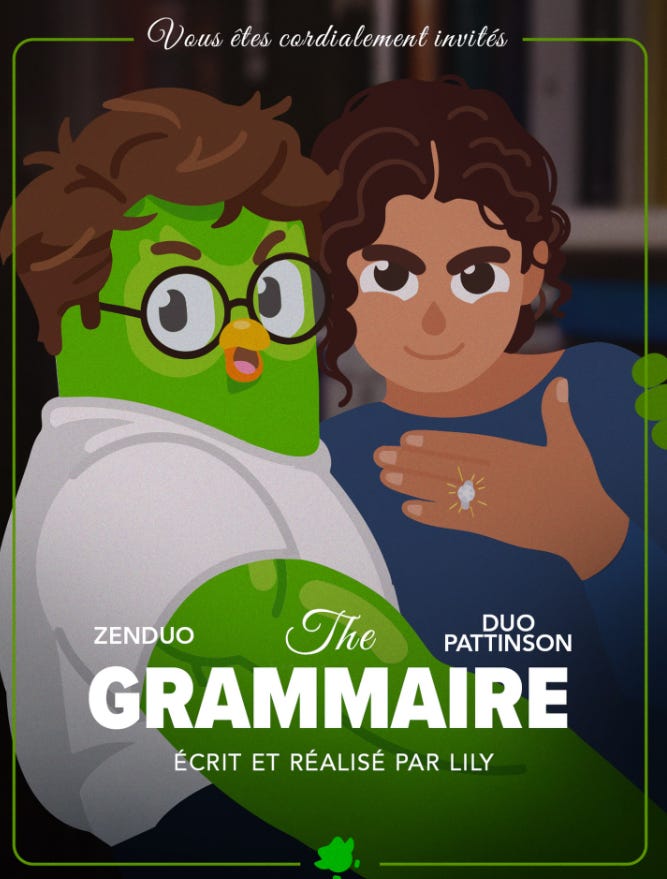
And then, far outside anything A24 could have planned or controlled, Duolingo France posted a Duolingo-styled version of The Drama poster with the caption “je te jure il s’est rien passé bb mayermki;” translates delightfully, to “I swear nothing happened, baby.” A reference to Filip Mayer, an actor who’d been posting content related to the film’s premiere.
So: did Duolingo France know what The Drama was actually about? Maybe not. It could be that their social team clocked a film that looked like a relationship drama and riffed on it in their house style; the way Duolingo does with anything culturally relevant. And that’s kind of the perfect encapsulation of what this campaign did: it created a surface so compelling, so tonally consistent with “fun wedding chaos,” that brands with absolutely no connection to the film started playing in the world A24 built.
Earned media by proxy.
The cultural texture of the campaign extended well beyond anything they paid for. Whether you find that impressive or troubling probably depends on where you land on the rest of it.
Paid Media, OOH, and What We Know About the Buy
Here’s where I want to be honest with you about what I can say with confidence and what I’m reading between the lines on, because the full media plan isn’t public.
What we know: the film opened to $28 million globally in its opening weekend, which was the third-highest domestic launch in A24 history. That kind of opening for a mid-budget original - even with Zendaya attached - doesn’t happen on organic alone. There was clearly a meaningful paid media push behind this, particularly in the weeks before release.
What I’d expect from a campaign of this type and scale: significant paid social investment across Meta, YouTube and TikTok, primarily targeting the 18-34 demographic with the kind of aspirational relationship content that performs well on those platforms. Zendaya’s Euphoria Season 3 premiere was running in parallel during the release window - Deadline specifically flagged this as part of the reason the film over-performed - and the media plan almost certainly tried to ride that cultural gravity rather than fight it.


For OOH, the approach appears to have been quality over quantity. I’ve seen poster placements referenced but this isn’t likely a campaign that went wide with bus shelters and large formats on the London underground in the way a bigger studio tentpole would; although these are in a pretty affluent area of London. The in-world activation was the OOH. The Las Vegas chapel, the Rome visit, and the Taiwan stunt all essentially owned OOH moments, that earned media value far beyond what a conventional billboard buy would have generated. When Zendaya shows up at a venue where real couples are getting married, the resulting social content is infinitely more valuable than a 48-sheet at the Holland Park tube station.
The press embargo strategy was also, functionally, a media planning decision (mostly PR though). By instructing journalists not to reveal the film’s subject matter and keeping the press tour deliberately surface-level - lots of chat about real-life friendship, zero discussion of the shooting theme - A24 were controlling information flow in the same way a media plan controls reach and frequency. They decided what reached people, when, and in what emotional register. The campaign was designed to bring audiences in on a false premise and let the word-of-mouth reframe the experience afterwards.
Whether that was the right call is a different conversation. But as a strategic execution, it’s coherent.
Social, Word of Mouth, and the Rachel Effect
If there’s a single mechanic that makes The Drama campaign worth discussing beyond its release window, it’s how A24 used the post-viewing discourse as a continuation of the marketing itself.
Within days of opening weekend, social media had decided that Rachel - Alana Haim’s character - was the true villain of the film. The comment sections under A24’s posts were on fire with it. “All my homies hate Rachel” got three thousand likes. “Rachel button →” got eight thousand. The discourse was completely detached from the actual subject matter of the film and entirely focused on the social dynamics of the dinner table.
A24, being A24, leaned straight into it. They posted a “Who Actually Caused The Drama?” carousel featuring the full cast - Emma, Charlie, Rachel, Mike, and Ivan the DJ added for comedic value - and let the comment section do the rest; as previously highlighted.
Alana Haim also posted beach photos with “Rachel started it” in bright red text on her top. The brands were stirring the pot while the real pot - the school shooting conversation - was being deliberately left unattended.
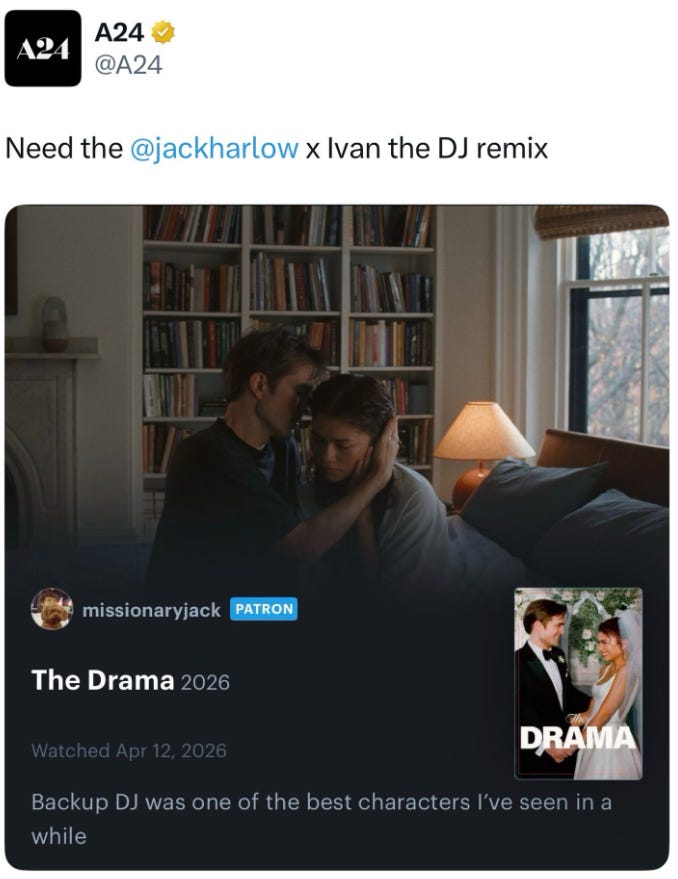
They also leaned into the audience-as-endorsement play. Multiple posts showcasing packed cinema reactions, social proof of full houses, Jack Harlow’s Letterboxd review amplified on its own as standalone content. The word-of-mouth mechanics were being actively managed and surfaced, which is smart; the comments section underneath those posts told a slightly different story, with people questioning whether the film was made for a specific cultural context that didn’t travel universally. “I legit thought it’s just a joke for a sec when Emma said her secret” was a recurring sentiment from audiences.
Straw Hat Goofy - one of the trusty movie guys operating in the short-form content space - gave the film his own treatment, and his review captures something genuinely interesting about the audience divide this film created. His take was measured, his points were solid, but what’s more revealing is his comment section: completely split. People latching onto different characters, arguing about intentions versus actions, debating whether Emma’s guilt is mitigated by the fact that she stopped. Which - and this is worth stating plainly - is exactly what the film wants you to argue about.
The discourse engine is the product.
A24 built a film that manufactures its own marketing in the afterglow of watching it, and Straw Hat’s comment section is live evidence of that working.
The gun imagery thing is also a small detail that says a lot. There are two versions of a photo used in the promotional material: one showing Emma’s hand with an engagement ring, the other where the same pose reads unmistakably as gun fingers.
A24 later shared what they called the “original” photo on Instagram, framing it as a behind-the-scenes discovery moment. It has over 138k likes. Comments were delighted. It’s the only moment in the campaign where A24 came anywhere close to acknowledging what the film was actually about; they did it with a wink rather than a statement.
The Controversy
Marketing, Ethics, and What A24 Chose Not to Say
This is the part I’ve been sitting with since I saw the film, and I want to be careful here because I think there are a few separate arguments that keep getting collapsed into one.
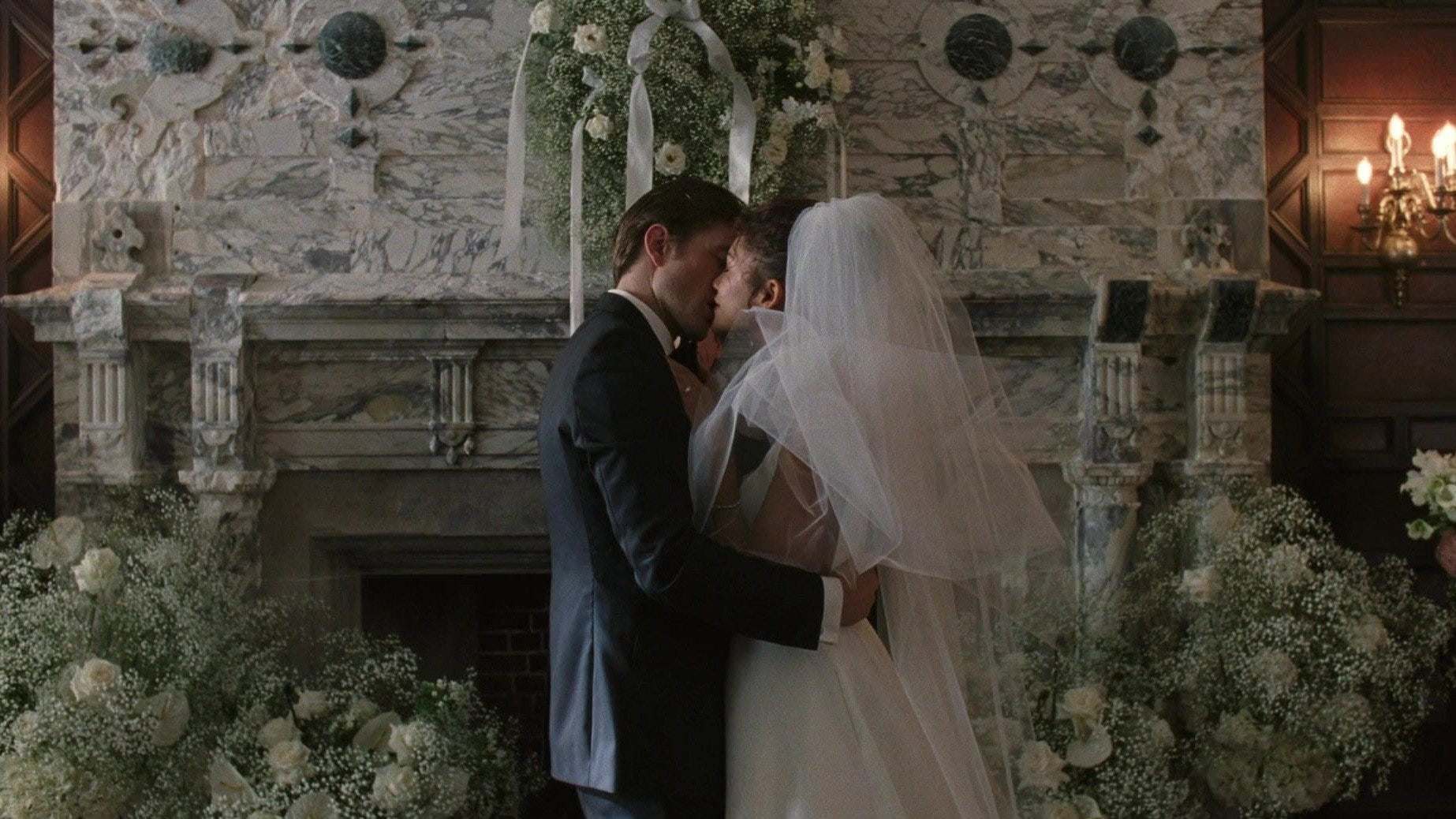
The first argument - that A24 deliberately obscured the film’s subject matter in the marketing - is just factually true. They instructed press not to mention the school shooting element. The press tour was kept light. The entire in-world wedding campaign created an aesthetic frame that primed audiences for a relationship drama, not an exploration of mass shooter psychology. That’s a creative and strategic choice, and it’s worth examining.
The second argument - that this was harmful - is where I think reasonable people can differ, but where I personally land on the side of having some concerns.
March for Our Lives, the gun violence prevention organisation co-founded after the 2018 Parkland shooting, called out the campaign directly, describing the marketing as “deeply misaligned” with the film’s actual content.
Jackie Corin, one of the Parkland survivors and a March for Our Lives co-founder, gave an interview to The Hollywood Reporter in which she described the experience as one where “small tonal choices” and the comedic framing of something that is a “constant, terrifying reality” for millions of American students can land very differently depending on who’s in the room.
Her quote that keeps coming back to me: “leaving it up in the air and not taking responsibility and discussing how heavy and real world that topic is is a missed opportunity at best, but harmful at worst.”
That feels right to me. And I think it’s possible to hold both things at once: the campaign is genuinely creative and effective, and it also ducked a responsibility that came with the creative choice.
When you build a film around a school shooting confession - even a darkly comedic one, even a sympathetic protagonist, even in a Borgli register that’s more about social absurdity than forensic tragedy - and then market it entirely around the relationship drama while asking press to stay quiet about the rest, you’re making a decision about whose feelings matter in the audience. You’re deciding that the discomfort of people who’ve lived through this kind of violence is a secondary concern to the surprise of the reveal.
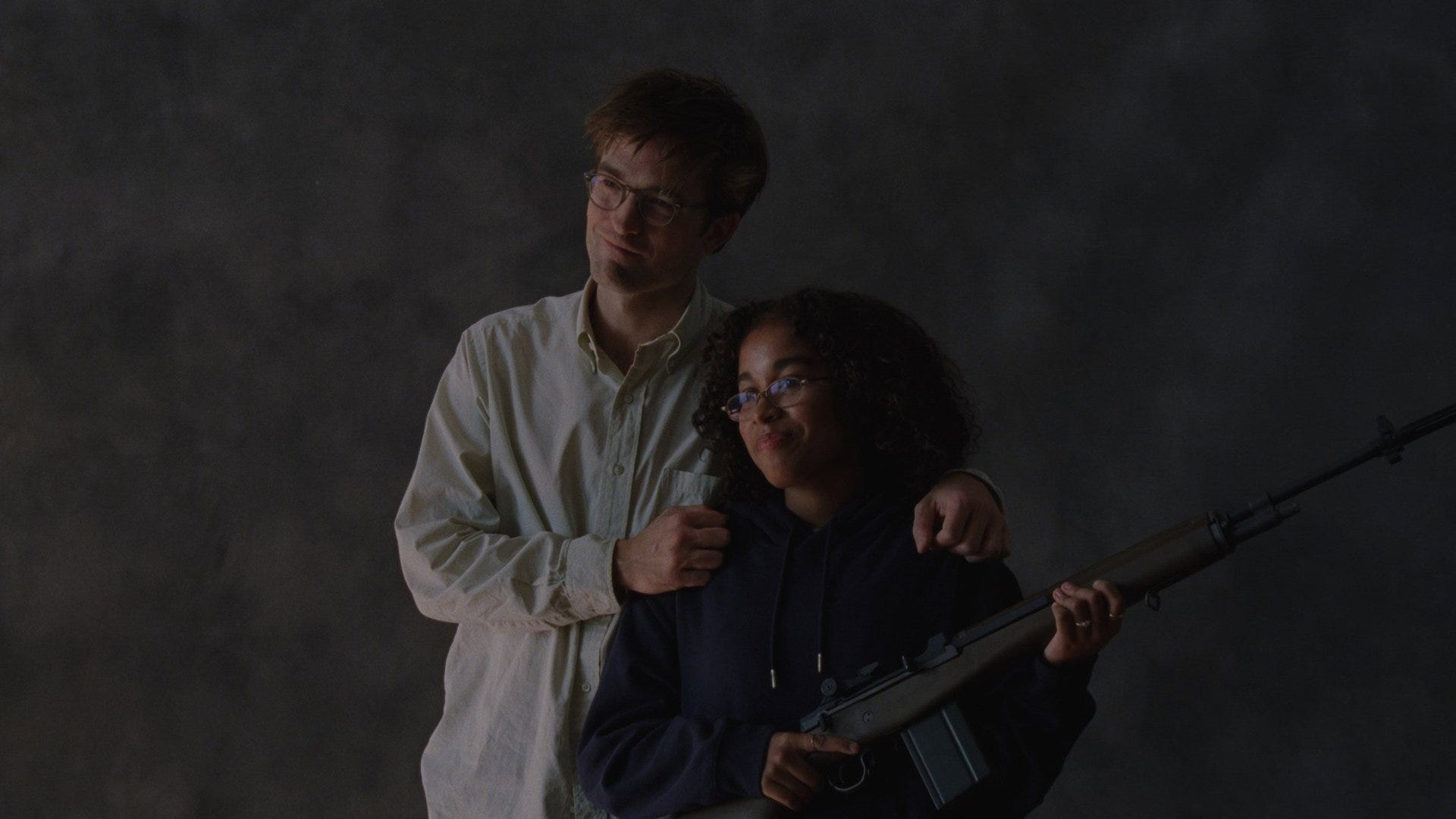
I’m not saying art has to carry a content warning for everything. I’m not saying dark comedies about difficult subjects are inherently wrong; I’ve seen and enjoyed enough A24 films to know that moral complexity is literally the point, in fact I really liked The Drama. But there’s a difference between the darkness being present in the marketing and being weaponised for effect, and the darkness being completely absent from the marketing so that the reveal lands as a gut punch rather than a considered engagement with the subject.
The best counterargument I’ve read - and genuinely, some comments under A24’s own posts made it - is that no one expects A24 to make comforting movies, and that audiences who know the studio’s output knew to expect something more than a standard romance. That’s fair, to a point.
But the marketing for The Drama wasn’t only pitching to A24 devotees; what’s with A24 fans? It was pitching to the 80% of the opening weekend audience who came for Zendaya and Pattinson specifically (a tree map or similar graph to highlight this would work so well here, alas I don’t have one on hand). That’s a much wider, much more general audience than the A24 faithful; some of them left the cinema having watched something they hadn’t been prepared for in any meaningful way.
A Letterboxd review I’ve spent time with - from someone whose family was directly affected by Columbine - captures it better than I can: “If Borgli wanted to make an authentic exploration of issues surrounding such a charged American subject, he and the studio wouldn’t have hidden it from the press tour.” I’m not sure that’s entirely fair either, but the underlying point lands. The hiding is the problem more than the film itself.
The irony A24 can’t escape: the only moment they came close to acknowledging the film’s subject matter was when they posted the “gun fingers” photo as a cheeky wink. That’s it. One Instagram post. And even then, the framing was “look what we found” rather than “here’s the conversation we want to have.”
The Transmedia Question
What A24 Built and What They Left On the Table
This is the part that interests me most as someone who thinks about world-building and movie marketing for a living.

A24 have, in recent years, developed what I’d describe as a genuine transmedia ecosystem around their films; not in the Marvel sense of interconnected universes, but in the sense of extending the emotional and aesthetic world of a film into objects, experiences, and participatory culture that exist independently of the cinema screen; a lifestyle so to speak.
The card game, the vintage tees, the Las Vegas chapel, the Polaroid partnership, the “Who caused the drama?” carousel, these aren’t just promotional materials. They’re extensions of the film’s fictional world into real life. The card game is something Emma and Charlie might actually have played. The vintage tees have a provenance story that mirrors the film’s interest in intimacy and honesty. The chapel stunt is, on its own terms, a piece of experiential storytelling.
That’s transmedia done well. The film’s world expands rather than just being advertised; it feels closer to home than other A24 films.
But here’s what I keep coming back to: the campaign built an extraordinarily coherent world around the relationship story and left the school shooting theme almost entirely outside of it. That’s not just an ethical omission, it’s also a creative one. Because the most interesting transmedia territory in The Drama isn’t Rachel’s behaviour or Charlie’s indecision.
It’s the question that sits at the centre of the film:
What do you do with something someone told you about themselves that you can’t unknow? What does it mean to love someone fully when you know something about them that horrifies you?
Those are genuinely rich discussion points and questions. And a campaign willing to engage with them could have created something much more durable than a viral wedding chapel.
Because look at what the campaign did build: a relationship hotline where the cast judged your real-life drama against theirs. A Vogue announcement that made fictional characters feel like aspirational real people. A nail salon in LA selling wedding manis to those who hadn’t yet seen the film. Duolingo France posting “I swear nothing happened, baby” because on the surface the campaign is convincing enough to be just a dark rom-com. All of these things stirred the pot; just not the exact the right pot.
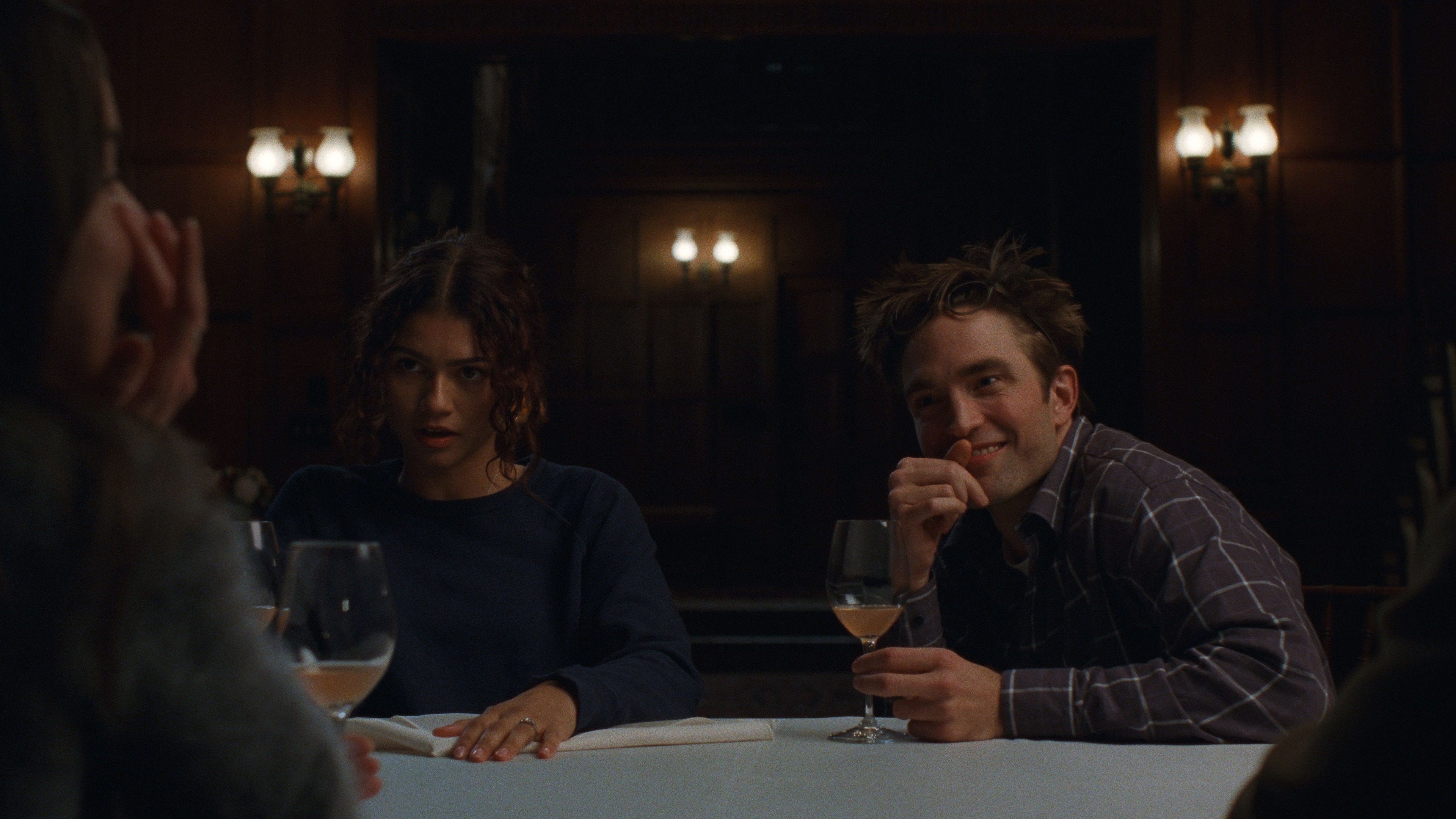
The hotline is the sharpest example of a missed opportunity. You’ve got a real phone number, real people calling in, the cast literally responding to confessions. The mechanic already exists for something more honest. Imagine a version of that activation where the cast - or even the studio - directs callers to a resource, or frames the hotline around the question the film is actually asking: what do you do when someone tells you something you can’t unknow? Instead, the drama being measured was “imaginary brother” versus “childhood best friend,” and audiences in the comments loved it. Which is fine. But it’s also the campaign choosing entertainment over responsibility at precisely the moment it had the infrastructure to do both.
The Vogue partnership compounds this. If Vogue knew the full picture and still ran the in-universe announcement - treating Emma and Charlie as a celebrated couple on the same day a film about a planned school shooting opened - that’s a significant editorial decision from one of the most culturally influential brands in the world, made in service of a campaign that was specifically designed to obscure the thing it was celebrating. That’s not a brand partnership. That’s a cover story.
A24 built enough of a world here to have said something real inside it. The absence of that choice is what lingers.
Box Office, PVOD, and What Comes Next
The numbers deserve more than a footnote.
$28 million domestic opening. $122 million worldwide by late April 2026. Production budget of $28 million, meaning the film has earned more than four times its cost before home entertainment even enters the picture. A24’s fifth-highest-grossing film. Those are meaningful numbers for a studio that built its identity on taking creative risks on smaller-scale films.
The PVOD window opened on May 4th, and the film immediately hit the top 10 on both Apple TV and Amazon. That’s a rapid transition from theatrical - slightly faster than a traditional studio would typically move for a film still generating box office revenue - but it reflects A24’s consistent approach to maximising the streaming moment while theatrical buzz is still live.
The demographic profile is worth sitting with. 60% female audience, 80% under 35; Deadline specifically credited Zendaya’s simultaneous Euphoria Season 3 presence as a significant driver. This is what happens when your lead actor is a genuine cultural vortex rather than just a movie star. The Zendaya bump is real and measurable.
What happens next is interesting. The home entertainment window is where the gun violence conversation could get more complicated, or more honest. Watching the film at home, with the ability to pause, discuss, look things up, and sit with the discomfort of what you’ve just seen, is a different experience to the cinema.
The “see it before it gets spoiled” urgency that drove theatrical attendance becomes irrelevant. The question of whether A24 does anything with the PVOD moment - any partnerships, any acknowledgment of the subject matter, any attempt to direct audiences toward resources - is still open.
My honest expectation is they won’t. The strategy has been to let the discourse manage itself, and that’s likely to continue.
What Creators and Marketers Can Learn Here
I want to be careful about how I frame this, because I don’t think “do what A24 did” is the uncomplicated lesson.
But there are things worth studying.
The in-world campaign is genuinely instructive. Building an aesthetic and emotional universe around a film that audiences can inhabit before they buy a ticket - through objects, experiences, and social participation - is more effective than any amount of paid media at creating genuine desire. The card game, the chapel, the vintage tees: people weren’t just aware of The Drama before release, they were inside it. That’s a different relationship to a film, and it’s much harder to replicate without committing fully to the bit.
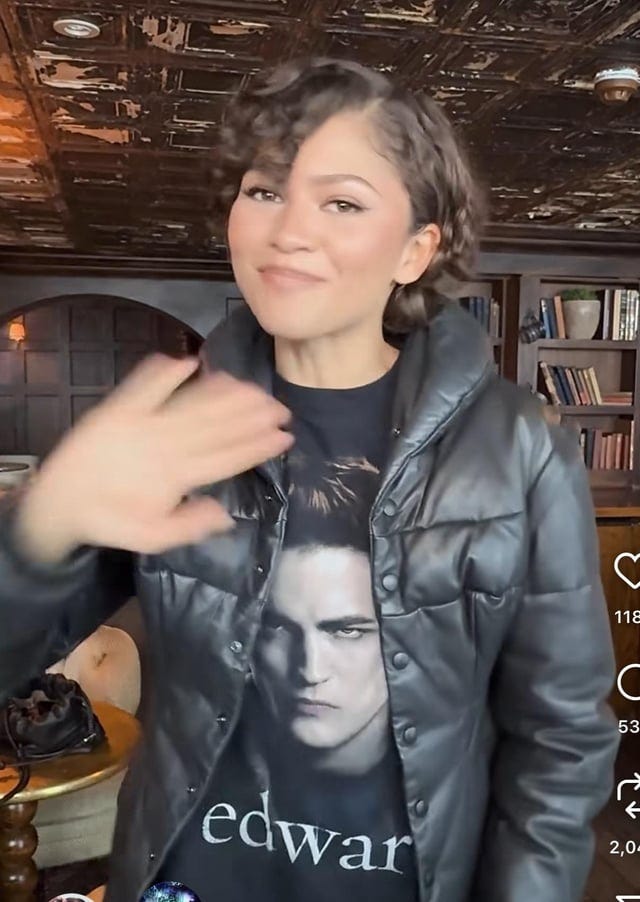
The modern press playbook is also worth noting separately. The talk show circuit hasn’t died, it’s expanded. Ladbible’s Agree to Disagree and the Chicken Shop Date-style formats: these are legitimate media placements now, not alternatives to press. A 530,000-like clip from a superhero hypothetical debate is a piece of audience targeting dressed up as entertainment.
When your stars are Zendaya and Robert Pattinson, you put them somewhere that lets the chemistry breathe rather than somewhere that makes them recite talking points. The contrast with how the press tour handled the film’s actual subject matter - which is to say it didn’t - makes the breezy, funny, fan-friendly content feel even more deliberate in retrospect.
The Clique nail salon moment is also worth flagging as its own lesson. Not every partnership has to be a CPG giant. A hyper-local, hyper-targeted activation that costs almost nothing and reaches exactly the right audience - females in LA, in the pre-film weeks, buying into the wedding aesthetic - is sometimes more valuable than a national spend. Know where your audience actually is, and show up there.
The social proof strategy also worked. A24 surfacing packed cinema reactions, Letterboxd posts, celebrity reviews turned audience enthusiasm into ongoing advertising. The Rachel discourse was genuinely organic, but A24 amplified and extended it in exactly the right ways. This is something any film with a strong post-viewing reaction can attempt, but most studios do it clumsily. A24’s social team has an instinct for when to lean in and when to let things breathe; social media geniuses.
The Polaroid partnership is a small detail that rewards attention. Polaroid x The Drama at the chapel feels completely natural - instant photography, tangible memory, physical artefact - in a way that most brand integrations don’t. The test for any brand partnership in this territory: does the brand feel like it belongs inside the film’s world? If yes, it works. If it feels like someone’s logo is being attached to something, it doesn’t.
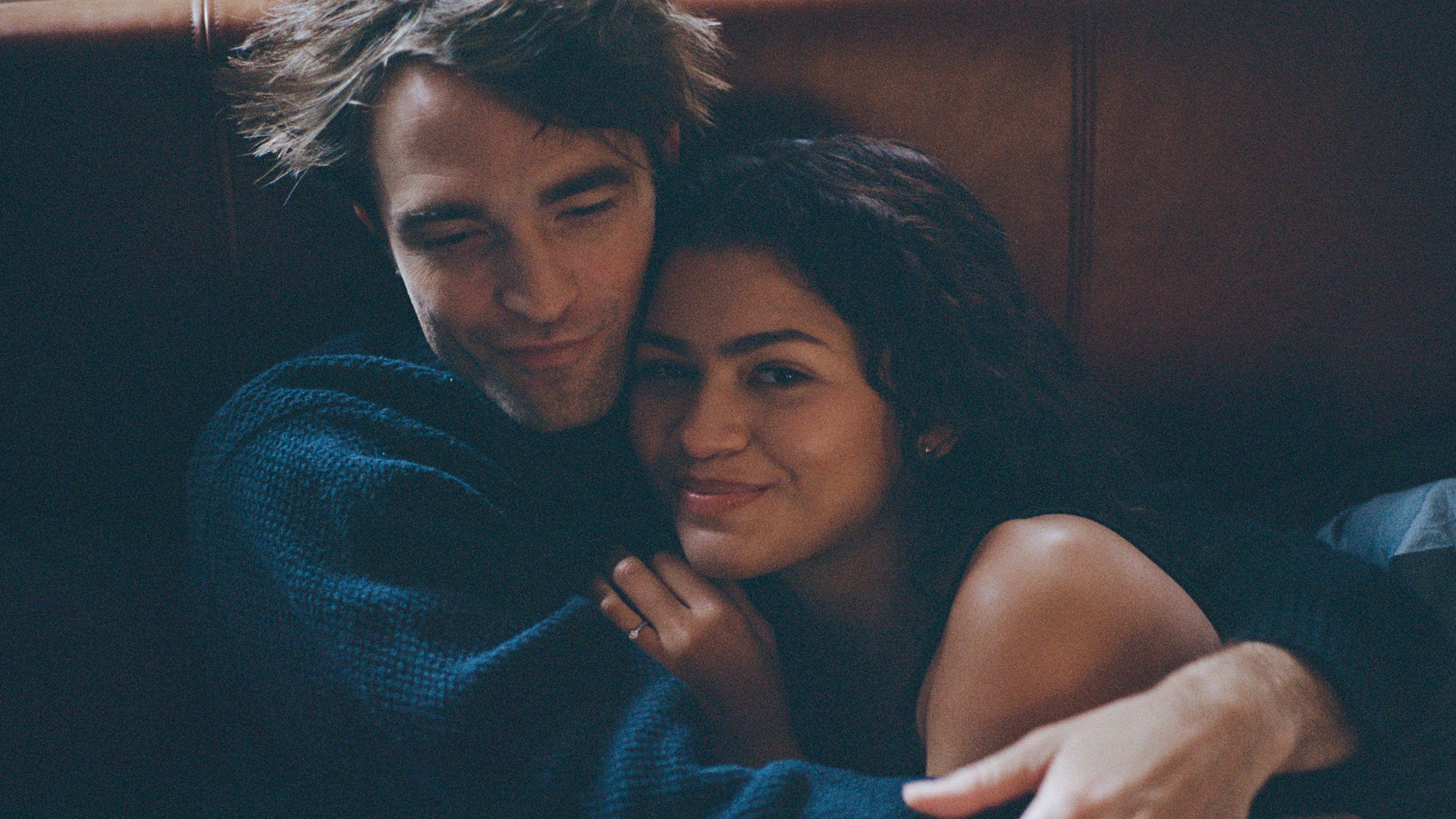
And then there’s the harder lesson, which is about what happens when your marketing is more coherent than your responsibilities. A campaign can be strategically brilliant and ethically complicated at the same time. The best version of this campaign - the version that would sit comfortably alongside every other thing A24 makes - would have found a way to engage with its actual subject matter without sacrificing the immersive, surprise-first approach that made the theatrical experience distinctive. That’s a hard creative problem. But it’s not an unsolvable one.
A24 chose not to solve it. And for a studio that genuinely cares about the cultural weight of what it makes - or at least presents itself as caring - that choice is worth naming.
The Drama is, in the end, the most interesting marketing case study of early 2026; precisely because it makes you think about things that marketing case studies usually avoid.
Not just: did it work? But: for whom did it work? What did it ask of the people it reached? And what would it have meant to do it differently?
That’s the real drama, honestly. And I’m still not sure we’ve finished watching it unfold.
That’s The Harperverse breakdown of The Drama.
If this is scratching an itch you didn’t know you had when it comes to how films are sold, how franchises get reactivated, and why some campaigns succeed where others just make noise
~ most uncredited images will have been taken from the films TMDB page!