

Wasteman
Film. Marketing. Culture. And the transmedia potential hiding underneath it all.

I walked out of Wasteman still thinking about it.
Not in the usual “that was good” kind of way, but in the slightly unsettling way where certain scenes keep replaying in your head afterwards. It’s a brutal film - tense, uncomfortable, and occasionally difficult to sit through - but it’s also one of the most grounded depictions of prison life I’ve seen in a long time.
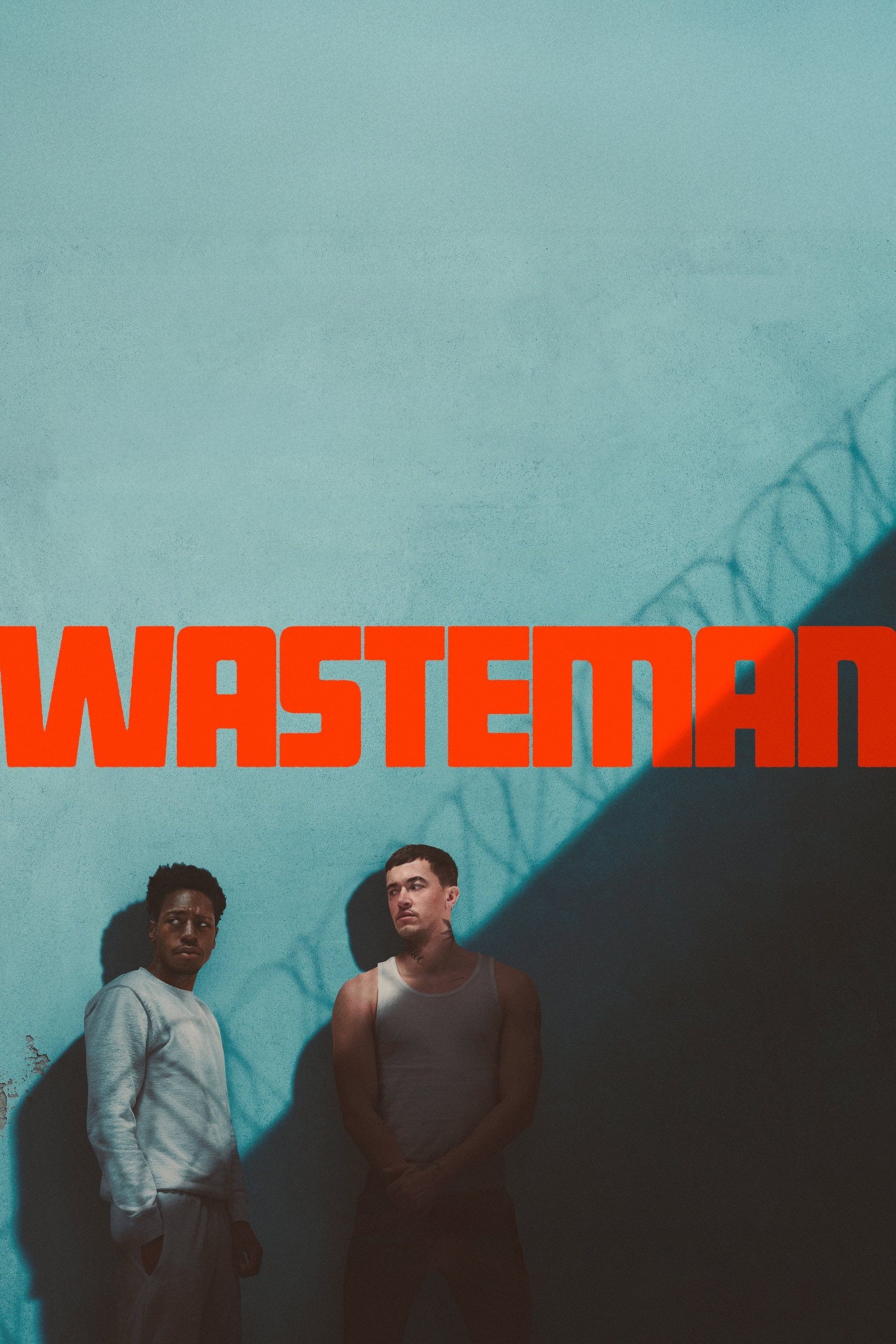
What struck me most is how little the film tries to dramatize the environment. There’s no glamorisation of prison culture here. Instead, it simply observes it: the routines, the tensions, and the strange forms of community that emerge when people are forced into the same confined space.
And that’s where the discomfort comes from.
You begin to understand how these micro-societies form. Not why they’re good, not why they should exist, but why they happen. That distinction is what gives Wasteman its power. It feels less like a stylised prison thriller and more like something observed; almost documented.
Which is why, after watching it, I couldn’t stop thinking about the wider story around the film. Not just the performances or the filmmaking, but the way it’s been positioned, marketed, and integrated into cultural conversations around prison life in the UK.
Because Wasteman isn’t just an impressive debut feature.
It’s also a fascinating case study in how smaller British films build momentum through festivals, community partnerships, and grassroots cultural engagement.
The Performances: Two Forces Colliding
The performances are what give the film its pulse.
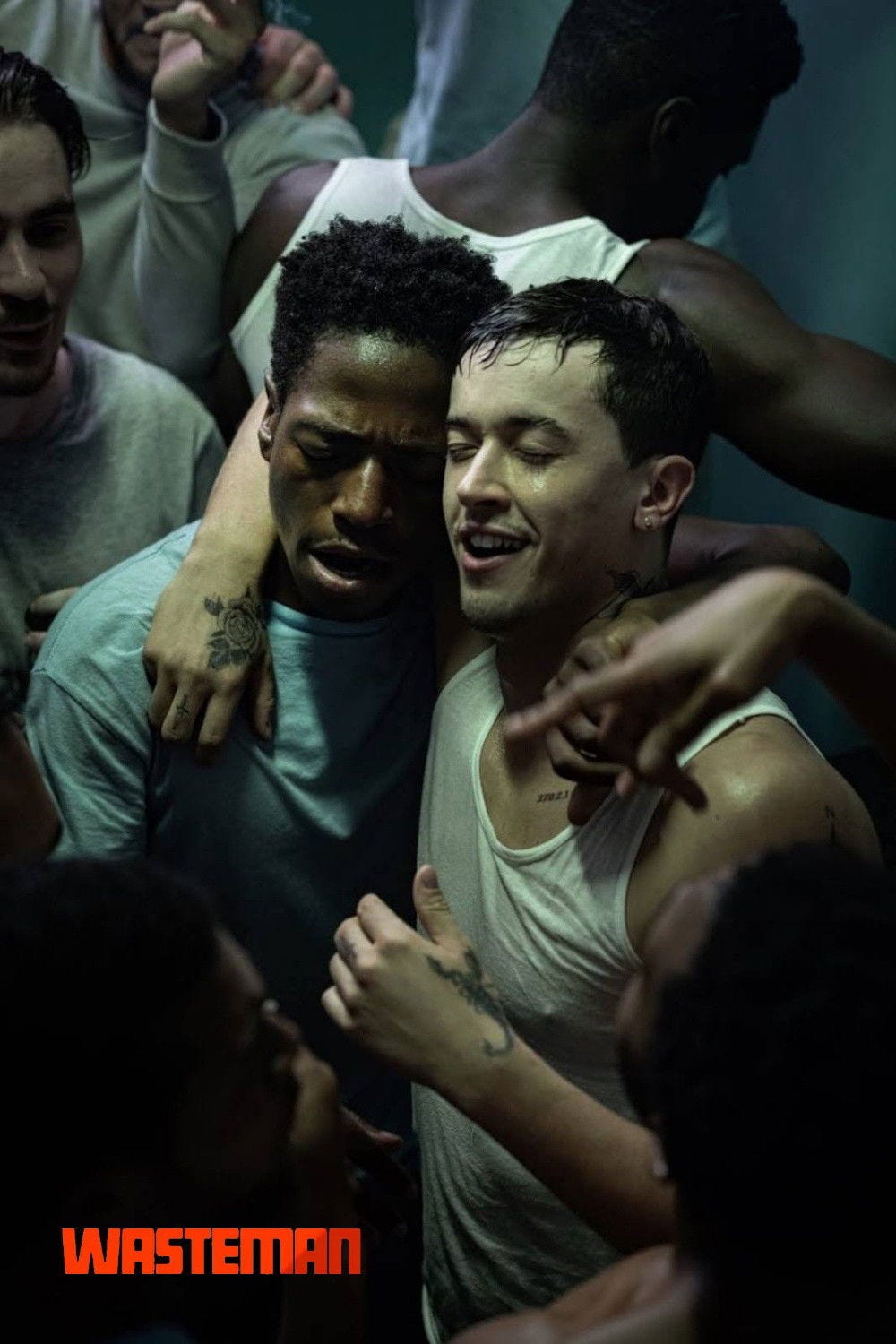
David Jonsson is exceptional as Taylor. The way he carries the character feels restrained and watchful; almost internalised. Much of his performance is quiet observation, which means every disruption lands harder when it arrives.
And then there’s Tom Blyth as Dee.
I genuinely don’t think I’ve seen an entrance like it before. He doesn’t simply enter the scene, he invades it and that continues throughout the film. There’s a storm-like energy to the character, something unpredictable and physically imposing. Blyth fully commits to the role, and the physical transformation adds to that sense of dominance.
Reportedly, David Jonsson had to lose weight for the role while Tom Blyth had to put it on, and it shows. Blyth looks absolutely jacked, and that physical presence becomes part of the intimidation factor that defines the character.
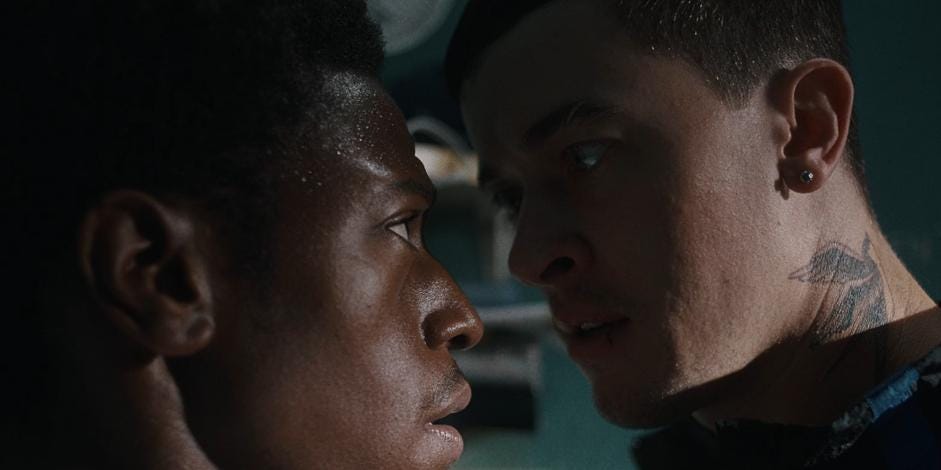
You feel it every time he appears.
The dynamic between Dee and Taylor becomes the spine of the entire film. Much of the narrative is built around Taylor simply trying to navigate the day-to-day rhythms of prison life, only for those rhythms to be repeatedly interrupted by Dee’s looming presence.
It creates a constant tension that never quite settles.
And that tension is relentless.
Visual Form: Claustrophobia, Phone Footage, and Documentary Texture
Visually, the film leans heavily into its realism.
The aspect ratio immediately creates a boxed-in feeling, reinforcing the claustrophobic nature of the environment. You’re constantly aware of the limits of the frame, which mirrors the physical confinement of the characters.
Layered throughout this are sequences that feel almost like contraband mobile phone footage; rough, personal, and intimate. The effect is fascinating because it blurs the line between cinema and documentation. Instead of polished cinematography throughout, the film occasionally feels like it’s capturing fragments of real life.
Those moments add authenticity.
Even the slower observational shots - scenes that might be dismissed as filler in other films - serve a purpose here. Prison life is repetitive. It’s routine. It’s waiting. The film embraces that rhythm rather than cutting around it.
Some of the photography is genuinely beautiful, which feels like a strange thing to say given the setting. But that contrast is part of what makes the film work. Moments of visual calm exist within a fundamentally hostile environment.
It’s an unusual balance, and the film handles it incredibly well.
The Production Context
Part of what makes Wasteman feel so grounded is the production itself.
The film was shot inside Shepton Mallet Prison, widely considered one of the oldest prisons in the world. Although it no longer houses inmates, the location still carries the architectural weight of its history.
According to a report by the BBC News, the prison has since become a tourist attraction and filming location for major productions. Notably, it once held notorious gangsters Ronnie Kray and Reggie Kray, figures immortalised in the film Legend starring Tom Hardy in both roles.
There’s something strangely poetic about that connection. A real prison with a history of infamous inmates becomes the setting for a film about the emotional and psychological structures that form inside those walls.
Even more impressive is the production timeline.
The film was reportedly shot in just 18 days.
That kind of constraint becomes part of the film’s identity. Instead of feeling rushed, the limited schedule seems to have pushed the production toward a raw, stripped-back style that ultimately benefits the story.
Marketing: A Low-Key, Festival-Led Strategy
From what I can see, the marketing behind Wasteman has been intentionally understated.
Rather than a huge mainstream push, the film appears to follow a more traditional breakout British thriller playbook: festival discovery, critical praise, and grassroots amplification.
The strategy begins with its festival trajectory. The film premiered at the Toronto International Film Festival in September 2025 before screening at the BFI London Film Festival. From there, the awards conversation began to build, including recognition at the British Independent Film Awards where director Cal McMau received the Douglas Hickox Award for Best Debut Director.
That festival-to-awards pathway is important because it frames the film as a prestige indie drama rather than purely a genre piece.
The theatrical release followed on 20 February 2026, with Lionsgate handling distribution in the UK and Ireland. Internationally, Sunrise Films picked up North American theatrical rights while Bankside Films handled global sales.
What’s particularly interesting about this release pattern is that UK audiences effectively got first access to the film. That’s fairly rare. Normally we Brits are the ones dodging spoilers from American premieres.
This time, the UK got there first!
Box Office Performance
In terms of numbers, Wasteman isn’t chasing blockbuster territory, and it doesn’t need to.
According to the Film Distributors’ Association, the film grossed approximately £636,947 in the UK and Ireland as of early March 2026.
Data from Box Office Mojo also shows the film opening with around $445,959 during its initial weekend.
For a gritty British prison drama with a relatively modest marketing push, those numbers are respectable. More importantly, they reinforce the idea that this film is building momentum through word of mouth and critical praise, not sheer advertising volume.
And that feels intentional.
Cultural Marketing and Grassroots Engagement
Where the marketing really gets interesting is in its cultural positioning.
Rather than relying purely on traditional media buys, the campaign leans into community and cultural credibility.
One of the strongest partnerships appears to be with GRM Daily, a platform deeply embedded in British rap and grime culture. GRM isn’t just another promotional outlet; it’s a media ecosystem with deep cultural roots.
For years, the platform has helped amplify artists across the UK scene, hosting music videos, interviews, and its iconic “Daily Duppy” freestyle series. Artists such as Central Cee, Fredo, Bugzy Malone, and Aitch have all built massive audiences through the platform.
So partnering with GRM Daily for editorial interviews with the film’s stars wasn’t just logical; it was culturally smart. It places the film directly within conversations that already resonate with its target audience.
The marketing also extended into physical spaces across London:
A huge Mural appeared on Brick Lane, featuring the film’s stars alongside artwork tied to the film’s visual identity. Video clips of the mural’s creation circulated online, showing local riders passing through the space wearing branded outfits linked to the campaign.
It’s a subtle way of blending street culture, community presence, and visual marketing.
P.s. because I love to treat ya, here’s a couple more examples from one of the films photographers, that has been used in the advertising:


Social Media Strategy
As expected, social media plays THE central role in maintaining visibility.
Trailers and video assets appear across the usual platforms; Instagram, Facebook, TikTok and YouTube.
The creative strategy appears fairly typical for modern campaigns: a handful of core video assets cut into multiple formats ranging from short six-second clips to longer promotional edits.
But the messaging is clever.
Many of the clips highlight the film’s accolades using bold orange typography: references to the director’s earlier work, festival wins, and critical praise from outlets such as Variety and The Guardian, which awarded the film four stars.
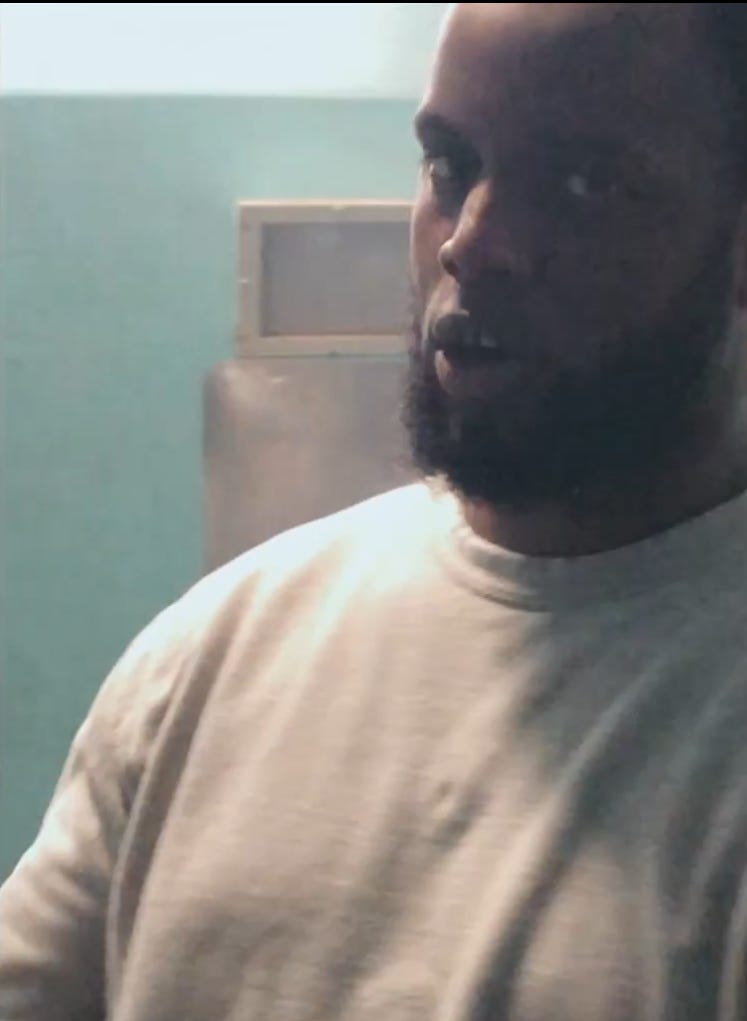
Some social clips lean into the film’s depiction of contraband phone culture inside prisons; a fascinating angle because it mirrors the type of mobile footage that circulates online in real life. Other assets emphasise the film’s rawness by using footage styled like social media recordings from inside the prison environment.
It’s a smart way of aligning the film’s aesthetic with the platforms promoting it.
The “Album Tour Continues” Meme
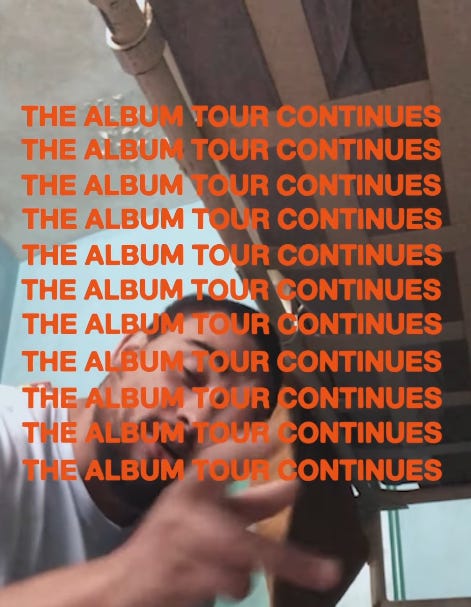
One of the most interesting pieces of campaign language is a running joke that appears across promotional content: “the album tour continues.”
Within the film’s world, the phrase refers to a prisoner (above) being transferred to a new wing after having only recently arrived and causing trouble.
But culturally, the phrase reads like a touring musician announcing their next city.
That reinterpretation is clever because it reframes something bleak - prison movement - through a piece of internet-native humour. It’s instantly meme-able and perfectly suited to short-form social media.
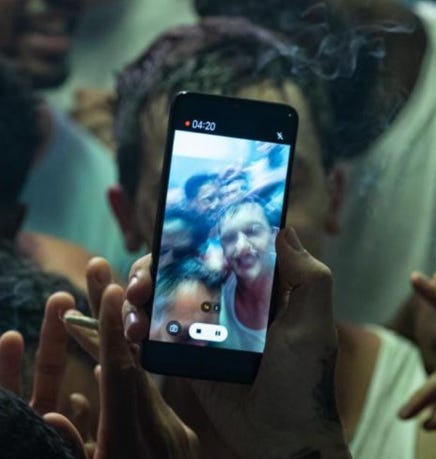
You can imagine it spreading on platforms like TikTok almost organically; mimicking that of real life prison content.
Community Partnerships and Real-World Impact
Perhaps the most meaningful element of the marketing campaign is its partnership with Switchback.
Switchback works with young men leaving prison to help them rebuild stable lives through mentorship, employment, and community support. Their involvement with the film extends beyond simple promotional tie-ins.
In several pieces of content, the cast and crew actively encourage viewers to support the organisation. Members of the production also spent time participating in community activities such as baking sessions at Dusty Knuckle Bakery, helping raise awareness for rehabilitation programmes.
This is where the campaign moves beyond marketing.
It becomes impact storytelling.
The film opens a conversation about prison systems and rehabilitation, while the partnership with Switchback offers audiences a tangible way to engage with those issues.
Press and Broadcast Reach
The press circuit for the film has also been extensive.
Cast appearances across radio and podcast platforms - including BBC Radio 1Xtra, Capital XTRA, and Kiss Xtra - ensured the conversation reached younger audiences connected to UK rap and urban culture. Funny that David & Tom whilst on the BBC radio 1Xtra show were going back and forth on how the places they’re from (East London & Nottingham respectively; two places I’m familiar with) use the word Wasteman haha!
Meanwhile, podcast appearances tied to the British Independent Film Awards circuit helped maintain visibility within film industry circles. Clipping podcasts is standard practice now people; take note if you have a podcast please!
Special screenings, including a Q&A event hosted by Everyman Cinemas, further extended the film’s reach into fan communities and influencer networks.
Transmedia Potential
Despite the depth of its themes, Wasteman hasn’t launched a full transmedia storytelling strategy.
There are no in-world social media accounts, alternate reality experiences, or narrative extensions across multiple platforms. Most of the surrounding content sits firmly within traditional promotional material: trailers, interviews, behind-the-scenes footage, and festival coverage.
But the seeds for transmedia are absolutely there.
Director Cal McMau has spoken about drawing inspiration from real contraband mobile phone footage circulating within prison systems. That aesthetic already blurs the boundary between fiction and documentation.
If the film ever expanded into a larger narrative ecosystem, that concept could easily evolve into in-universe social content; short “smuggled” clips appearing online as if recorded from inside the prison itself.
Other possibilities could include documentary-style podcasts pairing fictional events from the film with real stories from organisations like Switchback, or community discussion screenings exploring themes of masculinity, violence, and systemic cycles within the prison system.
Although not exactly transmedia, limited merchandise - like the promotional hoodies briefly teased during the campaign - hints at the possibility of deeper cultural engagement.
At the moment, these ideas remain hypothetical.
But the foundations are there.
Final Thoughts
What makes Wasteman so compelling is how grounded everything feels.
The film itself avoids sensationalism. The performances feel lived-in. The marketing campaign leans into community voices rather than overwhelming audiences with spectacle.
It’s a small film that moves carefully but deliberately.
And sometimes those are the films that last the longest.
Because for many people - particularly young audiences growing up in cities like London - the themes explored in Wasteman don’t feel abstract. They feel adjacent. Familiar. Uncomfortably close to real life.
That’s why the film works.
And that’s why I suspect we’ll still be talking about it long after its theatrical run ends.
What did you think of Wasteman?
I’d love to hear your thoughts - whether it was the performances, the realism, or the way the film builds its tension.
And if you enjoy deeper dives into films and the marketing strategies behind them,
I’m sorry it doesn’t have a wider release. I saw the preview and would have loved to watch it on the big screen.