

Backrooms
The Movie, The Marketing, and the Kid Who Built a World From a 4Chan Image

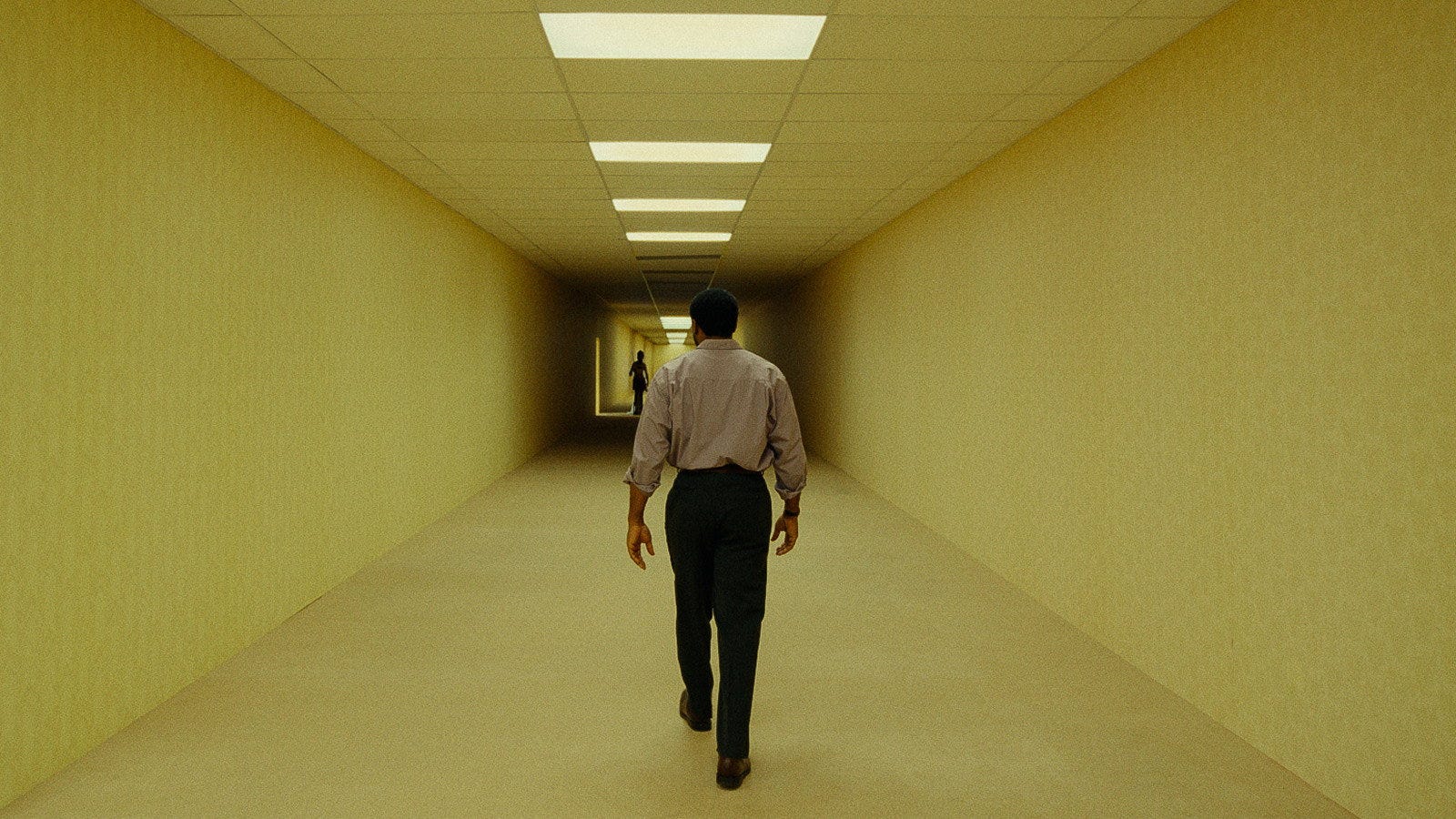
There’s something genuinely unusual about the Backrooms story.
Not the film itself - though I have thoughts on that too - but the entire arc of what it is, where it came from, and how a 20-year-old from the internet ended up directing a feature film for A24 with Chiwetel Ejiofor and Renate Reinsve starring in it.
On paper, that doesn’t make any sense. In practice, it makes complete sense, because the Backrooms was never really a normal IP. It was always something stranger and more communal than that, and the way this film has been made and marketed reflects exactly that DNA - from guerrilla OOH drops in Wisconsin to immersive pop-ups in Burbank, in-universe fax machines, and brand takeovers on a Chinese metro.
I’ve been sitting on my research for this one for a while, mainly because the campaign is still very much in motion even as I write this. But it’s also because there’s a lot to unpack here.
So, I’m going to try and do it justice; the 4chan origin story and what Kane Parsons actually built on YouTube, to A24’s campaign mechanics, the transmedia ecosystem around the film, and what all of it means for anyone thinking about how stories get turned into worlds.
Let’s go in.
A Single Image, an Entire Internet Myth
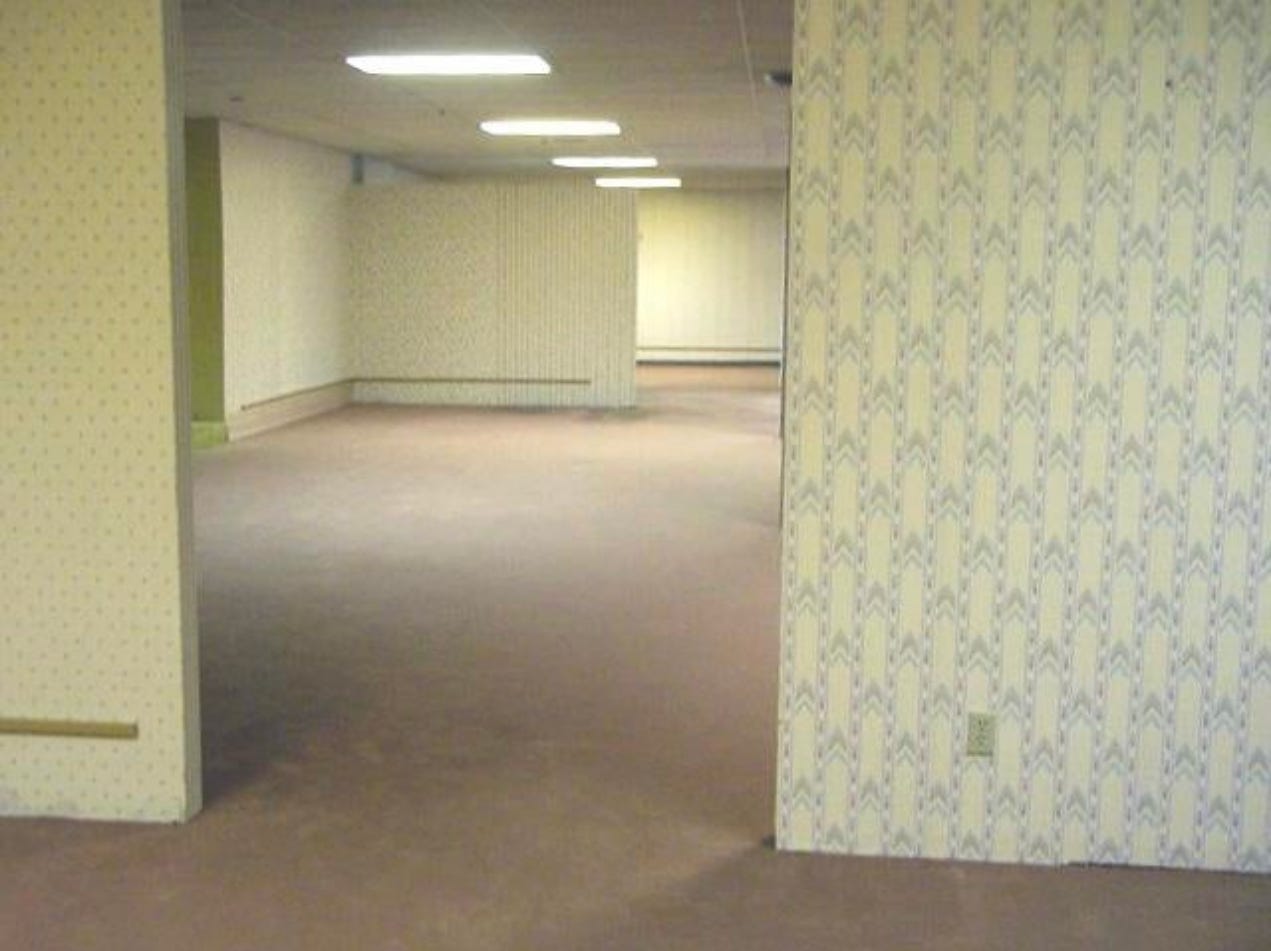
Before we talk about the film or the marketing, we need to talk about what the Backrooms actually is, because the origin story is genuinely important to understanding why this campaign works the way it does.
![r/backrooms - The origin of the backrooms was a post on 4chan [2019]](https://substackcdn.com/image/fetch/$s_!ZH-B!,f_auto,q_auto:good,fl_progressive:steep/https%3A%2F%2Fsubstack-post-media.s3.amazonaws.com%2Fpublic%2Fimages%2F664b9a32-9934-4db4-840d-6f2ea3eeaf8c_1280x1280.jpeg "r/backrooms - The origin of the backrooms was a post on 4chan [2019]")
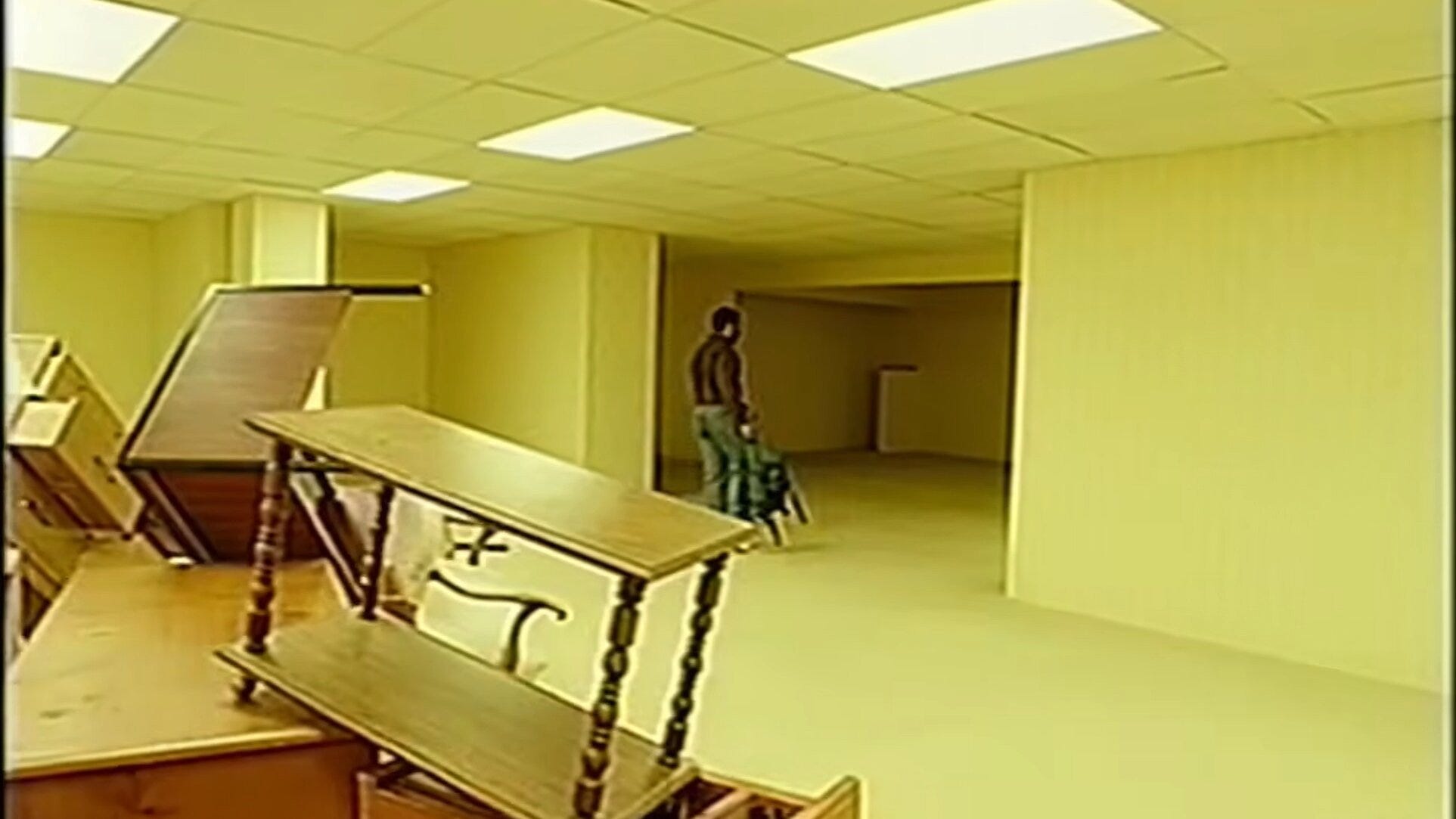
In 2019, an anonymous user on 4chan posted a photograph of an empty office space; yellowish, damp-looking walls, buzzing fluorescent lights, low ceilings, no windows, no exits. The caption described it as a place you could “noclip” into from reality if you weren’t careful. That was it.
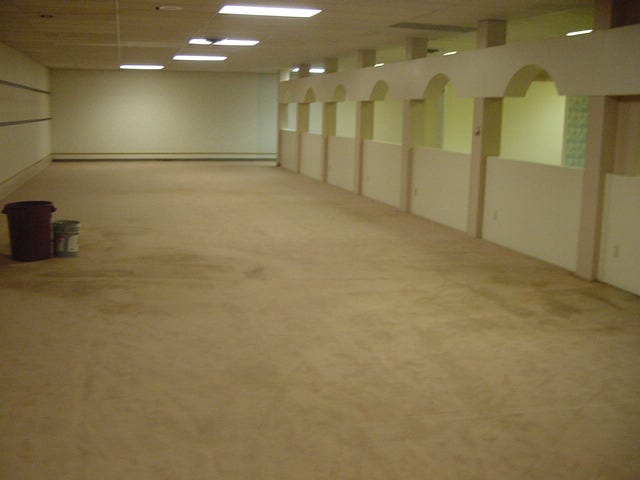
Reddit users eventually traced the original photograph through the Wayback Machine to a 2003 website for a model car racing facility in Oshkosh, Wisconsin, called Revolution Raceway.
The rooms had been cleaned up and repainted, but the space - low ceilings, fluorescent lighting, minimal decoration - matched the eerie liminal aesthetic perfectly. The image wasn’t staged. It was just real life, made unsettling by framing and context.
From that single post, an entire mythology grew. Short films, games, fan stories, wiki entries, ARG-style investigations, Creepypasta threads. Unlike traditional franchises where a central author expands a universe, the Backrooms became a form of decentralised worldbuilding. There was no director. There was no studio. There was no single canon. Anyone could add to it, and thousands did.
This matters enormously when you think about what Kane Parsons then did with it, and what A24 has had to navigate in bringing it to a cinema screen.
Kane Parsons
The YouTube Kid Who Understood the Assignment
In 2022, a then-teenager named Kane Parsons - online alias KanePixels - uploaded a short video to YouTube called The Backrooms (Found Footage). It had 83 million views the last time I checked. 83 million. For a no-budget short horror film made by someone who wasn’t old enough to vote in most countries.
That video, and the 21 more that followed in his Backrooms playlist, are what eventually led A24 and James Wan to his door. But the numbers alone don’t explain the phenomenon. What Kane built was something subtler and more intentional than most people give him credit for.
He said it himself in his conversation with James Wan on the A24 podcast:
“I engineered my stuff to work on a recap level.”
Think about what that means for a second.
He wasn’t just making horror videos. He was designing content specifically to generate theory videos, reaction videos, analysis breakdowns, lore recaps.
He was building a secondary media ecosystem around his primary content before most of his audience knew what transmedia storytelling was. Channels like Nexpo, Night Mind, and Film Theory weren’t just covering his work. They amplified it, creating a free marketing operation around content that cost essentially nothing to produce.
That’s not luck.
That’s understanding how the internet actually works, from the inside out, because Kane was - and is - a member of the community he was creating for. As he put it:
“The audience that I speak to is the audience that I’m also a part of.”
He understood ARG culture, theory culture, Easter egg culture, the specific rewards that internet horror fans look for. He designed his work around those behaviours before he had an audience large enough to appreciate them.
The result was a community that didn’t just consume the Backrooms. They marketed it by engaging with it. Every rewatch, every Reddit thread, every Discord discussion, every fan-made lore breakdown was effectively another touchpoint in a campaign Kane never had to pay for.
From YouTube to A24: What Actually Happened
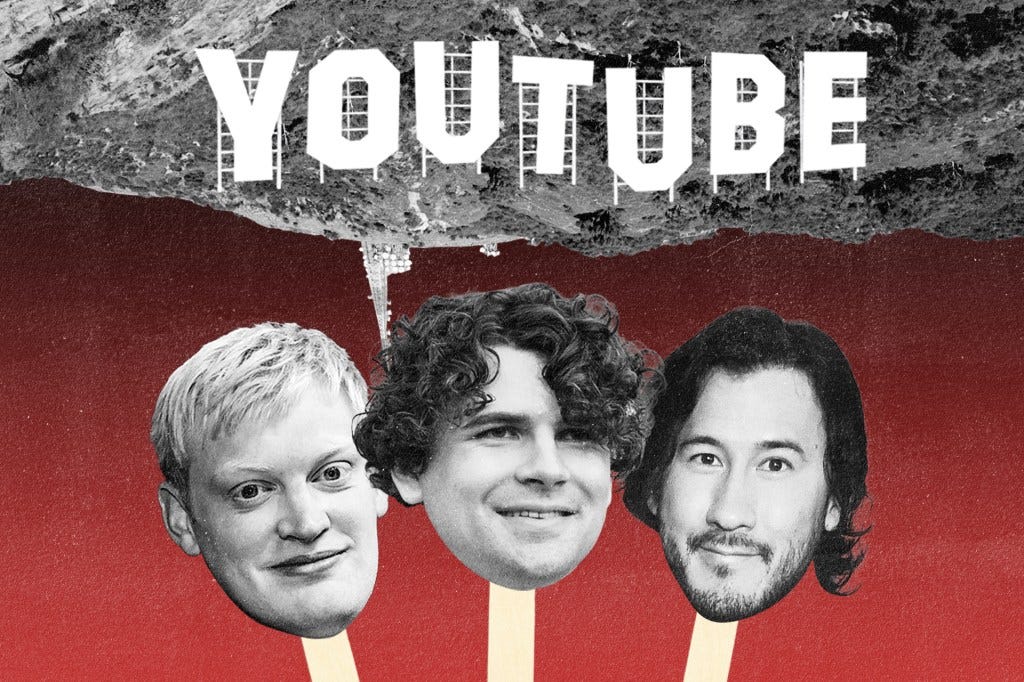
The transition from internet creator to feature filmmaker is becoming more common, but Parsons’ version of it is still one of the more unusual ones. He was barely 18 when serious industry conversations started, in fact he needed his Dad to jump on calls with him initially.
He walked into meetings, by his own account, worried about “beloved IPs getting torn to shreds.” That instinct - protecting the contract you made with your existing audience rather than chasing a clean slate - is what distinguishes him from a lot of adaptation projects that go badly wrong.
He told Cultured Magazine: “I feel it’s critical as the person directing this project and this entire series that you don’t go and betray the contract you made with the existing audience… There’s this very strong desire to start fresh. It’s just been like fighting a force of nature, with that being the average desire of all parties, and needing to counterbalance it constantly.”
That’s a remarkably mature read on how IP adaptations fail; and it’s coming from someone in their late teens. For context, this is the same instinct Kevin Feige used to protect Marvel, or Dave Filoni uses to protect Star Wars. The obsession isn’t with the film you’re making; it’s with the universe you’re stewarding.
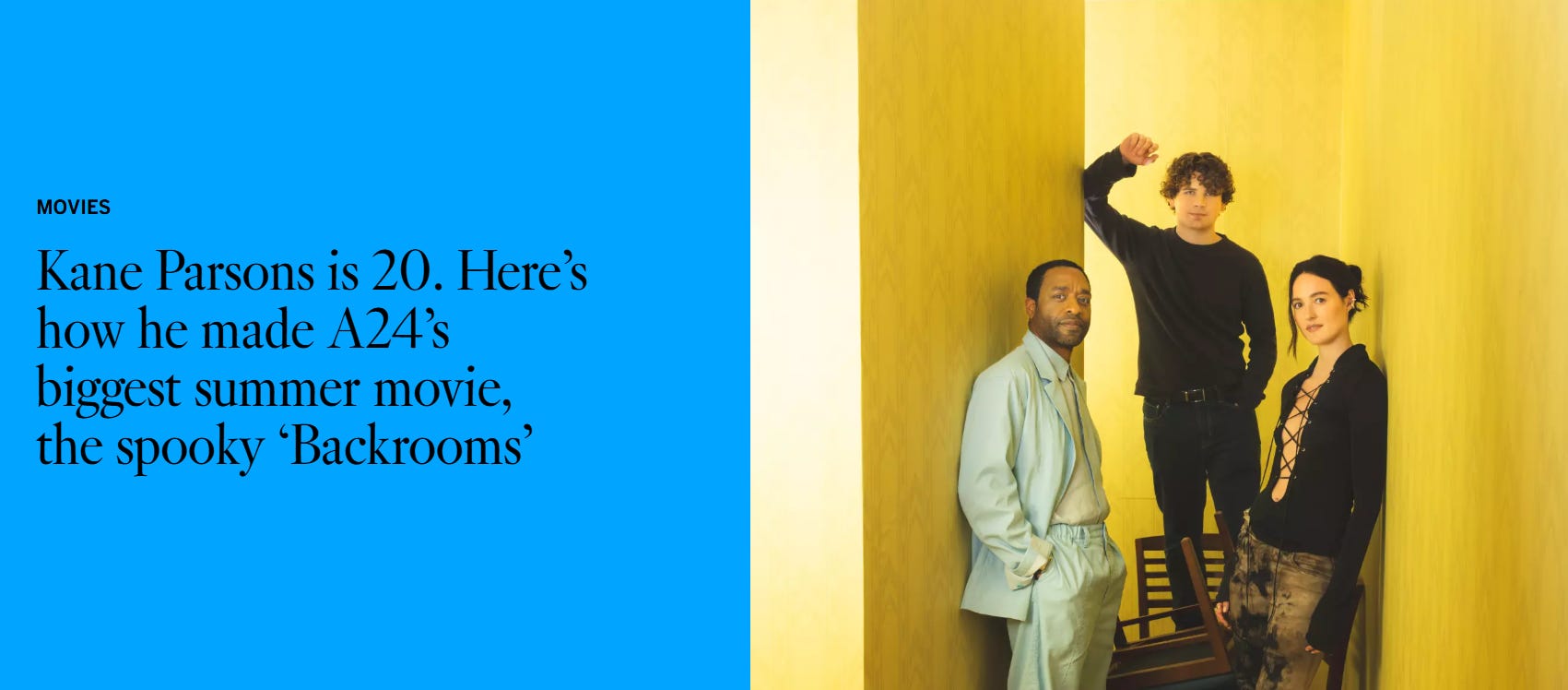
It’s also worth being direct about the elephant in the room: Kane was 20 when he directed this film. There were whispers online - tedious and predictable ones - that he didn’t really direct it, that ghost directors were involved, that a 20-year-old couldn’t possibly be responsible for a studio feature. I find that take genuinely irritating, and I think it says more about the industry’s discomfort with how talent pathways are changing than it does about the work.
Renate Reinsve, who has a pretty credible eye for these things given her career trajectory, said it well: “He has so much life, and he was so particular about his ideas and his visions. He was very firm about them, and he was really trying all the time to ask how he could give better directions.”
Age means almost nothing when it comes to creative vision. What matters is whether the person understands the material deeply enough to protect and expand it. Kane demonstrably does. The YouTube channel is the evidence. The 83+ million views are the evidence. The 30,000 square feet of practical sets - which he designed in Blender before a single wall was built - are the evidence.
Speaking of which.
The 30,000 Square Feet of Yellow Wallpaper


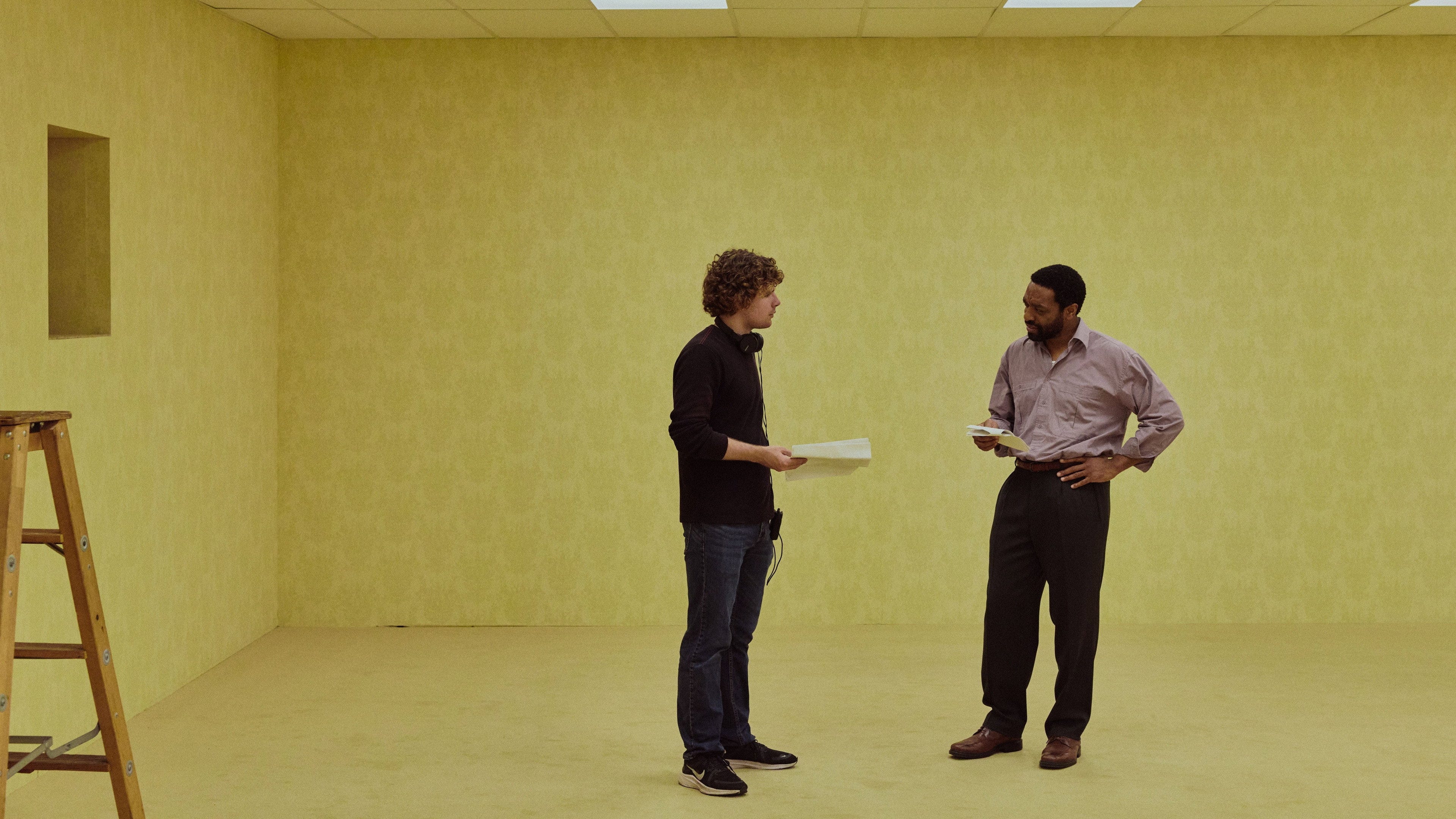
One of the most consistently talked-about production details for this film is the decision to build the sets practically. The production reportedly spent millions constructing around 30,000 square feet of physical environments - walkable hallways, dead ends, impossible architecture - rather than relying on CGI. Kane also ran 50 different wallpaper tests to get the exact yellow tone right.
That’s not a throwaway detail. It’s a philosophical statement about what makes the Backrooms frightening, and it has direct implications for how the campaign was able to work.
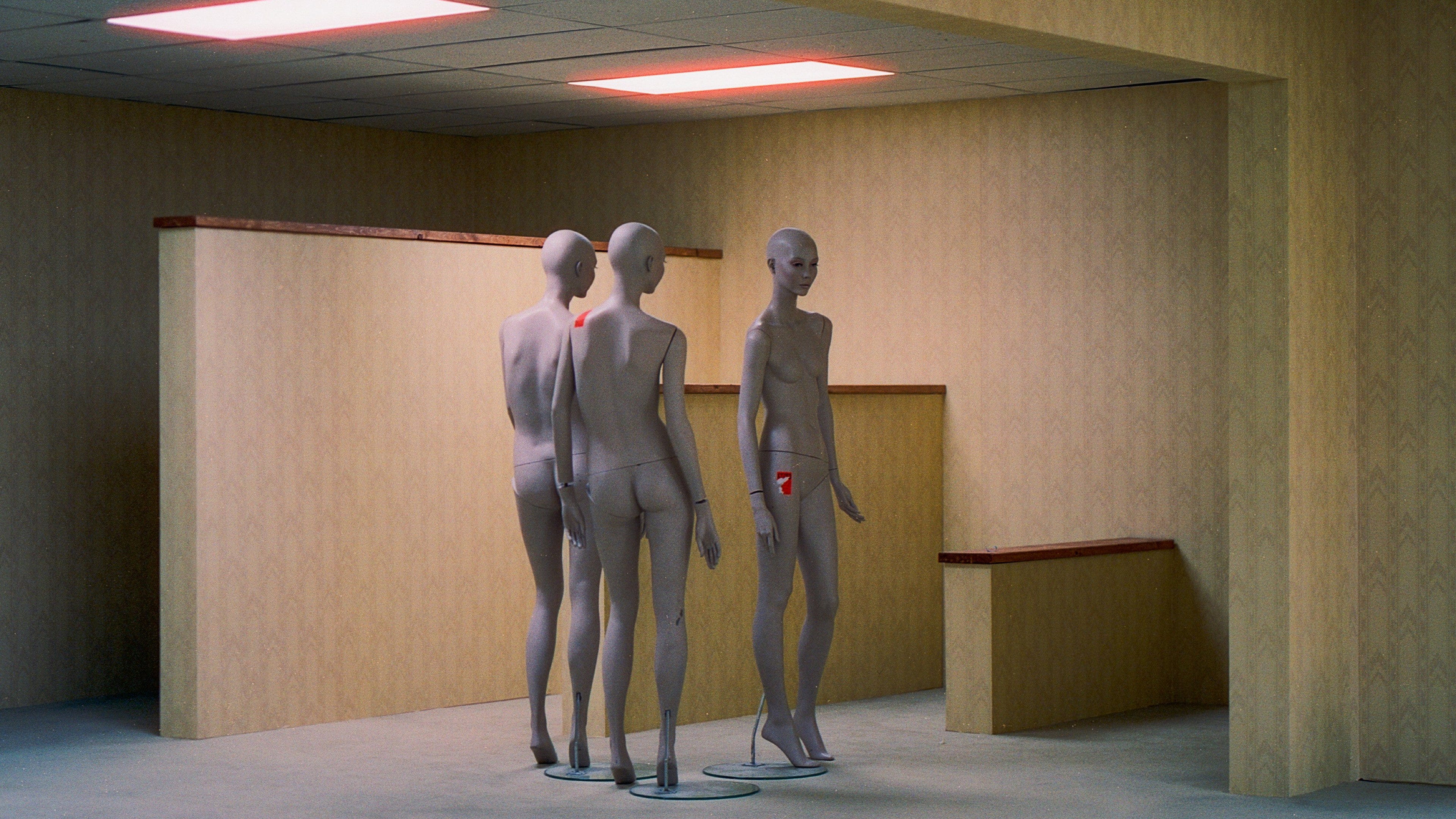
The Backrooms as a concept is inherently environmental horror. The fear isn’t located in a specific monster or creature, it’s in the space itself. The endless corridors, the blind corners, the feeling that something could be just out of frame; monsters just add on top to stress you the f… out!
CGI environments, however impressive technically, tend to produce a specific kind of synthetic uncanniness that the Backrooms already weaponises. If everything looks digitally constructed, the horror becomes abstract. A real, walkable environment - one that the cast and crew could actually get lost in - creates a different register of dread entirely.
It also made the experiential marketing component of the campaign feel genuine. When audiences saw BTS footage of the actual set, or when IGN’s interviewer wandered through the pop-up and found corridors that went nowhere, the reaction wasn’t “cool production design,” it was visceral.
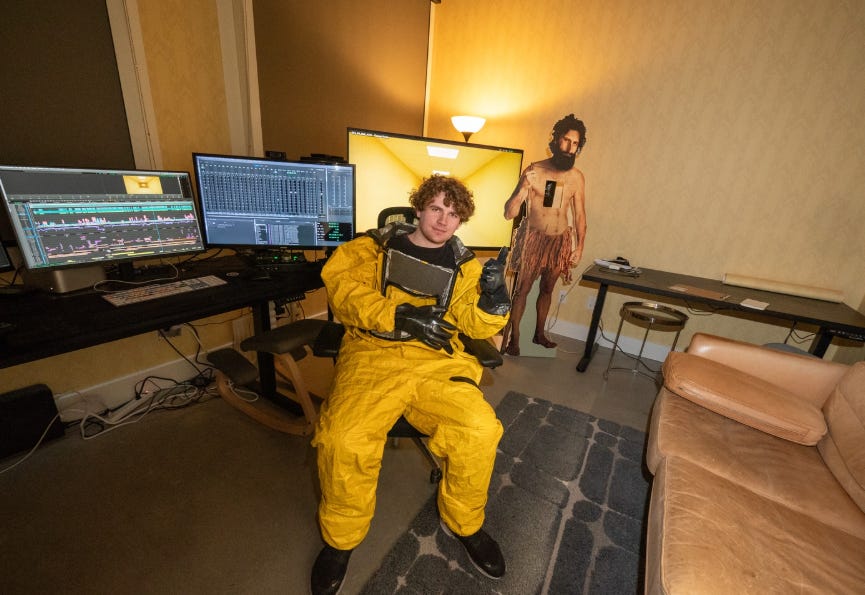
A comment section reaction to one BTS post captured it perfectly: Kane is pictured at his monitoring station in a hazmat suit, three screens behind him getting progressively bigger, the Backrooms wallpaper on the wall, a cardboard caveman cutout in frame. It’s bizarre and very on-brand. 121k likes. The set itself became content.
The Campaign: How A24 Sold an Internet Legend
A24’s marketing for Backrooms is a fascinating object of study because it operates on a completely different logic to most studio campaigns. There’s no P&A spend in the Superman range here ($10+ Million roughly). There’s no global outdoor takeover, no IMAX skyline activation, no sports league partnership. What A24 did instead was use the existing architecture of internet culture to do most of the heavy lifting; and then add just enough tactically precise activity to amplify it.


Posters, Trailers, and the Wallpaper as Merchandise
The first posters were released on Instagram on 30th March, with the caption “If you’re not careful… Backrooms trailer tomorrow.” They achieved 445k likes. The posters themselves are remarkably simple, which is both a creative choice and a commercial one.
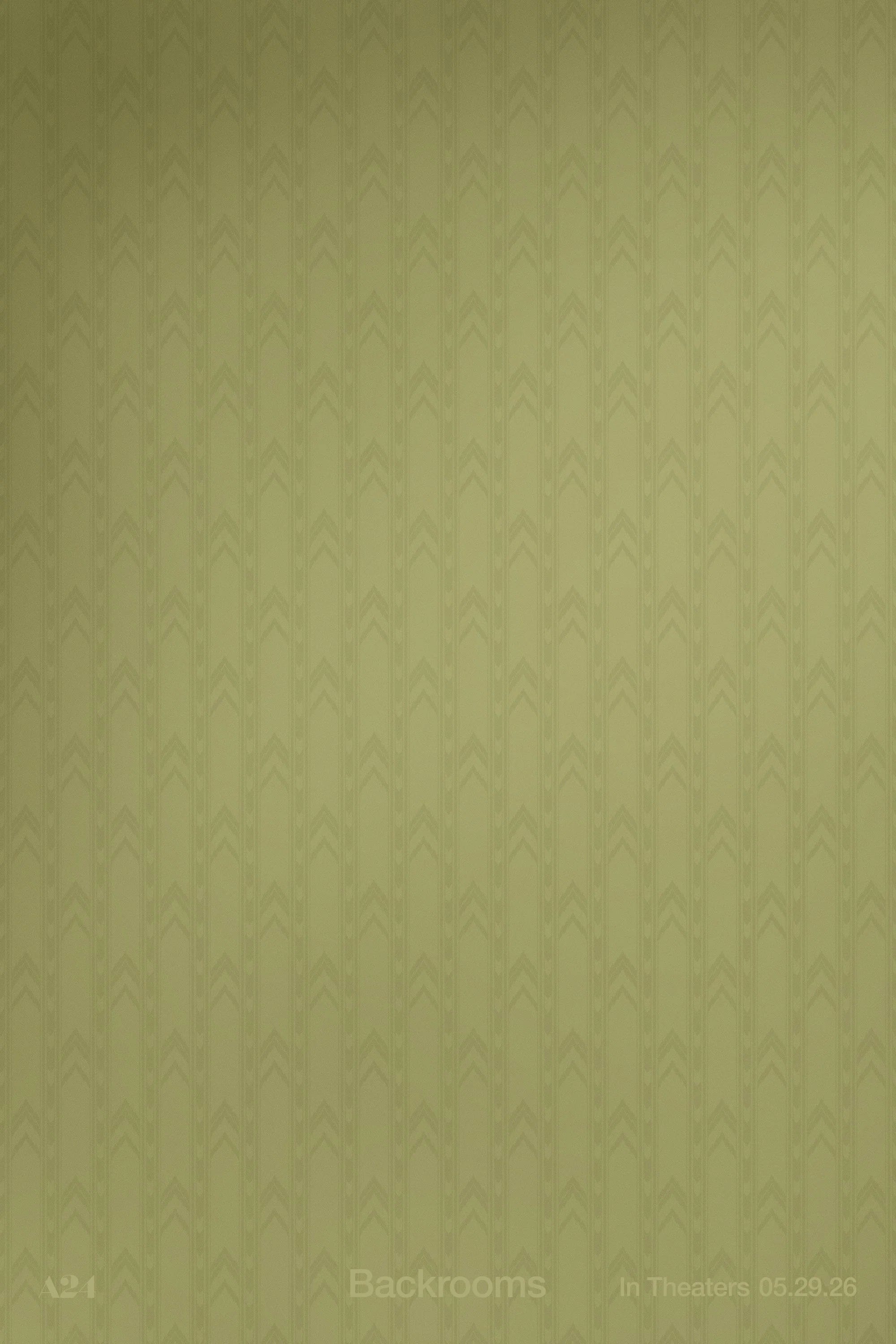
AMC and Regal Cinemas received physical paper posters - not digital - which a community fan account clocked and called out specifically. Surprisingly, Fans appreciate that distinction. If you think about it, it signals craft and intentionality to exactly the kind of audience that cares about that. That same standard wallpaper poster was then also made available to download digitally, buy as an adhesive poster, or purchase as actual 30-inch wide rolls of yellow wallpaper for your home.
The poster is the merch. The merch is the marketing. They’re the same thing.
The Official Trailer on YouTube has over 36 million views. For a non-franchise A24 horror film, that’s extraordinary. And it’s not just the number, it’s the engagement around it. A comment on one still post from IMDb noted they could spot shoes from another scene “no-clipped” into a different frame. The community was frame-by-framing the trailer before the film even opened.
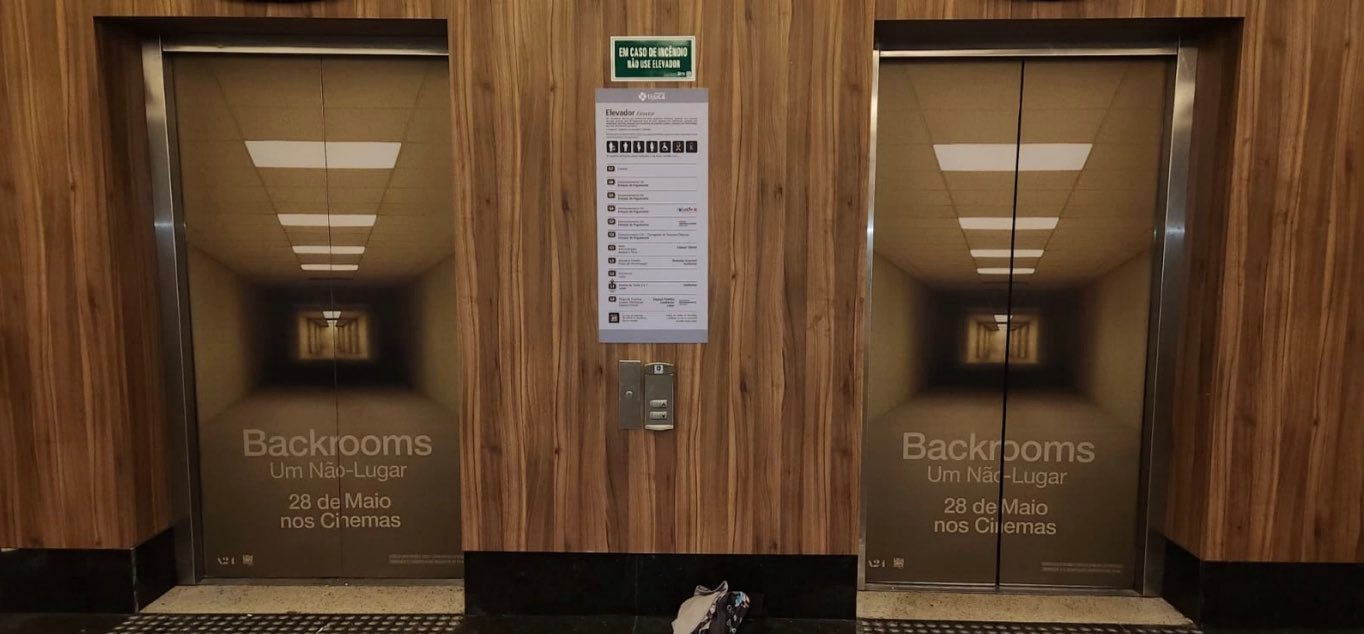
There’s also a Brazilian elevator activation I have to mention - found on X - where the static paste image on the outside of closed elevator doors shows a dimly lit Backrooms corridor. You see that at 2am and you’re going to feel it. Simple, inexpensive, and utterly on-brand; call it Trompe-l’œil' or deceiving the eye…
OOH: Guerrilla, Global, and Deeply Lore-Aware
The OOH strategy for Backrooms is not a blanket national spend. It’s deliberately targeted, with some placements chosen for scale and visibility and others for their symbolic meaning within the fandom. The combination is what makes it special.


The Oshkosh and New York Billboards
Two large roadside billboards appeared: one on the side of a building in Wisconsin at coordinates 44.016877, -88.5361499 (Oshkosh, the city where the original 2003 photograph was taken), and one above a Buddhist temple in East Broadway Mall, New York at 40.7162972, -73.9953365 (I know the coordinates because that’s what A24 shared to social media lol).
The reaction was immediate. As a fan put it in the comments of A24’s post: “Real ones know that the original Backrooms pic was taken in Oshkosh.” Rapper Kenny Hoopla responded: “I’m literally down the street - why did no one tell me A24 was in my city?!” The Insta post hit 100k likes, with 230 comments ranging from lore-aware fans to casual passers-by just clocking a very yellow billboard in an unusual place.

This is the kind of media placement that works on two levels simultaneously: broad outdoor awareness for anyone passing by, and deep fan significance for the community that immediately understood why those coordinates mattered. You can’t manufacture that kind of dual impact unless you actually know your audience well enough to find the resonant location.


The Blue-Tape Doorways
Connected to the above placements, “blue-taped doorways” started appearing throughout key cities; 744k+ likes which is insane! The exact same blue tape doorway shapes in various settings from overlooked corners to alleyways, and blank architectural spaces inside other liminal environments, rather than on traditional outdoor formats. Not just your bog standard paste-ups.
The Backrooms fan account shared the exact same doorways but from Oshkosh; captioned to lean fully into the in-universe fiction reports of “unusual disappearances,” compasses behaving strangely nearby, people hearing voices near the marked spaces.
Whether that caption was A24’s own work or community storytelling layered on top, it doesn’t really matter, because both are part of the same thing. The campaign and the community’s interpretation of it had become indistinguishable, which was the goal. Then, finally to add on top of that theme, more videos emerged capturing ASync in action; the Backrooms Insta account shared one video: “Doors open this Friday” (229k likes) with a bunch of comments about the fact they’re in the place those initial images came from. And then DiscussingFilm shared a video, a first person POV of someone walking through a tunnel under a bridge that connects to the Houses of Parliament, spotting another person in a hazmat putting blue tape on a wall just before the exit.
Again, low effort, no context, just a person in a hazmat placing blue taped doorways in a liminal space….
International OOH: China, Brazil, and Beyond
In China, a genuinely unusual digital OOH placement appeared that I haven’t seen done quite like this before: a deep immersive corner screen that mimics the architecture of the room itself, making it look like you can literally walk into the Backrooms. It’s video-based, so the room appears to move, furniture shifts, and a chair floats across to an adjacent screen. It’s one of the most on-brand OOH formats I’ve seen for any film; the medium and the message are the same.
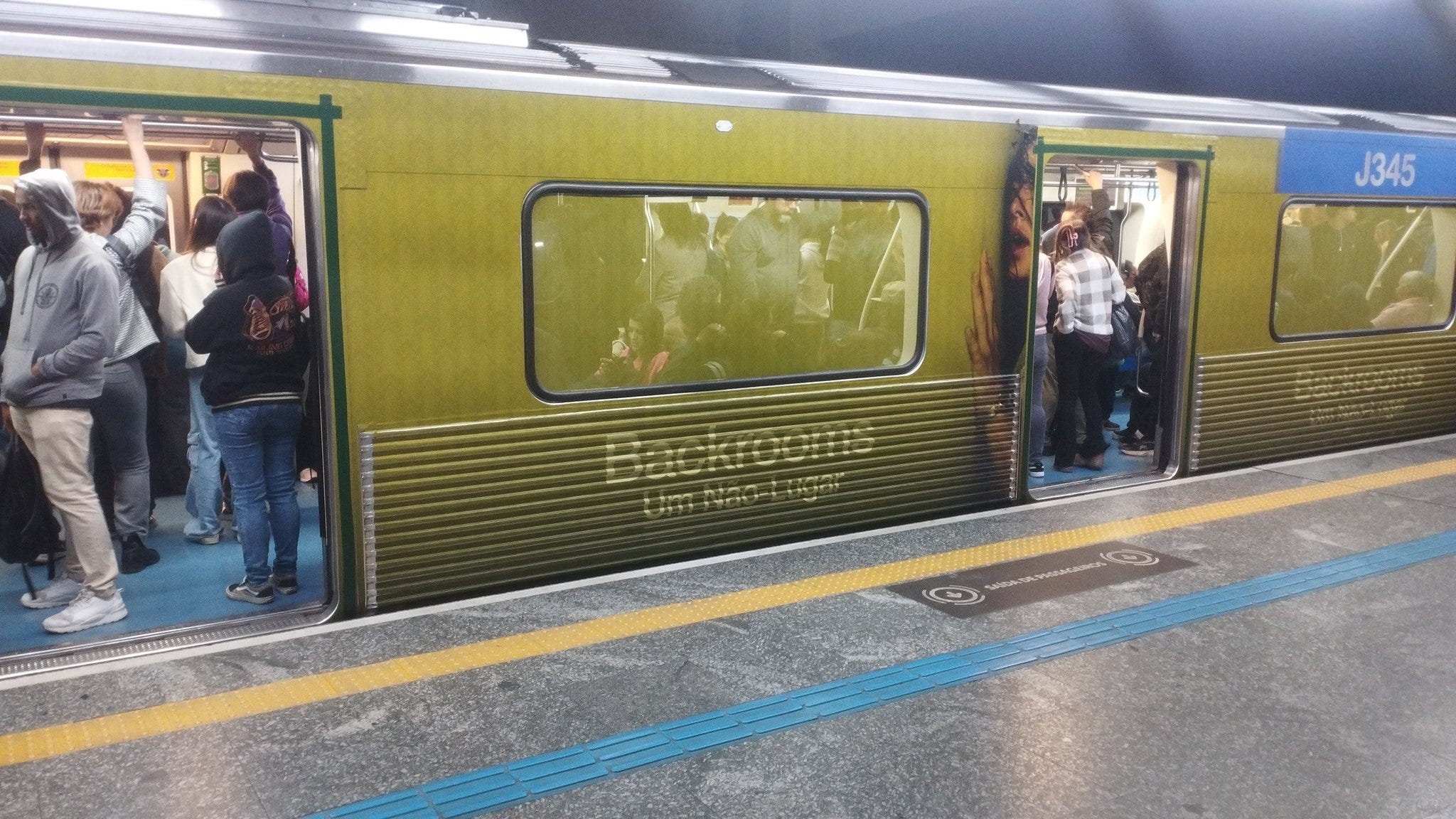
In Brazil, a metro car was covered in promo. The key yellow wallpaper art with Renate Reinsve’s character, and crucially, the metro doors themselves were lined with that signature blue tape. So the doors of an actual moving train become a portal you walk through every day. Genius. Low cost. Entirely in-universe.
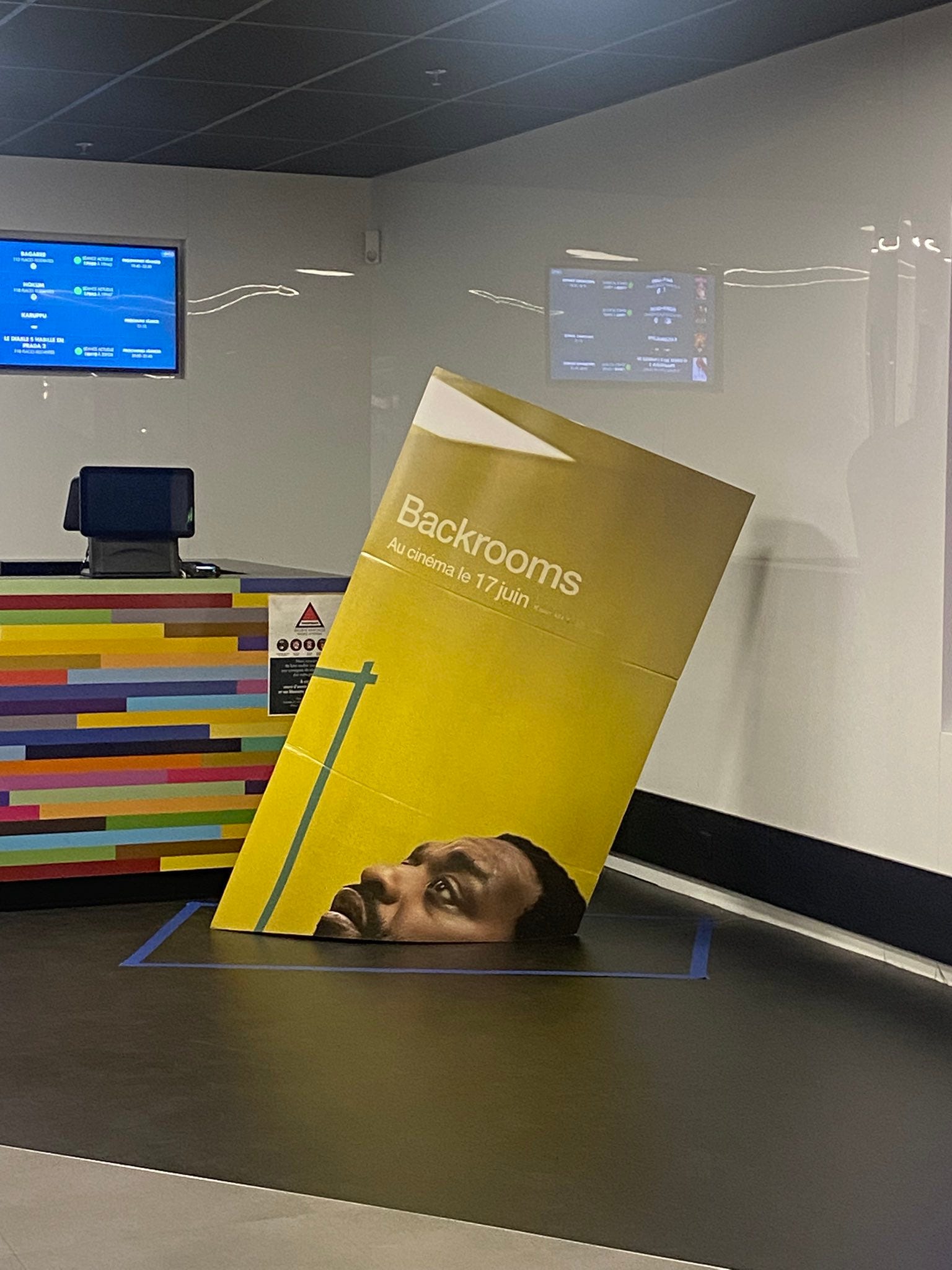
There’s also a “no-clipping” poster format that appeared in various markets; a physical poster slanted diagonally, cut off at the bottom as if it’s sinking through the floor. It looks like a mistake until you understand the lore. Then it’s one of the cleverest bits of contextual OOH I’ve seen.
The In-Universe Pluto TV Commercial and the Fax Machine
This is the one that gets me every time, I appreciate Bloody Disgusting for the details!
A24 ran a retro television commercial for “Cap’n Clark’s Ottoman Empire” - the fictional furniture store that features prominently in the film - on Pluto TV. Pluto, for context, is a free ad-supported streaming platform (FAST). The commercial was designed to look indistinguishable from the kind of genuinely low-budget retro furniture ads that you might naturally see play on Pluto. I imagine the placement was chosen because it would feel native to that environment; not jarring, but uncanny.
And just maybe because it was shot for the films actual in-universe TV ad…
The commercial was spotted and filmed in its entirety by a fan account called Backrooms Movie Updates. A24 knew the community would find it. That was the plan. Earned media value generated by a paid placement that only has to reach one person to activate the network.


Then there’s the phone number included in the commercial: (408) 357-2875. Turns out, it’s a fax number. A fan then sent a fax. They received a PDF document in return; an in-universe document tied to the Cap’n Clark’s Ottoman Empire mythology.
Who has a fax machine anymore?
Nobody. But that’s the point.
The Backrooms community includes people who will track down every possible hidden thread, and the reward for doing so was a piece of in-universe content delivered via technology that barely exists. It’s completely impractical and it’s a perfect piece of ARG-adjacent marketing that costs almost nothing to execute but generates outsized community value.
The Burbank Pop-Up: Enter the Backrooms
May 13th to 17th. Burbank, California. Limited slots available. The Instagram post announcing it read simply: “Enter the Backrooms. enter.backrooms.mov.”
From the footage that came out: IGN went and interviewed Kane literally inside the experience, wandering through corridors with dead ends that go nowhere. The Secret LA account documented it. Jacksepticeye attended (105k Instagram likes). A carousel from the Backrooms Instagram account captured attendees in various areas; video 3 had four guys doing a Harlem shake, the last clip shows people running from figures in hazmat suits; 208k likes.
The context worth noting here is what this activation solves. One of the defining characteristics of the Backrooms as a cultural phenomenon is that people genuinely started trying to find liminal spaces IRL; abandoned buildings, forgotten shopping corridors, empty car parks at 3am. That energy was already there. A24 didn’t create it. What they did was channel it into a legitimate, monetisable, deeply shareable version of the thing the community already wanted. You’re not manufacturing fan behaviour. You’re providing the container for it.
Social and Paid: A24’s Platform Intelligence
A24’s paid social strategy for Backrooms is worth examining because it doesn’t look like traditional paid advertising. They’re not running standard trailer cuts against broad horror audiences. They’re using paid budget to amplify native-format content in ways that feel organic to the platforms they’re appearing on.
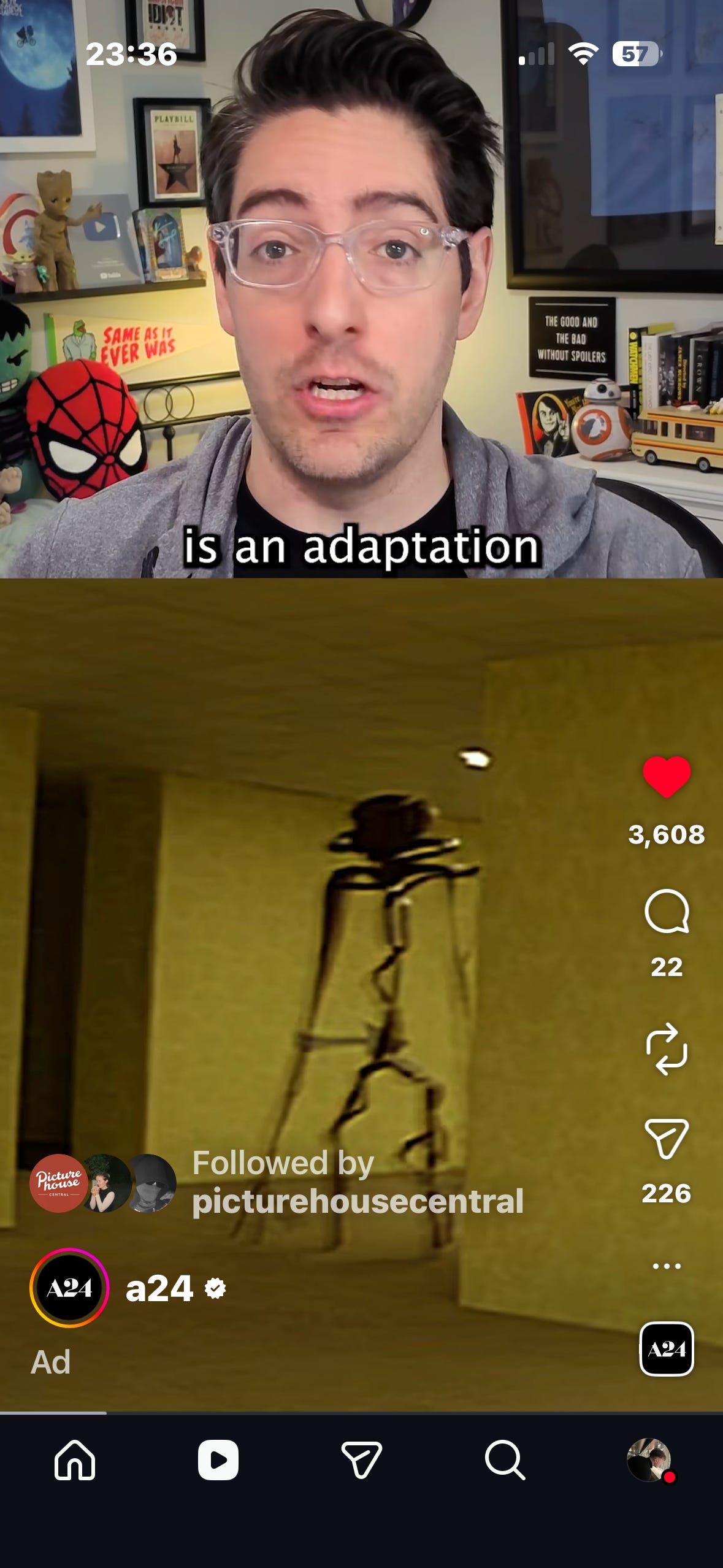
The most interesting example is the Popculturebrain boosted post. Popculturebrain is a social media creator who makes split-screen explainer content - his face at the top, images relating to his topic below - in a very specific, recognisable format that fans of his know well. A24 ran his video as a paid/boosted post from their own account, where he explains the real Backrooms sets Kane built and gives background on the director’s YouTube origins. Small engagement numbers on the paid post itself (that’s fine, it’s a paid placement meant to drive awareness), but the point is what it signals: A24 testing social-native content formats by literally having platform-native creators produce them, then funding the distribution. It doesn’t look like an ad. It looks like content. Because it is content.
Similarly, the A24 Instagram account ran a boosted Esquire quote post - not a trailer, not a poster, but a critical endorsement - as a paid placement. Clean. Simple. Lets the credibility of an established publication do the persuasive work.
For anyone thinking about paid social strategy, both approaches work because they follow the audience’s existing behaviour rather than trying to override it. If Popculturebrain’s audience already trusts his format, A24 borrows that trust. If A24’s audience responds to critical validation, that’s what the paid post delivers. Platform-native thinking with paid fuel behind it.
Social: The Organic Layer
The organic social around Backrooms is another brilliant example in letting a community amplify a campaign without trying to control it, while seeding just enough first-party content to give that community things to react to.
A24’s own account produced a few key social pillars that did serious numbers:
The UGC Repost captured above is a smart use of UGC. This is something A24 have done before and studios will continue to replicate; this time A24 aimed to showcase flair by using various audience members own X posts with images. Thos images themselves tell stories; various liminal spaces and Backrooms inspired/lookalike environments, with Empty malls, staff corridors in Cinemas and more…
The “Cast attempts to map the 30,000 sq ft set” video is exactly what it sounds like, and it’s brilliant. You don’t need to explain that the set is enormous. You show four actors getting genuinely confused trying to navigate it. 304k likes on a companion post of Kane photographed on set by Wendigoon.
The Soundtrack post - 180k likes, captioned “You weren’t supposed to hear this” - for the Original Motion Picture Soundtrack, composed by Edo van Breemen with Kane’s involvement. That caption does a lot of work. It’s in-universe. It sounds like a secret. It sounds like something the Async Research Institute doesn’t want you to hear. Even an album rollout becomes part of the mythology.
Third-party coverage and creator content is where the reach really multiplied. Letterboxd ran a six-minute interview with Kane on YouTube (197k views) and 110k Instagram likes, where he talked about how Portal games influenced the film’s direction; worth flagging because he’s mentioned Portal more than once across press and nobody’s properly adapted that IP for cinema yet. Watch that space…
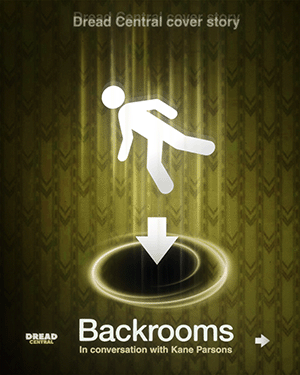
Dread Central gave Kane their June digital cover with some genuinely great quotes: “I care about making sure stuff isn’t horror for the sake of horror. I enjoy bringing up concepts in different ways that aren’t inherently horrific, and cranking things up to ten to make people uncomfortable in ways that feel so unusual they become horrific.” That’s a director who understands his own work. And it reads as authentically as it was probably meant to.
Patrick Tomasso has made various pieces of great content - including the brilliant interview above - but his Insta post relating to the Canadian premiere is one I want to pull out at length, because Patrick’s caption captures something important about the YouTube-to-filmmaker moment that this whole post is really about:
“100 people > 100m views. I had the pleasure of hosting the Canadian premiere of the Backrooms movie with director Kane Parsons, and it got me reflecting quite a bit on the path of a YouTuber to traditional filmmaker. I was standing backstage with Kane as the credits started to run, and you hear the applause, and then we came out to do a Q&A, and I could feel his energy. I could feel the energy in the room, and that is something you will never feel on YouTube. Do not get me wrong, it is incredible the amount of people that we can reach with our platforms now. But truthfully, I would probably give all of that away for 100 people, 50 people, 20 people in an actual cinema watching something that I made. That, to me, is where film really comes alive. I want to be able to use those audiences and create little micro-moments in person with real people experiencing art together in actual cinemas.”
There’s something really honest about that. The numbers on YouTube are real. The feeling of a room watching something together is also real. And the whole arc of Backrooms - from anonymous forum post to Jacksepticeye in a pop-up in Burbank to a sold-out cinema in Canada - is proof that both things can be true at the same time.
Going back to the ‘traditional’, the Async Research Institute hat drop - exclusive early access when you bought your theatrical ticket online - is the merch and email marketing and brand universe-building all rolled into one. You buy a ticket, you get access to a limited merch item from within the fiction. Your ticket purchase becomes part of the world.
Then lastly, the UGC and the brand pile-on is also worth cataloguing, because it tells you something about the cultural gravity of the concept. The brands that leaned into it:
McDonald’s produced a two-minute horror short called “You’ve Been Here Before” (843k YouTube views). Found footage, first-person POV, iconic McDonald’s environmental cues (Grimace lurking at the end of a corridor, a giant ball pit accessed via red slides), caption: “chat, did I just noclip?” It’s genuinely good brand content, not cringe-adjacent.
IKEA Canada: “Ever wondered what the basement of an IKEA looks like?” Lamp and green chair against the Backrooms wallpaper. 95k likes. Simple, effective, and completely on-brand for IKEA’s social tone; they already exist in liminal retail spaces, so the joke practically writes itself.
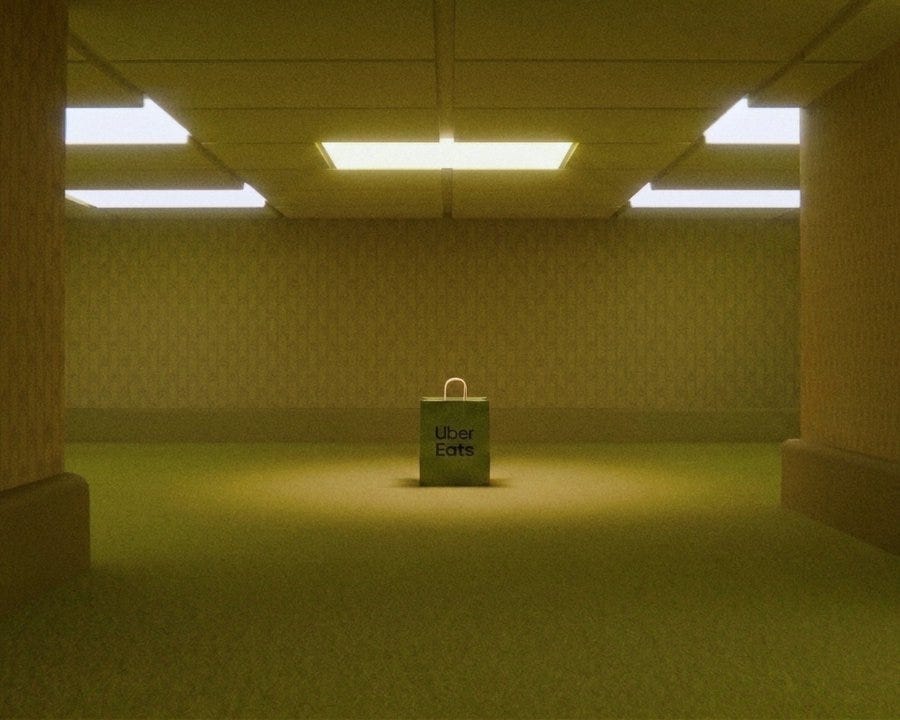
Uber Eats: an Uber Eats delivery bag in the middle of a Backrooms corridor. “ok be so fr who ordered from the Backrooms.” One sentence. Correct.
Minecraft, Mountain Dew, Minions, Plants vs. Zombies, Burger King and more all had a go.


And Shrek. Just Shrek in a doorway, Fiona surrounded by furniture. It’s not the most creative execution. But I’m going to use it as an inlink because - and this is relevant - I wrote about the Shrek IP and its 25th anniversary recently, and the fact that Shrek is now reactive enough to play in trending cultural moments on social media says something interesting about where that franchise sits right now as a brand.

The Press Tour: Earned Media Done Right
The press circuit for Backrooms is substantial for an indie horror film, and it’s worth laying out in full because it shows how A24 sequenced earned media across different audience segments.
The biggest single piece of press was the A24 podcast episode with Kane and James Wan - 173k YouTube views, 64k Instagram likes. But what A24 also did was publish the full transcript on their website as a ‘Notes’ entry, and distribute the same conversation via Spotify and Apple Podcasts. The same interview across three different format layers, each designed to reach the Backrooms audience wherever they happen to consume: watching on YouTube, listening on a commute, or reading in full. That’s not complicated content strategy. It’s just content marketing done with actual care.
The mainstream press quickly spread and picked Kane up: BBC News released an 11-minute interview with Kane on their YouTube channel; the suggested video sidebar was and is still full of other Backrooms adjacent interviews: Tonight Show with Jimmy Fallon (425k views & Kane said he’d bring a hydrogen bomb to survive the Backrooms, which is exactly the right energy for Fallon’s audience), Fandango’s scene breakdown (770k views), CBS Mornings (121k views, where Kane also talked about why he doesn’t want to embrace AI; a clip that did good numbers in itself given where the cultural conversation is right now), IGN, Barstool Sports: Out of Order, and the Dread Central cover I mentioned earlier. That’s just how the press and YouTube especially work; an algorithmic halo forms around the content (the BBC interview in this scenario) and kick off recruitment work for the whole press ecosystem.
That’s how earned media compounds. One interview becomes the gateway to six more. The A24 PR team clearly understood that and sequenced the press to feed that loop rather than treating each placement as standalone.
The Tour Diaries content series sits somewhere between press and organic social; three mini-documentary posts showing Kane in Mexico City, at the LA premiere, and in London. Each one captures him in Backrooms-esque environments: liminal spaces, corridors, transitional architecture. It gives followers a window into the press tour that feels personal and on-brand rather than like promotional boilerplate. 150k, 55k, and 48k likes respectively.
As seen in Tour Diaries 001: CDMX, Kane made an appearance at CCXP Mexico, where he spoke about the production in detail - the 30,000 square feet, modelling in Blender, the wallpaper tests - with that quote picked up and widely shared: “The set was huge. We built 30,000 square feet of actual backrooms that we could walk around in. Actually, some people were getting lost. It felt like being there, which was really weird” (THR).
Wendigoon and the Community Infrastructure
One of the quieter but most significant decisions in the campaign is how A24 positioned Wendigoon - real name Isaiah Markin, a YouTuber known for multi-hour video essays on horror lore, conspiracy theories, and analogue horror, and specifically someone who’s spent years covering Kane’s Backrooms series in exhaustive detail - within the promotional infrastructure.
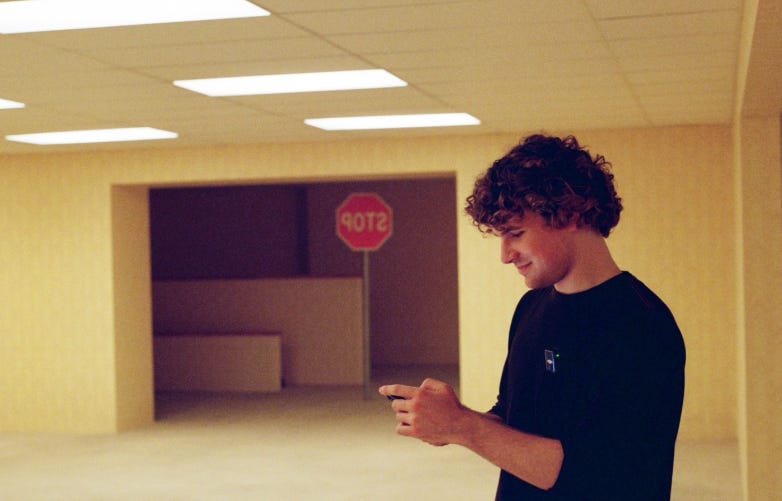
He was given set access. He attended the premiere. And when a BTS image appeared captioned “KanePixels in the Backrooms, shot by WendigoonActual,” the comment section responded: “You’re telling me Wendigoon SHOT Kane Pixels in the backrooms?” / “A24 promoting Wendigoon, I’ve seen it all.” / “Jesus shot by God.”
304k likes on that post. And the reaction is community language: in-joke, reverence, and humour simultaneously. You cannot buy that response. You can only earn it by paying attention to who the community already trusts. Wendigoon isn’t a paid influencer in the traditional sense. He’s a community institution. A24 treated him like one.


Contrast that with Mike Majlak - co-host of the Impaulsive podcast - organically posting to his Instagram story that he’d gone to see Backrooms in theatres. No partnership. No payment (as far as I know). Just a creator with a large audience championing another creator’s work. That’s the social flywheel in action: if you’ve genuinely made something good for the right community, the community does the promotion.
The Merch and the A24 Brand Ecosystem
A24’s shop being a genuine marketing arm rather than an afterthought is something I’ve written about in The Drama / A24 marketing breakdown, and Backrooms is another strong example of it working.
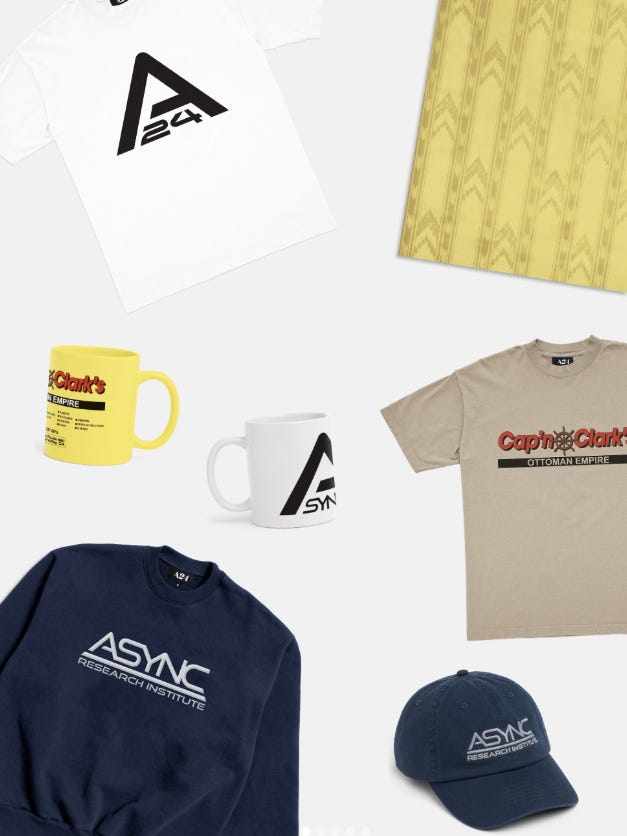
The full merch range: the wallpaper poster (digital download and physical adhesive), rolls of actual yellow wallpaper for your home, Cap’n Clark’s Ottoman Empire and Async Research Institute mugs and tees, an Async crewneck and hat (with exclusive early access for ticket buyers; email marketing, brand universe extension, and fan reward all in one mechanic), and the Original Motion Picture Soundtrack on vinyl.
Chiwetel Ejiofor wearing a Cap’n Clark’s tee in a simple two-image A24 Instagram carousel got 127k likes. The comment from A24: “a24.shop/Backrooms.” The product integration and the character promotion are the same post.
That’s the A24 brand ecosystem at its most efficient: the merch exists inside the fiction, the cast wears it organically, the shop comment is the call to action, and fans who buy it are literally decorating their homes with Backrooms wallpaper. Every item extends the fiction into the physical world of the buyer.
A24 and the Audience-First Approach
I want to spend a moment on the broader A24 philosophy here, because it contextualises why this campaign works at a structural level beyond the individual tactics.
A24 was built - as one Substack writer I follow put it - around “an unusually obsessive understanding of how to market specific films to specific audiences, run by people who didn’t come from the traditional studio system.” That obsessiveness is the thing. It’s what allowed them to identify that the Backrooms had an existing, passionate, highly engaged audience already doing the community-building work, and then design a campaign that added value to that community rather than trying to redirect it.
Most studios think about marketing as something you do to audiences. A24 has always thought about it as something you do with them. The fax machine commercial works because they knew someone would find it. The Oshkosh billboard works because they knew someone would understand why those coordinates mattered. The Wendigoon set visit works because they knew the community would react in exactly the way they did. None of those decisions are accidents.
It’s also worth noting what A24 didn’t do: they didn’t try to strip the community element out of the IP and make it into a clean studio horror film. The Async Research Institute mythology that Kane built on YouTube is in the film. The found footage aesthetic is in the film. The lore is honoured. The campaign reflects that continuity rather than treating the theatrical release as a separate product from the YouTube work.
That’s what Jordan of Think Like A Creator meant when he wrote that A24 figured out how to “market specific films to specific audiences” from the start. Backrooms is the test case for what that looks like when your audience is an internet fandom rather than a traditional film demographic.
The Transmedia Ecosystem: What Already Exists and What Could
The Backrooms IP is uniquely positioned for transmedia because it was never owned by anyone. Kane is explicit about this; he pays homage to where the concept originated and doesn’t claim sole authorship. The community built the mythology. He contributed a significant and influential branch of it.
Which means Puppet Combo - the indie studio behind Nun Massacre and Murder House - could release their own Backrooms console game around the same time as the film, and that’s not a problem. It’s the nature of the IP. Kane’s film doesn’t own the concept of the Backrooms. It owns his specific mythology and characters. Other interpretations can coexist, and arguably the game arriving simultaneously only deepens the overall cultural footprint.
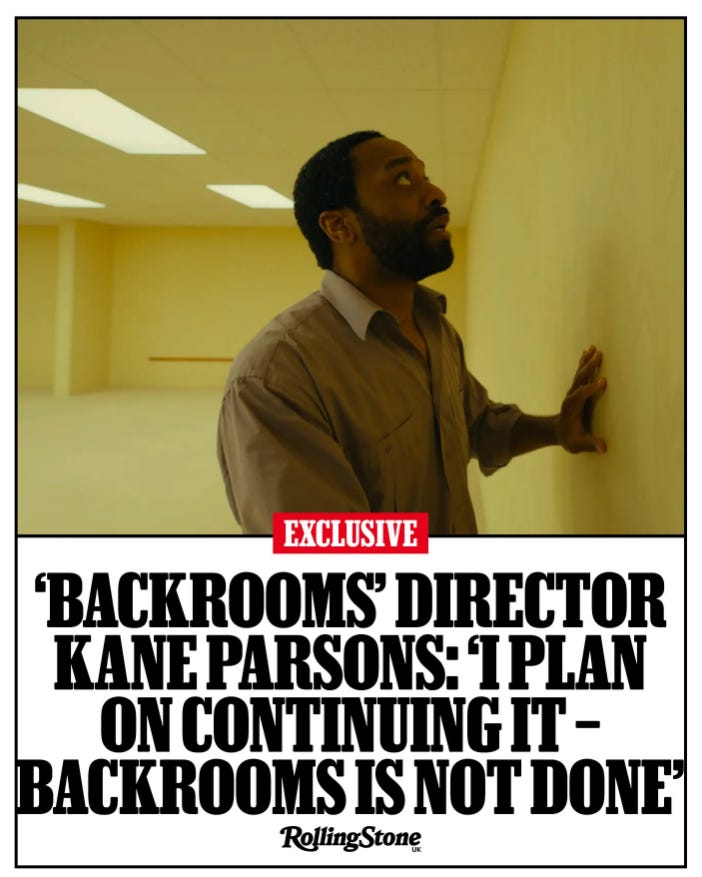
The A24 podcast transcript makes Kane’s transmedia thinking explicit: “The material goes outside the confines of the YouTube series and outside the confines of the film.” The YouTube series and the film are designed to coexist and are different entry points into the same universe. He’s also talked about wanting to do a TV series. Rolling Stone got the exclusive on his plans to continue the story.
The question is what comes next and how the studio relationship navigates that. The community has co-ownership of the concept in a way that’s unusual for a theatrical IP. Managing that tension - between studio commercial interests and the open-source origins of the mythology - is one of the more interesting franchise management questions in entertainment right now.
If you want to dig further into how horror marketing has been working in 2026 more broadly - Send Help, Return to Silent Hill, Primate, Iron Lung, 28 Years Later: The Bone Temple - the Horror Marketing in 2026 breakdown has all of it. Backrooms sits in interesting company. And the YouTube-to-filmmaker thread connects directly to what I wrote about Markiplier and Iron Lung in that piece. Worth reading together.

I Watched It. Here’s Where I Landed.
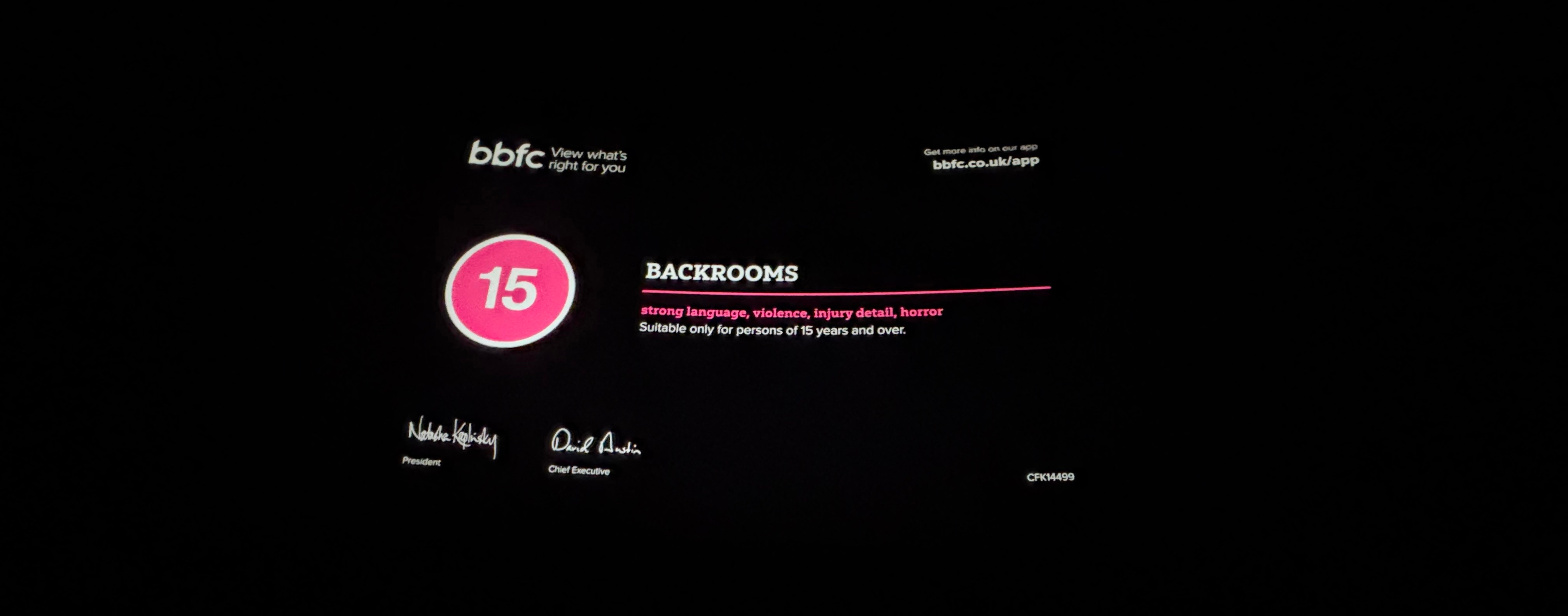
I watched Backrooms dead centre front row, completely alone, with nothing between me and the screen. Dark, cool, quiet room. That vulnerability ended up being exactly the right context.
The horror works. Really works, in the way that genuine atmospheric dread works, which is rarer than it should be. The environments are oppressive and disorientating in a way only practical sets can produce because you can feel the scale. The found footage opening sequences are genuinely effective at placing you inside the experience.
Where the film is shakier is the transition into more conventional narrative territory. The characters are performed well, but I never became particularly invested in them as people. By the end, I remembered the atmosphere far more than the plot. That’s not necessarily a failure - the Backrooms concept is inherently difficult to adapt into a conventional story arc - but it does mean the second half doesn’t quite reach the standard set by the first.
Overall as a horror experience, it succeeds. As a creator success story, it’s exciting. As a transmedia case study, it might be one of the most interesting films released this year.
What Creators and Marketers Can Actually Take From This
Let me be specific.
The community is the co-author.
The Backrooms worked before Kane’s films because the community built it. He honoured that, and designed his contribution to extend the community’s relationship with the concept rather than replace it. For any creator working with IP or community-driven content: what is the existing contract with your audience, and are you deepening it or betraying it?
Design content for the secondary ecosystem.
Kane engineered his work to generate theory videos and analysis content. He built a secondary media ecosystem into the structure of the primary work. What does your campaign generate beyond the campaign itself? What does the community do with your material? If the answer is nothing, you’ve left value on the table.
Let the medium match the mythology.
The fax machine. The no-clipping poster. The corner screen in China that makes you feel like you could walk into the room. The metro doors in Brazil lined with blue tape. Each of these works because it makes the Backrooms world bleed into the real one. If your IP has a world worth living in, your media placements can exist inside that world.
Find your lore-aware placements.
The Oshkosh billboard is not a standard roadside buy. It’s a media placement that means something to the people who already care, and generates earned media from the people who don’t yet know why it matters. Audience-first media planning isn’t just about reach. It’s about resonance.
Experiential with genuine stakes.
The Burbank pop-up worked because it gave the community a legitimate version of the thing they already wanted. Think about what your audience already does around your IP and build experiences that legitimise that behaviour rather than inventing new ones from scratch.
Platform-native paid.
The Popculturebrain boosted post. The Pluto TV commercial. The paid Esquire quote. None of these look like ads because they’re designed to be native to the environments they appear in. Paid budget amplifying earned-feeling content is the model.
Final Thoughts
The Backrooms story is, at its core, about what happens when a community builds something that no single person owns, and then the most talented member of that community is trusted - by a studio who recognised what they had - to bring it to a cinema screen without dismantling what made it special.
A24 then designed a campaign around that same principle. Every fax number, every Oshkosh billboard, every Wendigoon set visit, every Pluto TV commercial; all of it treated the community as a collaborator rather than a target demographic.
That’s not a playbook you can photocopy. But it is a philosophy. And it might be the most important shift happening in entertainment marketing right now.
I’ll be watching what Kane does next.
That’s The Harperverse breakdown of Backrooms.
If this kind of breakdown is your thing - film marketing, transmedia storytelling, the business behind the stories - subscribe to The Harperverse.
The Harpeverse is a free publication, if you want to support what I’m building here, a paid subscription is £4 a month, less than a coffee in London!
For related reading: Horror Marketing in 2026 • The Drama / A24 Marketing • How a 24-Year-Old Gen Z Watches Films • Lee Cronin’s The Mummy • How to Find Your Audience
~ most uncredited images will have been taken from the films TMDB page!
Woah. That may have took lot of time. Thanks for the detailed breakdown.
This is exactly the deep dive I needed. Thanks so much for taking the time to write it!