

Caught Stealing
A Retro Marketing Masterclass That Made a Modern Hit

Interestingly, Caught Stealing was on my radar but that’s only because I’d seen the usual D6 posters on the London Underground, but I can’t help think that for a film starring a well-known Brit playing a punk rocker, the marketing felt surprisingly subtle. Maybe I wasn’t the target audience for the theatrical push, but the organic word-of-mouth was pretty undeniable, because that’s what ultimately got me into the cinema.
Now, if you haven’t heard of Caught Stealing here’s the official synopsis from IMDb:
“Burned-out ex-baseball player Hank Thompson unexpectedly finds himself embroiled in a dangerous struggle for survival amidst the criminal underbelly of 1990s New York City, forced to navigate a treacherous underworld he never imagined.”
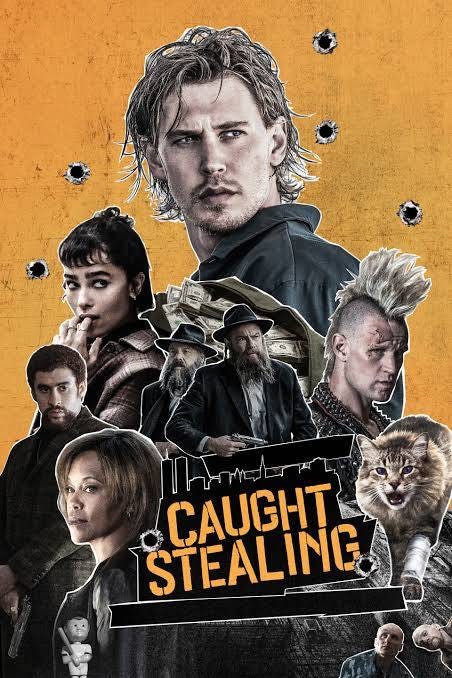
And if you haven't seen the trailer yet, you can check that out here:
Now, let's get into what you're really here for: the marketing of Caught Stealing.
A Campaign 20 Years in the Making
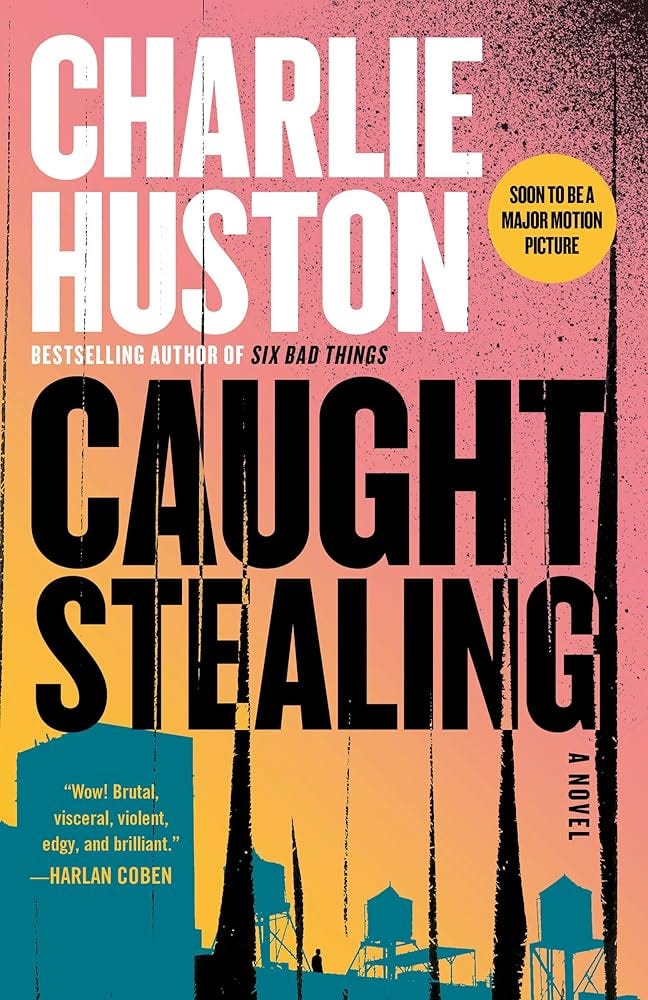
One of the most interesting aspects of "Caught Stealing" is its long journey to the screen. With it being an adaptation of a 2004 novel, the film took nearly two decades to come to life. This long development period, and the fact that the author, Charlie Huston, doesn't even associate the script with his original work, adds a pretty unique layer to the film's story. It’s really a testament to the creative process and the long, winding road that some stories take.
Building the World: Authenticity and Immersion
The film's marketing did a hell of a good job to leverage its 1990s New York City setting, to create an immersive and authentic experience for the audience.
Aronofsky's Stealth Marketing Legacy: So, it turns out the director: Darren Aronofsky has a history of clever stealth marketing (pretty cool right?). For his 1998 debut feature, Pi, he used a guerrilla technique to plaster "Pi" symbols all over the East Village as a marketing tactic. In a full circle moment, the production designer for Caught Stealing then even hid numerous "Pi" symbols throughout the film's 1998 East Village set, and to follow that up Aronofsky even launched an "Easter egg" competition for fans to find them all. This not only created a fun game for dedicated fans but also does a great job to connect his latest work to his indie roots.
Just to add to this, this is really a nice piece of guerrilla marketing that adds to the immersion of the overall campaign and is pretty damn cheap to run. While it’s more of a PR piece and has nothing to do with media buying/planning, being able to have a more boots on the ground type of activation that stirs up some fuss in the area it’s set up in - the East Village - is bound to draw some eyeballs and attention.
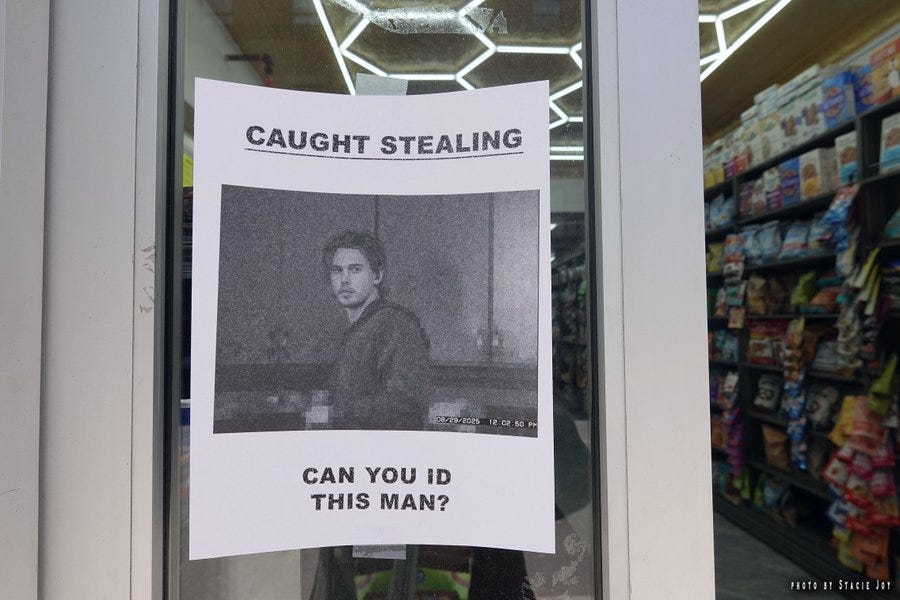
Just take me for example, I found out about this via X - granted I was searching for examples - but for anyone who might be affiliated by geography, mutuals (friends, family, etc), or even by UGC from creators (influencers)/a trending post, this would appear as a pretty interesting or engagement bait type of social post.
Now, if Sony and their PR/media team wanted to go further and promote this via social media, they definitely could have. But they likely wanted to keep all the budget going towards the things they thought would genuinely move the needle more - i.e. OOH, social media, VOD/CTV, etc
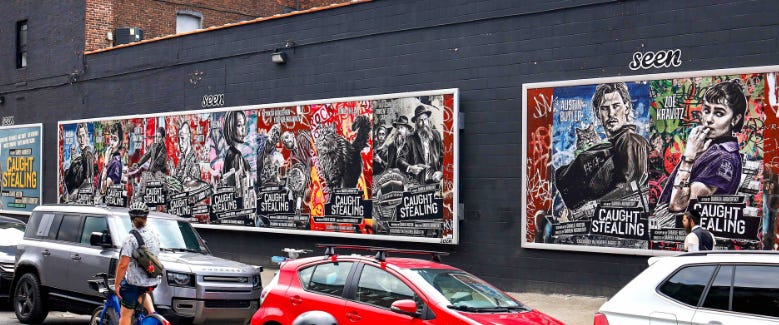
Outdoor Advertising That brings the 90s feel: With the film being set in NYC, it was only right that the city itself became a character in the marketing. Sony's OOH campaign, with its high-impact billboards and murals, especially in Brooklyn, was a nice touch. It didn't just advertise a film; it invoked the feel of the 90s, adding a layer of authenticity that resonated with the city's vibrant culture.
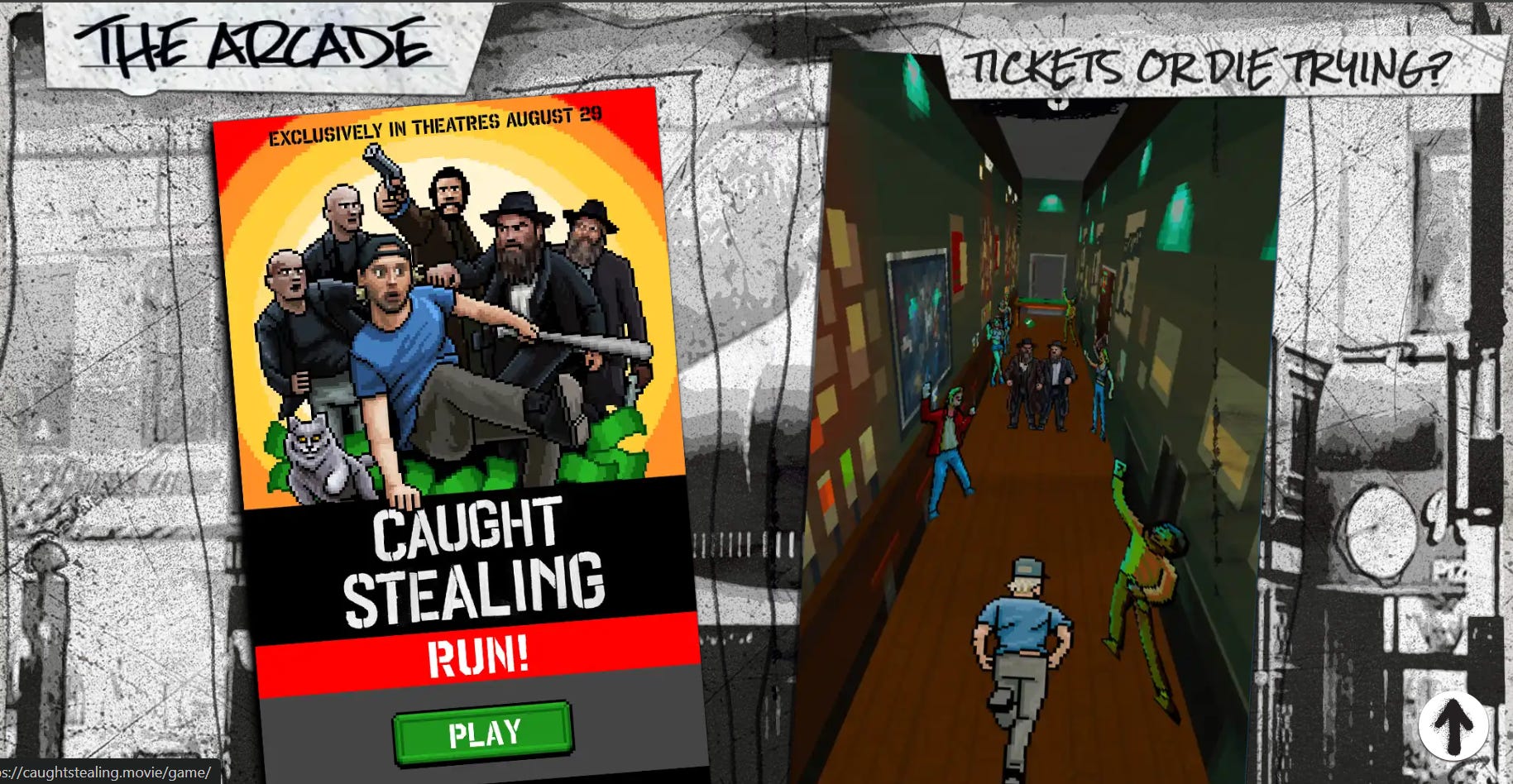
The Digital Zine: The film's website is a standout piece of marketing alone. It’s more than just a landing page; it’s a digital world with key art, a map of the story, character bios, and historical facts about NYC in '98. It's also an evergreen piece of content that will live on long after the theatrical run. The "Temple Run"-style game is also a great touch, it’s a fun, addictive addition that perfectly captures the film's energy. More studios should be doing this!
The Power of the Cast and a Cat
A film's cast is one of its greatest marketing assets, and "Caught Stealing" used its stars to maximum effect.
The Press Tour and Social Content: Austin Butler and Zoe Kravitz, looking every bit the fashion icons in Saint Laurent, were a constant presence on the press tour. Their joint appearances and bespoke social media content, from "trying to talk at eye level" videos to Butler's workout content, were perfectly pitched to their respective audiences.
Star-Boosted Social Power: With a cast that includes Austin Butler, Zoe Kravitz, Regina King, Matt Smith, and even Bad Bunny, the collective social media power was strong. Each star's posts would’ve amplified the film's reach, creating a constant stream of content for fans to engage with.
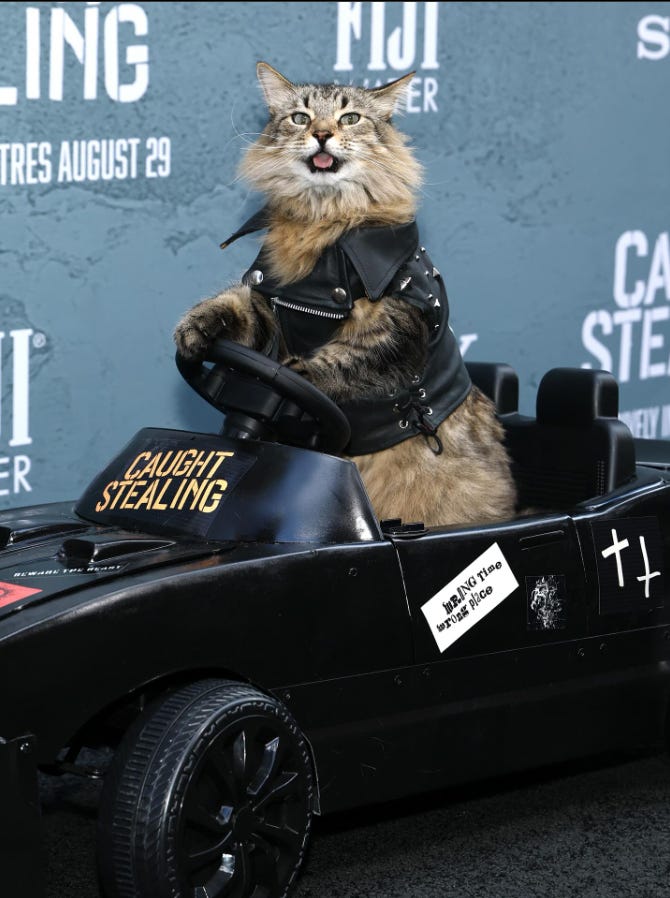
Tonic the Cat: The Unsung Hero: And let's not forget Tonic the Cat, a horror icon in his own right after his role in 2019's "Pet Sematary." The fact that the cat has a resume is a fantastic talking point and a fun, quirky detail that adds to the film's charm.
A Masterclass in Social Media Engagement
The official Instagram page for "Caught Stealing" is a treasure trove of content. With 245 posts and counting, it’s a perfect example of how to keep an audience engaged.
A Rich Content Mix: From BTS content and cast interviews to film clips with trending captions and user-generated content, the page offers a diverse range of content that caters to all types of fans.
Like Matt Smith taking us through Russ’s ride (his characters Toyota Celica), direct clips taken from the film with trending captions over the top of them like: “me and who” in reference to the chemistry between Hank & Yvonne, cast interviews; like Regina King and Matt Smith chatting about what trends should stay in the past, reviews (social ugc & news articles like Hollywood reporter) from other platforms, and of course premiere content.
Authentic and Engaging Content: The video of Austin Butler and Zoe Kravitz seeing their billboard in NYC is a perfect example of the authentic, unpolished content that resonates with audiences today, to me it looks more like a quick banner that was draped down the side of a building located in a set piece location from the film and sees the two stars in various poses together in a photobooth photo reel. Then the CGI subway car clip is another clever piece of content that blends the film's world with the real world.
Strategic Partnerships: The social content and this film wouldn’t be what it is, without leveraging partnerships where possible. Which is why the film collaborated with the band Idles (a popular British Pop-Punk band & a personal fave is ‘Meydei’ for me) for the soundtrack and a surprise show at Nightclub 101 (a rebrand for the actual gig, as the club is called Pyramid Club), and with the recently popular ‘rah_money1’ for a chopped cheese (a staple NYC classic, not that I’d know as a Brit - does look so good though) w/jalapenos chips “THE OCKY WAY”. These are both brilliant examples of contextual partnerships that feel authentic to the film's world.
Final Take
The marketing for "Caught Stealing" is a great example for how to blend old-school cool with new-school engagement.
It’s a campaign that understands the power of authenticity, immersion, and a multi-layered approach that caters to both casual fans and die-hard cinephiles.
This campaign proves that you don't always need to shout the loudest to be heard.
Sometimes, a well-placed sticker, a clever social media post, or a cat with a resume can be the most powerful marketing tools of all.
If you liked this post, consider answering the following: What do you think is more effective in today's media landscape: a big, splashy, traditional marketing campaign or a more subtle, multi-layered approach like the one used for Caught Stealing?
Loved this! The Pi easter eggs and the whole “immersive world” angle really sold me on how much thought went into the campaign. Subtle beats splashy for me, it sticks longer and actually makes you want to talk about it with people.